Quality Control Modules in AgTech ERPs: From Seedling to Harvest

Modern farming is changing fast. We now use advanced software to manage big operations. Agricultural quality control is key for growth.

ERP systems give us full control over our supply chain. They track everything from planting to distribution. This precision helps our crops meet top safety and efficiency standards.

We use digital tools to keep every harvest consistent. Agricultural quality control helps us cut waste and boost output. These solutions are vital for success in today’s global market.

Key Takeaways

  • Digital transformation is essential for modern farming efficiency.
  • ERP systems function as the central nervous system for agricultural enterprises.
  • Integrated software provides visibility from seedling to final distribution.
  • Rigorous standards ensure safety and compliance across the production cycle.
  • Data-driven insights help producers minimize waste and improve overall yields.

Understanding Agricultural Quality Control in AgTech

We see agricultural quality control as key to a successful harvest. It’s about checking crop health and the environment to keep quality high every season.

Using digital tools, we turn field data into useful insights. This is crucial for staying ahead in the global food market.

agricultural quality control

Definition and Importance of Quality Control

Quality control in farming is more than just checking the final product. It’s about managing the crop’s whole life. With crop inspection software, we can spot and fix problems early, like pests and nutrient issues.

“Quality is never an accident; it is always the result of high intention, sincere effort, intelligent direction and skillful execution.”

— William A. Foster

Without these tools, farmers face uneven yields and losses. We focus on digital solutions to give each plant the care it needs.

Key Components of Quality Control in Agriculture

A good quality program has several key parts. These help us make decisions based on data, not guesses.

  • Standardized Testing Protocols: We use the same methods for soil and plant tests.
  • Real-Time Monitoring: Our crop inspection software tracks growth and environmental factors.
  • Compliance Management: We make sure our practices meet safety standards.

The table below shows how these parts compare to old ways of managing quality.

Feature Manual Methods AgTech ERP Integration
Data Accuracy Low (Human Error) High (Automated)
Response Time Delayed Immediate
Risk Mitigation Reactive Proactive

By focusing on these key areas, we help our partners keep high agricultural quality control standards. Using these technologies is the best way to ensure long-term success and healthy crops.

Overview of AgTech ERP Systems

We see AgTech ERP as the brain of today’s farms. It’s a system that brings together all farm activities into one digital space.

These systems collect data and connect AgTech ERP modules smoothly. They track everything, from soil moisture to worker hours, so nothing is missed.

What is an AgTech ERP?

An AgTech ERP is advanced software for modern farming. It replaces old ways of tracking with a single database that offers real-time insights.

With AgTech ERP modules, managers can watch over crops, stock, and money at the same time. This changes how we manage resources and plan for the future.

AgTech ERP modules

Benefits of Integrating Quality Control in ERPs

Adding quality control to our software gives us an edge. It lets farm managers see their work and resources clearly.

This setup makes operations more open and cuts down on waste. With AgTech ERP modules, teams can spot problems early and fix them before they affect the harvest.

Feature Traditional Management ERP-Integrated System
Data Access Siloed and manual Centralized and real-time
Quality Tracking Reactive and sporadic Proactive and continuous
Waste Reduction Limited visibility High precision monitoring
Compliance Paper-based records Automated digital reporting

Switching to an integrated system lets us make better choices based on data. We think transparency is key for farms to grow sustainably.

Quality Control Modules: Features and Functionality

We use AgTech ERP modules to make our daily work better. These tools help us manage big farms with ease and speed.

Real-Time Monitoring and Data Analysis

Our team uses crop inspection software to get important data from the field. This system gives us quick updates on plant health and growth.

Our nursery grading tools sort seedlings by their looks. This proactive approach helps us pick only the best plants. It cuts down on waste and makes our work more efficient.

Compliance Management and Reporting

Following strict food safety rules is crucial. We use automated reports to keep track of all safety steps.

These tools create detailed records for audits. This helps us stay fully compliant and keeps our brand safe.

Traceability from Seedling to Market

Our harvest tracking is key to quality control. We watch every batch from nursery to consumer.

This gives us unmatched insight into our supply chain. With these tools, we keep our work scalable and up to date with industry standards.

Best Practices for Implementing Quality Control Modules

Modern agriculture needs smarter digital workflows. Success comes from a mix of strong software and a skilled team. Your team must know how to use these tools to get real results.

Training and Education for Staff

Investing in your team is key. They need to see the value of accurate data entry. Good training helps them understand nursery grading well.

When they’re confident with the software, they help keep data quality high. This is good for the whole operation.

Continuous Improvement Strategies

Reviewing past performance data is important. It helps you improve daily tasks. By looking at trends, you can cut waste and boost yield quality.

This cycle of review and improvement keeps you ahead in a changing market.

Leveraging Technology for Enhanced Quality Control

Building a culture based on data-driven decisions is powerful. It helps your organization reach new heights. Integrating these advanced modules sets you up for long-term success.

We encourage you to start improving your processes now. This will help ensure a strong future for your farm.

FAQ

How do we define agricultural quality control within a digital framework?

Agricultural quality control means checking crop health and soil conditions. We use special software to make sure products are safe and efficient. This is true from planting to when we distribute them.

Why are AgTech ERP modules essential for modern farming operations?

AgTech ERP modules are like the digital heart of our farms. They bring together data from all farm activities in one place. This helps us see how resources are used, cut waste, and track everything in real-time.

What role does nursery grading play in the production cycle?

Nursery grading checks how plants grow early on. It uses tools to give quick feedback. This helps us pick only the best seedlings, improving our yields and using resources better.

How does harvest tracking improve market traceability and compliance?

Harvest tracking makes a digital record from farm to table. It’s key for following food safety rules and keeping the market transparent.

What are the primary benefits of using crop inspection software for risk management?

Crop inspection software helps us spot and fix problems early. It lets us focus on quality, not just reacting to issues. This keeps our output consistent and high.

How do AgTech ERPs function as a “central nervous system” for our operations?

An AgTech ERP brings together farm tasks like managing labor and tracking fields. It gives us a complete view of our farm. This makes quality control a key part of our work.

What are the best practices for implementing new quality control modules?

To do it right, balance learning new tech with training staff. We aim to keep getting better by using data from tracking and grading. This helps our team keep doing great work.

B2B Partner Portals: Extending Your CRM to Resellers and Distributors

In today’s fast-paced world, companies need better ways to work with their sales teams. A B2B partner portal is key. It connects your systems to your resellers and distributors.

By adding these teams to your setup, we make a single, strong system. This means everyone can get the real-time data they need. This helps close deals quicker and more smoothly.

Having all info in one place gets rid of barriers to growth. Giving distributors the right tools lets them make more money. A B2B partner portal turns old ways of managing channels into something new. It’s fast, based on data, and good for everyone.

Key Takeaways

  • Extending CRM capabilities improves collaboration with external sales networks.
  • Digital bridges centralize data to ensure consistency across all channels.
  • Real-time access to information empowers resellers to drive higher revenue.
  • Modern infrastructure reduces operational silos and improves overall efficiency.
  • Data-driven management creates a more scalable and responsive sales ecosystem.

Understanding B2B Partner Portals

A B2B partner portal is key for channel success. It’s a secure online space for vendors and their partners to work together smoothly.

What is a B2B Partner Portal?

This tech is a central spot for partners to get what they need. It’s better than old emails or spreadsheets. It gives real-time access to important business info.

It runs on strong PRM (Partner Relationship Management) software. This tracks and improves every step, from start to finish.

Key Features and Functionality

Today’s platforms do more than share files. They manage leads, support sales, and track performance. This helps companies keep their brand strong and lets partners close deals quicker.

The table below shows how these systems beat old ways of managing partners:

Feature Traditional Method Modern Portal
Lead Tracking Manual Spreadsheets Automated PRM Integration
Content Access Email Attachments Centralized Resource Library
Performance Data Periodic Reports Real-time Dashboards
Communication Fragmented Threads Unified Messaging System

Using these advanced features, businesses build a collaborative environment for growth. We think a top-notch B2B partner portal is crucial for any company wanting to grow its indirect sales.

The Importance of Partner Portals in B2B

Our experience shows that the right digital infrastructure is key for a thriving B2B sales strategy. In today’s fast-paced market, companies must give their partners tools that boost transparency and efficiency. By ditching manual spreadsheets and email chains, businesses can create a more unified ecosystem.

Enhancing Communication and Collaboration

Effective collaboration needs easy sharing of information. We use channel sales software to break down internal information silos that often slow growth. When partners have access to a centralized hub, they can talk to us in real-time.

This level of connection ensures everyone is on the same page for product launches and marketing plans. Clear communication stops costly misunderstandings and builds trust. Our partners feel more supported with instant access to the resources they need to succeed.

Streamlining Operations and Processes

A dedicated wholesale portal is a single source of truth for all transactional data. By automating routine tasks, we let our partners focus on selling and supporting customers. This digital change gives them real-time updates on inventory levels and current pricing.

When partners can check stock availability instantly, they answer customer inquiries faster and more accurately. This speed boosts the end-user experience, leading to higher satisfaction rates. Streamlining these processes is crucial for staying competitive in complex global markets.

Integrating with Your CRM System

Integrating our partner portals with a CRM boosts our network’s efficiency. This connection ensures smooth info exchange between our teams and partners.

This digital link breaks down barriers, merging our systems into one. Now, data guides every choice we make.

Benefits of CRM Integration

Our main gain is better lead management. With channel sales software, lead data moves smoothly between systems.

This setup brings several key benefits:

  • Less chance of errors from manual data entry.
  • Clear, up-to-date views of partner performance.
  • Quicker help for partners with pricing or inventory needs.

Efficiency is our main aim. It lets our team build stronger ties, not just fix data issues.

Overcoming Integration Challenges

Setting up a strong distributor CRM integration comes with its own set of challenges. We face technical hurdles that need careful planning.

Data mapping is a big challenge. We must match our portal fields with our database to avoid losing data.

Keeping data safe is also crucial. Our IT team works hard to protect customer info while giving partners what they need.

By tackling these issues early, we create a distributor CRM system that’s safe and grows with us. We suggest a step-by-step approach to make sure everything works right before we go live.

Choosing the Right Platform for Your Needs

Choosing a strong B2B partner portal affects your whole distribution network. It should connect your systems with partners who boost your sales. This choice should help your business grow and offer value right away.

Key Considerations When Selecting a Portal

Look for scalability in software to match your business growth. A system for ten partners might not work for a hundred. Choose cloud-based options that handle more data easily. Also, ease of use is key, as your partners will use it more if it’s simple.

Make sure the platform fits your industry needs. It should handle lead management, marketing assets, and pricing well. Create a list of essential and nice-to-have features to guide your choice.

Popular B2B Partner Portal Solutions

The market has many tools for better channel management. Big names often mean less technical trouble and more support. A B2B partner portal from a trusted vendor can save you time and worry.

  • Salesforce Experience Cloud: Great for those already using Salesforce.
  • Impartner: Offers strong automation and quick setup.
  • Allbound: Focuses on partner engagement and content sharing.

The best B2B partner portal is powerful yet easy to use. Try live demos and talk to users to see if it fits your needs. A careful choice leads to a productive and profitable partnership network.

Customization and Branding Opportunities

We think a professional portal should feel like a part of your company’s identity. When partners log in, they should see your company’s unique style right away. A well-designed wholesale portal connects your internal work with your sales network.

Tailoring the Portal to Your Business

Customizing your portal lets you match it to your business needs. You can change colors, fonts, and layout to fit your brand. This makes your distributor CRM a powerful tool that shows your company’s personality.

It’s key to keep your design clean and easy to use. This helps partners understand complex data without getting lost. Here are some important things to consider for your customization:

  • Custom Dashboards: Show the most important metrics for your partners.
  • Branded Communication: Make sure all emails and notifications have your logo.
  • Role-Based Views: Adjust the interface for different partner levels.

The Importance of Brand Consistency

Consistent branding is more than looks; it builds trust with your resellers. When your digital stuff looks the same, it makes your partners feel at home. This makes them more likely to use your platform.

Keeping your wholesale portal looking like your main site makes things smooth for users. Here’s how branding affects your distributor CRM:

Feature Impact on Adoption Trust Level
Custom Logo/Colors High Strong
Unified UI Design Medium Moderate
Standardized Messaging High High

Spending time on your portal’s look pays off in the long run. A nice, branded space shows you care about your partners. By focusing on these details, you build a space for growth and teamwork.

Onboarding New Partners Effectively

We think the first few weeks of a partnership are key to success. A clear plan helps your resellers feel supported and ready to go from the start. This way, we make sure they can grow and make money together.

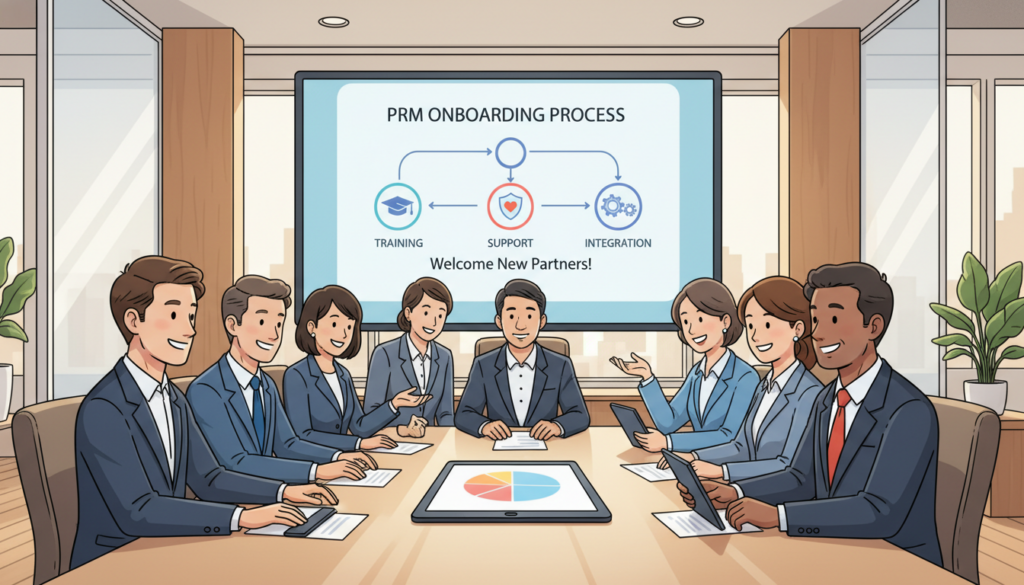
PRM (Partner Relationship Management) onboarding process

Step-by-Step Onboarding Process

Handling new partners well means following a set process. We use PRM (Partner Relationship Management) tools to make the welcome smoother. These tools send out emails, set up accounts, and get documents signed without us having to do it all.

“The secret to success is to start with a clear vision and a well-defined process that empowers every team member to contribute their best work.”

Our systems guide partners through important steps. This includes filling out their profile, agreeing to legal terms, and setting up their portal. By doing these tasks automatically, our team can focus on building strong relationships.

Providing Training and Resources

Knowing how to do your job is the first step to success. We offer in-depth training in the portal so partners know our products well. They can learn whenever they want, keeping our brand consistent.

We also give partners sales guides and marketing materials to start selling right away. Our PRM (Partner Relationship Management) platform helps us see how they’re doing. This way, we can help where needed, making sure they can make money fast.

Best Practices for Managing a Partner Portal

Keeping a B2B partner portal running well is an ongoing task. It’s not just a tool but a living asset that needs constant care. By actively managing it, we make sure our partners get the latest and most useful info.

Regular Updates and Maintenance

We keep our B2B partner portal fresh by updating it regularly. Old or broken content can upset users and hurt our reputation. We check all documents and materials every month to keep them up-to-date.

But it’s not just about the content. We also focus on keeping the site secure and fast. Here are some tasks we do to ensure the platform works well:

  • Security Patching: We update software to protect our partners’ data from threats.
  • User Feedback Loops: We use simple surveys to hear from our partners and learn what they need.
  • System Optimization: We keep an eye on how fast the site loads and how easy it is to use.

Measuring Performance and Success

We can’t improve without tracking our progress. By looking at specific numbers, we understand how our B2B partner portal helps our business grow. We make decisions based on data to get the best results.

We watch a few important numbers to see how our platform is doing. These metrics tell us if our partners are getting the help they need:

  • Active User Rate: We see how many partners use the portal regularly.
  • Content Download Frequency: We find out which resources are most useful to guide future updates.
  • Support Ticket Volume: Fewer support requests mean our self-help tools are working better.

Our aim is to use these insights to grow our business. By regularly checking these numbers, we keep our portal a key tool for teamwork and making money.

Encouraging Partner Engagement and Usage

We think a wholesale portal should be the core of your partner network. Getting partners to use your channel sales software is key. When they do, they get quick access to what they need to do well.

Strategies for Increasing Portal Activity

To keep partners coming back, try gamification strategies. These reward them for logging in often and finishing tasks. Leaderboards or badges make routine work fun. This makes them want to check out new features often.

Personalized messages also help a lot. Instead of sending out general emails, tailor them to each partner’s sales history or interests. This makes every message feel important and relevant to their business goals.

Building Loyal Relationships with Resellers

Our wholesale portal is more than just a tool; it’s a way to work together for the long haul. By making it easy and intuitive, we show we care about their success. When partners have access to reliable data and marketing tools, they trust us more.

Building real relationships makes your channel sales software a go-to place. When partners feel valued and heard, they choose your products over others. Here’s how to get them more involved.

Engagement Tactic Primary Benefit Implementation Effort
Gamified Milestones Increased Daily Logins Moderate
Personalized Dashboards Higher User Satisfaction High
Automated Alerts Improved Response Time Low
Exclusive Resource Access Stronger Brand Loyalty Moderate

Security Considerations in Partner Portals

Managing a PRM (Partner Relationship Management) system requires strict security measures. When we let partners into our data, we must keep our digital walls strong. Security is not just a technical requirement; it is the bedrock of our professional reputation.

PRM (Partner Relationship Management) security

Protecting Sensitive Data

We use role-based access controls to limit what partners see. This way, we prevent data leaks or changes to prices. It’s key to keeping our PRM (Partner Relationship Management) workflows safe.

We also use robust encryption standards for all data. This makes sure data stays safe, even if it’s caught in the middle. Keeping customer info safe is our main goal as we grow our partner network.

Compliance with Industry Standards

Following global data protection laws is a must for us. We make sure our portal meets GDPR and SOC2 standards. This shows we’re transparent and accountable, building trust with our partners.

We regularly check our PRM (Partner Relationship Management) setup for weaknesses. By staying compliant, we show we care about data privacy and ethical business practices. This makes our partners feel safe and confident when working with us.

Future Trends in B2B Partner Portals

The B2B partner portal is changing fast, thanks to smart technology. The world of business is changing, and we need to keep up. By being innovative, we make sure our tools are useful before our partners even know they need them.

The Rise of AI and Automation

Artificial intelligence is now a must-have for growing businesses. We’re using machine learning to give predictive insights. This helps resellers find new sales chances based on past data.

Our B2B partner portal now has automated workflows. It sends out personalized tips and resources. This way, every user gets the right info at the right time, helping them meet their business goals.

“Digital transformation is not just about adopting new technology; it is about fundamentally changing how we create value for our partners in a connected ecosystem.”

— Industry Analyst

Evolving Partner Expectations

Today, resellers want a user-friendly experience in our systems. They look for seamless mobile access, easy navigation, and up-to-date info on inventory and orders. We’re focusing on making our platform the best choice for our partners.

The table below shows how we’re moving from old systems to new ones:

Feature Traditional Portal Future-Ready Portal
Data Access Static Reports Real-time Predictive Analytics
User Experience Desktop Only Mobile-First & Responsive
Support Manual Ticketing AI-Driven Chatbots
Engagement Reactive Proactive & Personalized

By keeping up with these trends, we stay ahead. We’re committed to making our B2B partner portal better for our partners. This way, we keep growing together and achieving success.

Case Studies: Successful B2B Partner Portals

Digital transformation shows us how leaders turn ideas into action. Companies like Cisco and Schneider Electric lead the way with advanced technology. They show that a strong distributor CRM is key for growth and keeping partners loyal.

Proven Strategies from Industry Leaders

Cisco uses its partner network to offer complex networking solutions worldwide. They centralize data so all resellers get the same quality resources. This makes sales faster and smoother for everyone.

Schneider Electric shows how a unified CRM can manage many products. Their portal gives real-time inventory updates and automated support. This builds trust and makes partners choose them over others.

Applying Lessons to Your Business

For digital success, focus on user experience and accurate data. Start with a small pilot to test your portal. Get feedback early to improve your system.

Keep it simple to get more resellers on board. A complicated system can frustrate users. Offer immediate value with self-service tools and clear communication. This will help you succeed in managing partners.

FAQ

What exactly is a B2B partner portal, and how does it benefit our organization?

A B2B partner portal is a secure online space that connects our team with our sales network. It uses PRM systems to share data and tools with resellers. This makes our channel management more efficient and improves every transaction.

How does channel sales software improve communication with our distributors?

Channel sales software breaks down information barriers by offering a single source of truth. It gives real-time updates on inventory, pricing, and marketing materials. This helps our partners answer customer questions quickly and accurately, enhancing the user experience.

Why is it important to integrate our distributor CRM with our main CRM database?

Integrating our distributor CRM with our main database prevents data entry mistakes. It ensures we have a clear view of the sales pipeline. While it can be challenging, the result is a strong system that boosts ROI and ensures data security.

Can we customize the portal to match our corporate branding?

Yes, we can make the wholesale portal look like a part of our brand. We tailor the design to match our brand guidelines, ensuring a professional look for our partners. This builds trust and increases adoption rates.

What strategies can we use to increase partner engagement within the portal?

To boost partner engagement, we use gamification, incentives, and personalized messages. We make the portal valuable by offering automated welcome sequences and training resources. This turns the portal into a go-to place for our resellers, fostering loyal relationships.

How do we ensure the security of sensitive data shared within the PRM system?

Security is our main concern when sharing data with partners. We use role-based access controls and encryption to protect sensitive information. We also follow industry standards like GDPR to keep our data safe and maintain trust.

What are the emerging trends in the world of B2B partner portals?

AI and predictive analytics are changing B2B partner portals. Modern PRM platforms use artificial intelligence to offer personalized recommendations. By keeping up with these trends, we stay ahead and meet our partners’ needs.

Are there any real-world examples of successful portal implementations?

Companies like Cisco and Dell have successfully extended their CRM to distributors. By studying their use of CRM and PRM tools, we learn how to grow and strengthen our sales ecosystem.

Managing a Global Remote Workforce: HR and Payroll Modules in Cloud ERP

Managing a team spread across different time zones is a big challenge. It’s crucial to keep a clear view of our team for success.

We use a strong Remote workforce ERP as the core of our work. Cloud-based systems help keep our work smooth, no matter where we are.

This way, we can work together as one team worldwide. Technology connects our team, helping us grow in a tough market.

Key Takeaways

  • Centralized cloud systems provide essential visibility for distributed teams.
  • Integrated administrative tools help maintain a cohesive global strategy.
  • Technology bridges the gap between personnel in different time zones.
  • Scalability is achieved through streamlined HR and payroll processes.
  • Effective management of global talent drives competitive advantage.

Understanding the Importance of Remote Workforce ERP

Companies now need to manage digitally to grow globally. A centralized digital infrastructure is key for a distributed team. A Remote workforce ERP brings all data together for our leaders.

Remote workforce ERP

The Shift to Remote Workforce Solutions

Old systems can’t keep up with today’s work needs. They often create data silos that slow us down. We’ve moved to integrated solutions for better flexibility.

Using a Remote workforce ERP helps us overcome these issues. It ensures everyone, no matter where they are, has the same information. This supports our growth in a tough market.

Benefits of a Cloud ERP for Remote Teams

Cloud platforms offer big advantages over old software. They give us enhanced data security and real-time reports. This helps our managers make smart choices with current data.

The table below shows the main differences between old systems and cloud solutions:

Feature Legacy Systems Cloud ERP
Data Access On-premise only Anywhere, anytime
Security Manual updates Automated encryption
Scalability Limited/Expensive Highly flexible
Reporting Delayed/Static Real-time/Dynamic

With a Remote workforce ERP, we stay strong and ready to grow. We keep investing in these technologies to stay ahead globally.

Key Features of HR and Payroll Modules

Expanding a business across borders needs precision in every step. We use advanced digital tools to make complex tasks easier. This way, we keep our operations agile and meet the needs of our diverse team.

global payroll software

Employee Onboarding and Management

Starting off right is key for a productive team. We focus on HRIS integration to keep data consistent across all platforms. This makes sure employee records are up-to-date instantly, cutting down on errors and saving time for HR.

Our systems make it easy for new hires, no matter where they are. We automate paperwork and checks, making sure everyone feels supported from day one. This helps us keep our company culture strong, even across different time zones.

Payroll Processing and Compliance

Handling international staff pay accurately needs special global payroll software. We use these tools for quick currency conversions and local banking needs. This ensures our employees get paid on time, keeping morale high.

Dealing with multi-country tax compliance is key to our growth. Our software keeps up with tax changes in each country we’re in. This keeps us safe from legal issues as we grow globally.

Time Tracking and Attendance

Tracking attendance for a team spread out needs clear and accurate data. We use strong tracking tools for easy hour logging. These tools give us instant insights into productivity and help control labor costs.

The table below shows the benefits of switching to our digital modules:

Feature Manual Process Automated ERP
Data Entry High Error Risk Real-time Sync
Tax Reporting Fragmented Centralized Compliance
Onboarding Slow/Paper-based Instant/Digital
Payroll Speed Days to Process Hours to Process

Best Practices for Implementing ERP Solutions

For a successful digital transformation, we need a clear plan. This plan should match our technology with our business goals. We look for vendors with scalable platforms that can grow with us.

Selecting the Right ERP Vendor

We check out partners like Oracle NetSuite or SAP. They must handle complex international payroll needs. We also look at their remote employee tracking tools. These tools help us manage our teams well.

Training and Support for Teams

Our team needs to feel confident with new digital tools. We invest in training to make complex modules easy for everyone. This way, our employees can quickly learn and use the tools they need.

Integration with Existing Systems

Connecting our current systems with the new ERP is key. We aim for smooth data flow without manual help. This approach makes our work environment clear and boosts productivity for everyone.

FAQ

How does a Remote workforce ERP improve our global operations?

A Remote workforce ERP centralizes our admin processes in one cloud-based system. This gives us real-time visibility and control over our team worldwide. It helps keep our global strategy united and growing.

This tech replaces old systems with a single digital platform. It makes our operations more efficient.

Why is global payroll software essential for our international team?

Global payroll software is key for paying our international staff right and on time. It handles different currencies and local laws, which manual processes can’t do well.

What role does HRIS integration play in maintaining data integrity?

We use HRIS integration to keep our HR data smooth across all parts of our system. This stops data errors and gives our leaders a full view of our employees.

How do we navigate the complexities of multi-country tax compliance?

Our cloud ERP handles multi-country tax compliance automatically. This keeps us safe from big legal and financial risks as we grow globally. We stay up-to-date with tax laws in every place our team works.

What are the advantages of using remote employee tracking features?

Remote employee tracking gives us insights into work hours without hurting our trust culture. It’s built into our ERP. It helps us use resources better and keeps our teams working well together.

How do we choose the right ERP vendor for our remote workforce?

When picking vendors like Oracle NetSuite, SAP SuccessFactors, or Workday, we look at their support for remote work and HRIS integration. We want partners that offer good training and support. This helps our team use the system well and grow our business.

Social Selling CRM Tools: Tracking LinkedIn Interactions for B2B Leads

Today’s sales teams must keep up with fast-paced digital networking. We need to catch every interaction to stay competitive.

Using a social selling CRM gives teams a full view of their pipeline. This tech changes how we find leads in a quick market.

Strong B2B social media tracking makes sure we don’t miss any chances. Data-driven insights are key for successful outreach in the U.S.

Watching these digital moments is now a must. It’s a critical requirement for teams wanting to grow and make more money today.

Key Takeaways

  • Modern sales success depends on capturing data from every digital touchpoint.
  • Specialized tools help teams organize and prioritize their outreach efforts.
  • Tracking interactions provides a clear view of the entire sales pipeline.
  • Data-driven strategies are essential for competitive lead generation today.
  • Consistent monitoring prevents valuable networking opportunities from being lost.

Understanding Social Selling and CRM

We see the mix of social interaction and data handling as key to B2B success today. By using strong tech, we turn simple online chats into real business wins. A Social selling CRM links our networking to our sales goals.

Definition of Social Selling

Social selling is about building real relationships in sales. It’s never about sending out unwanted messages or hard sales pitches. We focus on adding value and making lasting connections that build trust over time.

When we talk to leads on sites like LinkedIn, we aim to solve their problems, not just sell. This approach keeps our brand in mind when they’re ready to buy. A Social selling CRM helps us keep track of these interactions while staying personal.

Importance of CRM in Social Selling

The number of digital talks can overwhelm any sales team. A Social selling CRM keeps all our digital interactions in one place. This way, we don’t miss any chances in the social media noise.

By using these systems, our sales pipeline stays strong and up-to-date. We count on this Social selling CRM for automated follow-ups and team organization. This setup lets us grow our outreach while keeping our relationships strong.

The Role of LinkedIn in B2B Sales

We see LinkedIn as key for making strong business connections. It’s where we start our outreach, connecting with others in our field and finding new lead generation chances.

LinkedIn as a Networking Platform

We’re moving away from just cold calls. Instead, we aim for meaningful talks that our audience will find valuable. By sharing useful insights and joining in on industry chats, we become trusted advisors, not just sellers.

“Networking is not about just connecting people. It is about connecting people with people, people with ideas, and people with opportunities.”

Michele Jennae

This new way of thinking helps us build lasting relationships. We focus on quality interactions that build trust. Trust is key for successful lead generation in today’s B2B world.

Best Practices for LinkedIn Engagement

Being consistent is at the heart of our strategy. We keep our profiles up-to-date and share content that solves our prospects’ problems.

To draw in valuable leads, we do the following:

  • Engage with posts related to our industry to get noticed.
  • Leave thoughtful comments that enrich the conversation.
  • Make sure our profiles clearly show what we offer.

By being active and quick to respond, we keep our brand in the minds of potential clients. This careful approach to lead generation creates a steady flow of quality prospects who are really interested in what we offer.

Key Features of Social Selling CRM Tools

We need to look at the main features that turn social media into a sales pipeline. Top social selling software is key for our outreach. It makes sure we don’t miss any chances.

Integration Capabilities with LinkedIn

A smooth LinkedIn CRM integration is crucial. It logs every message, comment, and connection request into our database. This means no manual data entry.

This syncing keeps all prospect info in one place. It saves our team a lot of time each week.

“The goal is not to live on social media, but to use it as a strategic tool to build authentic relationships that drive business growth.”

— Anonymous Sales Strategist

Analytics and Reporting Features

Advanced analytics help us see how well our outreach works. We can see which content gets the most interest. And which channels bring in the best lead generation.

These insights help us improve our messages quickly. We don’t guess anymore about what works best.

Lead Management Functionality

Great lead management lets us focus on the most promising prospects. We score interactions to find those ready to buy.

This targeted approach boosts our lead generation. With a strong LinkedIn CRM integration, we turn cold outreach into warm, productive conversations.

Top Social Selling CRM Tools Available

Finding the right social selling CRM is key. You need to know what your team needs. We’ve looked at the market to find tools that help with social engagement and lead conversion. The right social selling software can change how your sales team works every day.

Salesforce CRM

Salesforce is great for big B2B sales. It tracks engagement on many social channels. Its advanced automation features are perfect for big companies that need lots of customization.

HubSpot CRM

HubSpot is known for being easy to use and working well with marketing. It’s a top social selling software for teams that value simplicity and quick learning. It turns social media into useful data without confusing sales staff.

Zoho CRM

Zoho is flexible and fits all business sizes. It’s a budget-friendly social selling CRM that doesn’t cut corners on features. Teams like how it lets them add social media feeds to their lead dashboards.

Platform Best For Key Strength
Salesforce Large Enterprises Scalability
HubSpot Mid-Market Ease of Use
Zoho Small to Mid-Size Customization

When picking these tools, think about a few things for success:

  • Integration depth with your current tech.
  • How easy it is for your sales team to learn.
  • Your budget and if it will grow with you.

Integrating Social Selling CRM with LinkedIn

To successfully link your LinkedIn CRM integration, you need to understand both the technical and operational sides. This connection merges your social networking efforts with your lead management database. It makes sure every interaction is recorded without needing manual input.

Steps to Connection and Syncing

The technical setup starts with authenticating your professional account in your CRM dashboard. Most platforms have a native connector that needs simple API authorization for a secure link.

After linking your accounts, we set up the sync settings. This decides which data moves between platforms. Real-time synchronization is key, as it updates your lead records instantly for new connections or messages.

If you hit sync errors, check your API permissions and clear your browser cache. These small tweaks often fix common setup problems.

Enhanced User Experience

Automating these connections boosts our sales team’s daily work. It eliminates the need for manual data entry. This lets our team focus on meaningful engagement and building relationships.

A smooth LinkedIn CRM integration gives a clear view of the customer journey. This clarity shows which social interactions result in quality conversions. It leads to better business results.

Feature Manual Entry Automated Sync
Data Accuracy Prone to human error High precision
Time Investment High (hours per week) Minimal (setup only)
Lead Visibility Delayed updates Instant real-time data
Sales Focus Administrative tasks Strategic selling

Gathering Insights from LinkedIn Interactions

Turning LinkedIn data into useful business insights is key for B2B success today. We see the digital trails left by potential customers as a guide for our outreach. By tracking these signs, we move from guessing to making data-driven decisions.

LinkedIn CRM integration

Tracking Engagement Metrics

To stay ahead, we use strong B2B social media tracking across all our professional platforms. We watch likes, comments, and shares to understand our audience better. This helps us see which topics our potential buyers find most interesting.

Tracking consistently helps us build a detailed profile for each lead. We know exactly when a prospect interacts with our content. This lets us follow up at the right time, keeping our sales team relevant without being too pushy.

Identifying Key Interactions

Not all interactions are equal, so we use social listening tools to focus on the important ones. These tools help us keep up with industry trends and what our competitors are doing. This way, we focus on the prospects most likely to become customers.

A smooth LinkedIn CRM integration is crucial for organizing these interactions well. It lets us link engagement data directly to our workflow, making sure we don’t miss any opportunities. We can then sort our leads based on their interests and how engaged they are.

“Data is the bridge between a cold outreach and a warm, meaningful business relationship.”

— Industry Sales Expert

The table below shows how we prioritize different LinkedIn interactions to improve our sales pipeline:

Interaction Type Priority Level Recommended Action
Direct Message Critical Immediate Response
Comment on Post High Engage and Connect
Profile View Medium Monitor Activity
Like on Content Low Nurture with Content

By using a proper LinkedIn CRM integration, we make sure our follow-up is both timely and personal. This method turns every digital touchpoint into a step towards a successful partnership. We keep improving our strategies to meet the changing needs of our B2B clients.

Building a B2B Lead Strategy Using Social Selling

We think successful lead generation comes from knowing your prospects well. A good strategy focuses on reaching out in a way that grabs attention and builds trust.

Target Audience Identification

To find the right people, we need to define our ideal buyer personas clearly. We use B2B social media tracking to watch what our target accounts do and what they’re interested in. This makes sure our outreach is always on point.

We look at how people interact with our brand to find out who’s most interested. This helps us tailor our messages to solve the problems our prospects face every day.

Content Strategy on LinkedIn

A solid content strategy is key to our lead generation success. We share valuable insights that tackle the main issues our audience faces. This way, we become trusted advisors, not just sellers.

When our content matches what our prospects need, we get more meaningful engagement. This strategy helps us build lasting professional relationships.

Strategy Component Focus Area Expected Outcome
Audience Research Behavioral Data Higher Conversion Rates
Content Creation Pain Point Resolution Increased Authority
Social Tracking Engagement Metrics Refined Targeting

By using B2B social media tracking every day, we stay ahead. We keep an eye on our results to make sure our strategy keeps up with the market’s changes.

Best Practices for Using Social Selling CRM

The true power of digital tools comes from those who use them every day. While technology is key, how we use it matters most. By setting clear rules, our social selling CRM stays a trusted tool for everyone.

Regular Updates and Maintenance

Keeping your database clean and up-to-date is crucial for success. We focus on keeping our data fresh to avoid old info. This keeps our team on track and ensures every interaction is based on the latest info.

We suggest regular checks to make sure lead info and engagement history are current. Clean data makes our outreach efforts much stronger. Consistency in maintenance helps avoid technical issues and lets us build strong relationships.

Training Your Sales Team

Technology works best when people know how to use it. That’s why we put a big focus on training. We offer ongoing programs to help our team get the most out of our social selling software.

We foster a culture where everyone learns from each other. This way, our top performers can teach new strategies to others. Keeping our team up-to-date helps us stay ahead in the market. A well-trained team is the heart of any good social selling CRM plan.

Measuring Success in Social Selling

We think that strong B2B social media tracking is key to any good sales plan. Without solid data, it’s hard to know what really works and what doesn’t. By setting up a way to measure, we turn vague social actions into real business insights.

B2B social media tracking

Key Performance Indicators (KPIs)

We look at certain metrics to see how well we’re doing in lead generation. These numbers tell us how our sales funnel is doing and if our outreach is good. We group these metrics to get a full view of our social selling world.

Metric Category Primary KPI Business Impact
Engagement Inbound Message Rate High intent identification
Conversion Social-to-Lead Ratio Pipeline velocity
Growth Network Quality Score Target account reach

These numbers show us how our work helps the bigger lead generation pipeline. By checking these numbers every week, we can change our plan before small problems get big.

Continuous Improvement Strategies

Success in social selling is always a work in progress. We test, learn, and make our tactics better. We see every campaign as a chance to learn and improve our messages and who we target. This keeps our methods sharp in a fast-changing digital world.

“What gets measured gets managed, and what gets managed gets improved.”

— Peter Drucker

We make quick changes based on what our B2B social media tracking tools tell us. By always looking to get better, our team stays on top of trends. Our focus on using data to improve means we get the most out of our social selling efforts.

Overcoming Challenges in Social Selling

Introducing new tech can lead to unexpected problems that slow down sales. Moving to social selling software is more than just installing it. It means changing how our teams see digital interactions and daily outreach.

Common Misconceptions

Many think social selling gives instant results. They expect a quick increase in leads after starting a new platform. But, building real connections on professional networks takes time and effort.

Another myth is that automation replaces human touch. While tools help us scale, they can’t match the personal touch of a real conversation. We need to mix automated workflows with real, human interaction for success.

Technical Limitations and Solutions

Adding new systems to our existing tech stack often reveals technical issues. For example, a LinkedIn CRM integration might face API limits that block data transfer. We solve this by using middleware to connect platforms.

Data privacy is a big worry in B2B today. We follow rules and use secure social listening tools to monitor trends without crossing lines. These tools help us get useful insights while keeping our prospects’ trust.

Challenge Impact Strategic Solution
Data Silos Fragmented lead view Unified LinkedIn CRM integration
Low Engagement Stagnant pipeline Advanced social listening tools
Slow Adoption Inefficient workflows Targeted team training
API Constraints Limited data sync Custom middleware development

By tackling these technical and cultural hurdles, we turn them into strengths. We keep working to make our social selling software as valuable as possible for our team.

Future Trends in Social Selling and CRM

The world of B2B sales is changing fast with new tech. Soon, artificial intelligence will be at the heart of every interaction. This will make our outreach more precise and effective.

AI and Automation in Sales

Now, advanced automation tools handle the boring tasks. This lets our teams focus on building real connections. We use top-notch social listening tools to keep an eye on market feelings in real time.

These tools give us clues about what buyers might want before they even contact us. It’s a game-changer for our sales team.

Evolving User Expectations on LinkedIn

Today’s buyers on LinkedIn want real conversations, not just sales talk. We need to create content that really speaks to their needs. By using social listening tools daily, we stay on top of these changes.

Our goal is to keep our brand a trusted leader online. We’re all about meeting these new expectations head-on.

It’s time to check how your social selling is doing. Try out new automation tools in Salesforce or HubSpot. See how they boost your lead quality. Your growth journey starts with these small, smart steps.

FAQ

What exactly is a Social selling CRM and why do we need it?

A Social selling CRM is our main place for all professional online talks. It helps us not miss any chances on social media. By linking these systems, we focus on real connections, not just cold calls. This approach boosts lead generation and helps us reach our sales targets.

How does B2B social media tracking enhance our sales pipeline?

B2B social media tracking helps us get data from every online touchpoint, like LinkedIn. This data helps us pick the best leads. Our sales team then focuses on those who have shown interest in our brand or content.

What are the primary benefits of a direct LinkedIn CRM integration?

A strong LinkedIn CRM integration logs every online interaction, like messages or comments, into our database. This saves time and makes our sales team’s job easier. It also gives us quick insights into how well our social selling software is working.

Which social selling software platforms do we recommend for B2B teams?

We use top platforms like Salesforce CRM, HubSpot CRM, and Zoho CRM. These tools help us manage leads and reports well. They make our social selling software work better and more efficiently.

How do we use social listening tools to identify new business opportunities?

We use social listening tools to keep up with trends and what our competitors are doing. This helps us plan our follow-ups well. It makes our team seem like trusted advisors, not just another seller.

What steps do we take to overcome technical limitations and API restrictions?

To solve technical problems, we use advanced LinkedIn CRM integration solutions. These follow data privacy rules and API limits. We also train our teams to handle these issues smoothly and safely.

How do we measure the ROI and success of our social selling initiatives?

We measure success by looking at specific goals linked to our lead generation pipeline. Our social selling software analytics show us how online actions lead to sales. This helps us improve our strategies for better results.

What is the future of social selling on LinkedIn?

We see more AI and advanced social listening tools in the future. These will give us deeper insights into what buyers want. Our goal is to keep offering personalized, meaningful interactions on LinkedIn.

Cloud ERP Disaster Recovery Plans: Securing Your Enterprise Against Ransomware

In today’s fast-paced digital world, our businesses face new threats. As we move key functions to the cloud, a strong ERP disaster recovery plan is crucial.

Modern hackers now target complex systems to demand ransom. This change makes ransomware protection B2B a key part of our defense.

We must protect our data to keep our operations running smoothly. By using a proactive defense strategy, we keep our systems safe and our stakeholders’ trust. This guide will show you how to strengthen your cloud against digital threats.

Key Takeaways

  • Cloud-based systems need special security to fight off today’s cyber threats.
  • Ransomware attacks are now aimed at core business management software.
  • Keeping data safe is key to long-term business stability.
  • Being proactive in defense helps us stay one step ahead of threats.
  • Securing your systems protects your assets and keeps client trust.

Understanding ERP Disaster Recovery

We see our business systems as our main defense against digital threats. We create a plan to get back to normal quickly after disruptions. This keeps our operations running smoothly.

What is ERP Disaster Recovery?

ERP disaster recovery is about getting back to normal after big problems. It’s a set of steps and tools to help us start again fast.

This isn’t just about saving files. It’s about making a detailed plan for business survival. We prepare for the worst to keep our systems strong.

Importance of Disaster Recovery in ERP Systems

ERP systems are key to our business. Their uptime is crucial for our teams. If they fail, it affects everyone, from supply chains to finance.

Keeping data safe is vital to avoid long outages and big losses. This keeps our reputation strong and our stakeholders confident in us.

Investing in a strong recovery plan is smart. It keeps our data safe and reduces risks from digital threats. This is the start of building a strong system.

The Growing Threat of Ransomware

Today, businesses face a world where ransomware attacks are more complex and targeted. Gone are the days of random phishing attacks. Now, hackers focus on big targets, like cloud-based systems that manage a company’s operations.

Recent Trends in Ransomware Attacks

Attackers are now using cloud vulnerabilities to their advantage. They sneak into cloud systems, lock down important data, and freeze business operations. This calls for strong ransomware protection B2B strategies to keep up with these threats.

“The greatest threat to our security is the belief that someone else is responsible for it.”

— Unknown

Before they start encrypting data, hackers often spend weeks inside a network. They look for and disable backups, leaving victims with no choice but to pay. Proactive monitoring is now a must for any business to survive.

Impact of Ransomware on Businesses

Getting hit by ransomware does more than just ask for money. It can shut down operations for weeks, stopping production and disrupting supply chains. This can cost millions in lost sales and recovery efforts.

The damage to a company’s reputation can also be huge. Customers expect their data to be safe. A breach can destroy that trust quickly. A solid IT security policy is key to avoiding these problems.

By focusing on security, we can keep our businesses safe from relentless hackers. A good defense not only protects our data but also the future of our companies.

Cloud vs. On-Premises Disaster Recovery

The move to cloud-native environments is changing how we handle business continuity. We must compare the flexibility of remote systems to the control of local hardware. This is key for any business wanting to avoid unexpected downtime.

Benefits of Cloud ERP Solutions

Cloud-based platforms offer unmatched scalability and geographic redundancy. Traditional models can’t match this. Using a cloud ERP backup, our data stays accessible even if a primary data center fails. These systems have automated failover, quickly getting us back to normal after an incident.

Cloud environments also let us spread workloads across different regions. This diversity protects us from a localized disaster. We know our recovery is in the hands of experts with top-notch infrastructure.

Challenges of On-Premises Recovery Options

Traditional on-premises systems face high maintenance costs and physical risks. When a disaster hits, servers can be lost, causing long downtime and data loss. Relying on local hardware is risky, as it’s a single point of failure.

Managing these systems needs a strict IT security policy for consistent backups. Without it, recovery is slow and error-prone. A good IT security policy is crucial but hard to maintain with local hardware.

The table below shows the main differences between cloud and on-premises recovery:

Feature Cloud ERP Recovery On-Premises Recovery
Scalability High and Instant Limited by Hardware
Maintenance Managed by Provider Internal IT Responsibility
Failover Speed Automated and Fast Manual and Slow
Cost Structure Operational Expense Capital Investment

The shift to cloud-native environments is about speed and reliability. A solid cloud ERP backup strategy lets us focus on our business. By adopting these modern solutions, we protect our business from digital threats.

Key Components of a Disaster Recovery Plan

To build a strong enterprise, we need to understand key metrics for recovery success. When we plan for ERP disaster recovery, we focus on specific, measurable goals. These elements are crucial for keeping operations stable during unexpected issues.

Data Backup Procedures

A solid cloud ERP backup plan is essential. We make regular, automated database snapshots to keep data current and safe. Off-site storage helps protect our data from hardware failures or disasters.

Our backup practices include:

  • Automate all backup schedules to avoid mistakes.
  • Check data integrity with regular tests.
  • Keep immutable copies to block ransomware.
  • Encrypt data for maximum security.

Recovery Time Objective (RTO)

The Recovery Time Objective (RTO) is how long we can afford downtime. It tells us how fast we need to get systems back up. For example, if our RTO is four hours, we must restore critical functions within that time.

Setting a tight RTO means investing in extra infrastructure. We balance the cost of quick recovery with the financial hit of downtime. This metric is a critical benchmark for our IT team in emergencies.

Recovery Point Objective (RPO)

The Recovery Point Objective (RPO) deals with data loss. It’s the point in time we aim to restore data to. For example, an RPO of one hour means we aim to recover data from the last hour before the issue.

Good cloud ERP backup solutions help us achieve near-zero RPO. This means we can sync data in real-time. By matching our RPO with our business needs, we reduce the risk of losing important data. These metrics help us execute a successful ERP disaster recovery plan.

Developing Your Cloud ERP Disaster Recovery Strategy

Creating a strong plan for your cloud systems is key to staying resilient. We know that just reacting to threats isn’t enough anymore. A structured plan helps protect our important data and keeps our business running smoothly.

Assessing Vulnerabilities

Every good plan starts with checking your whole digital setup. We need to find out where our systems could fail. This careful check helps us see where we’re most at risk.

Knowing these risks is crucial for keeping our data safe during tough times. We examine every connection and data path carefully. This way, we know exactly what to protect most.

Establishing Clear Goals

After finding our risks, we set clear goals for recovery. These goals must match our business needs. ERP disaster recovery is a key part of our daily work.

We aim for specific times to get services back and data loss limits. These goals give us a clear aim for success. With clear goals, our team can act fast and with confidence in emergencies.

Engaging Stakeholders

A good plan needs support from IT and top leaders. We see ERP disaster recovery as a team effort. Getting key people involved early helps get the right support and funding.

This teamwork keeps our plan up-to-date as our business grows. When leaders see the value of enterprise data continuity, they’re more likely to support it. Together, we build a strong culture of readiness for the future.

Best Practices for Cloud ERP Disaster Recovery

We believe that a strong recovery plan evolves with your business. A static plan can’t keep up with today’s fast-changing cyber threats. By making your plan a living document, you keep your business safe from unexpected downtime.

cloud ERP backup

Regular Testing and Updates

Even the best plans fail without regular testing. We suggest doing simulation exercises often to check if your cloud ERP backup works under stress. These tests find weaknesses before a real disaster hits.

It’s also key to keep your plan up to date. As your IT setup changes, your recovery plan must too. Regular reviews help avoid outdated plans that fail in emergencies.

Employee Training and Awareness

Technology is just half the battle; your team is the other. We stress the importance of training to prepare staff for disaster scenarios. A well-trained team is a strong defense against cyber threats.

When staff spots a potential breach, they can start recovery fast. This human factor cuts down the time to start fixing things. By teaching your team to be alert, you make your business more resilient against ransomware.

Testing Activity Frequency Primary Goal
Tabletop Simulation Quarterly Validate team communication
Full System Restore Bi-Annually Verify cloud ERP backup integrity
Policy Audit Annually Ensure IT security policy alignment

Recovery Options: Hot, Warm, or Cold Sites

Creating a strong disaster recovery plan means picking between hot, warm, and cold sites. Your company needs to weigh how quickly it must get back up against its budget. Each site type affects how quickly you can start again after a security issue.

Hot Sites for Immediate Recovery

A hot site is a full, mirrored version of your main ERP system. It’s ready to go at any time, thanks to real-time data sync. This is key for systems that can’t afford to be down for even a few minutes.

Hot sites keep your ransomware protection B2B plan ahead of problems. They’re the priciest option, but they offer quick recovery times. This is a big plus for big companies.

Cold Sites for Cost-Effective Solutions

For those on a tighter budget, a cold site is a good choice. These sites have the basics like power and cooling but no pre-set hardware or data sync. They’re cheaper because they’re not ready to go until needed.

They take longer to get up and running, but they’re still a solid part of a ransomware protection B2B plan. They’re best for systems that can handle longer downtime.

Site Type Recovery Speed Cost Level Complexity
Hot Site Near-Instant High High
Warm Site Hours Moderate Medium
Cold Site Days Low Low

Leveraging Automatization in Disaster Recovery

Automating your recovery workflows is the best way to keep your data safe during a crisis. Manual steps during a crisis can lead to errors, slowing down recovery. By taking out the human factor, we make our systems more stable and reliable.

Benefits of Automation in Recovery Processes

Automation cuts down recovery time dramatically. When a system fails, automated scripts start the recovery of your cloud ERP backup right away. This quick action is key to keeping downtime low and financial losses small.

Also, automation makes sure every recovery is consistent. We can set up exact steps that keep data safe, which is hard to do when teams are under pressure. This consistency is the heart of modern enterprise data continuity plans.

Tools for Effective Automation

Today’s companies use advanced orchestration platforms for complex, multi-cloud setups. These tools let us automate everything from initial backups to full system recovery. By using these tools, we can test our recovery plans often without affecting daily work.

The table below shows how manual recovery differs from automated recovery:

Feature Manual Recovery Automated Recovery
Execution Speed Slow and variable Rapid and consistent
Error Probability High due to stress Negligible
Resource Demand Requires expert staff Low oversight needed
Testing Frequency Rarely performed Continuous and automated

Vendor Selection for Cloud ERP Disaster Recovery

Choosing the right cloud ERP vendor is key to disaster recovery. It’s a critical decision that affects how well your organization can bounce back from a disaster. We need vendors who know how to protect against ransomware protection B2B to keep our business safe.

ransomware protection B2B

Criteria for Choosing Providers

We look for vendors with a strong track record in disaster recovery. They must support our ERP platform well and ensure a smooth failover. Scalability and having data in different places are also must-haves.

  • Proven Uptime History: Choose providers known for being always available.
  • Platform Compatibility: Make sure they work with your ERP system.
  • Support Response Times: Check their SLAs for quick help in emergencies.

Evaluating Vendor Security Practices

It’s crucial to check a vendor’s security before you sign anything. We need to make sure their ransomware protection B2B meets our standards. This includes looking at their encryption, how they verify identities, and how they handle security incidents.

“Security is not a product, but a process that requires constant vigilance and partnership with trusted technology providers.”

We’ve made a table to help you compare vendors. It focuses on ransomware protection B2B and keeping your system safe.

Evaluation Metric High Priority Standard
Security Certifications SOC2 Type II / ISO 27001 Basic Compliance
Ransomware Defense Immutable Backups Standard Encryption
Recovery Speed Under 4 Hours Under 24 Hours

Our goal is to find a partner that sees your data security as their own. By doing our homework, we reduce risks and make sure our cloud ERP is ready for any challenge.

Compliance and Legal Implications

Compliance is more than just a formality; it’s the cornerstone of enterprise data continuity. When we create our recovery plans, we must focus on the legal rules that guide our field. This helps us avoid expensive fines and damage to our reputation.

Understanding Regulatory Requirements

Today’s businesses face strict rules from around the world and locally. Laws like GDPR, HIPAA, and SOC2 tell us how to manage and recover sensitive data when systems fail.

These rules aim to safeguard customer privacy and keep companies accountable. Not following them during a disaster can result in serious legal trouble and loss of customer trust.

“Compliance is the art of doing the right thing even when no one is watching, especially when your systems are down.”

Aligning Your DR Plan with Compliance Standards

To ensure enterprise data continuity, your recovery plan must match your compliance duties. We suggest doing a detailed gap analysis to see where your current methods don’t meet the rules.

Keeping detailed records of your recovery steps is key. This gives auditors the proof they need to confirm your operational maturity.

Keeping your disaster recovery plan up to date is crucial. It helps you stay in line with changing laws. This not only reduces legal risks but also shows your dedication to enterprise data continuity in every area.

Future Trends in ERP Disaster Recovery

Digital landscapes change fast, needing new ways to keep data safe. Enterprise systems face new risks that need better protection. Using the latest tools is key to safeguarding important business info.

Innovations on the Horizon

New tech like AI for threat detection and secure storage is coming. These tools help fight off advanced ransomware attacks. Adding these to your setup makes your data safer from unauthorized access.

Preparing for Future Threats

Creating a strong defense means thinking ahead about cyberattacks. Keeping your IT team up-to-date and flexible is crucial. Regularly check and update your IT security policy to stay ahead of threats.

By focusing on constant improvement, we ensure our ERP systems stay safe and running smoothly for the future.

FAQ

What is the primary objective of ERP disaster recovery within our organization?

Our main goal is to quickly restore critical business apps and data after a disaster or cyberattack. By focusing on ERP disaster recovery, we keep our core operations running smoothly. This helps us avoid big financial and operational losses.

How has the threat of ransomware evolved to target cloud ERP environments?

Ransomware attacks now target entire cloud infrastructures, not just individual computers. These attacks aim to encrypt our data to get leverage. Our strategy includes a strong IT security policy to protect our systems from threats.

What are the main advantages of choosing cloud-based recovery over traditional on-premises solutions?

Cloud-based recovery is better because it offers more redundancy and scalability. It’s faster and more reliable than traditional systems, which are prone to local failures and high costs. This makes our digital assets safer.

How do RTO and RPO metrics influence our disaster recovery planning?

RTO and RPO are key to our resilience. RTO is how long we can be offline, and RPO is how old the data can be. By setting these, we can design our systems to meet our business needs.

Why is regular testing essential for our cloud ERP backup procedures?

Testing is crucial to ensure our plan works. We do regular simulations to check our backup and restoration processes. This keeps our security up to date against new threats.

What is the difference between hot, warm, and cold recovery sites?

Recovery sites vary in readiness. Hot sites are ready to go, ideal for critical systems. Warm sites are a middle ground, and cold sites need more time. We choose based on each unit’s needs.

How does automation enhance our ability to recover from a cyberattack?

Automation cuts down on human mistakes during recovery. It helps restore data quickly and accurately. This lets our team focus on security and analysis, keeping our data safe.

What criteria should we use when selecting a vendor for cloud ERP services?

We look at a vendor’s ERP disaster recovery track record and platform support. It’s important to check their security practices to meet our standards. We seek providers with strong encryption, multi-factor authentication, and uptime guarantees.

How do we ensure our disaster recovery plan remains compliant with legal regulations?

We align our plans with global standards like GDPR and HIPAA. Our plan includes detailed data protection and recovery procedures. This meets legal requirements and builds trust with our customers.

What future trends are we monitoring to improve our enterprise resilience?

We’re watching for AI in threat detection and immutable storage. These technologies help us spot threats and protect our data. By keeping up with these trends, we stay ahead of cyber threats.

Building Custom Dashboards: Advanced Power BI Integration for Cloud ERPs

In today’s fast-paced world, moving from old data methods is crucial. We think using modern cloud platforms is key to unlocking true efficiency. This way, businesses can see their internal processes clearly.

This guide shows how cloud software and advanced tools work together. It explains how strategic data integration helps teams make quicker, smarter choices. With good ERP custom reporting, leaders can track performance metrics with great detail.

This article is a strategic roadmap for tech teams and business leaders. We want to help you update your data setup and stay competitive. Let’s explore how to turn raw data into useful insights.

Key Takeaways

  • Switching to cloud analytics boosts operational speed.
  • Real-time data visualization is key for modern business decisions.
  • Advanced tools create a unified view of performance.
  • Modernizing data infrastructure gives long-term competitive edge.
  • Custom dashboards let teams focus on important metrics.

Understanding ERP Custom Reporting

Off-the-shelf reporting tools often only show the surface of our business health. They cover basic needs like accounting and inventory but lack depth for complex decisions. This is where ERP custom reporting becomes crucial for today’s businesses.

What is ERP Custom Reporting?

ERP custom reporting means making special data views and dashboards for our business needs. Unlike fixed templates, these reports get data directly from the database. They show us the metrics that are most important for our goals.

Benefits of Custom Reporting in ERP Systems

The main benefit of ERP custom reporting is getting more detailed data. We can look at specific transactions that standard reports might miss. This helps us spot trends and problems early.

Custom solutions also let us track tailored KPIs that fit our industry. Whether it’s supply chain efficiency or sales, custom reports show us what matters. This keeps our teams focused on what drives growth.

Challenges in ERP Custom Reporting

There are technical challenges with ERP custom reporting. Integrating data sources can be hard without knowing the database well. Keeping these custom layers up can also strain IT resources.

There are also organizational hurdles. Different departments might have different ideas about what’s important. Getting data consistency across the company needs strong leadership and clear talk. By tackling these issues early, we can create a strong reporting system for the future.

The Role of Power BI in Cloud ERPs

Power BI is key for unlocking cloud system potential. It turns complex data into clear visuals. This helps teams move beyond simple spreadsheets. It’s a must for any modern business strategy.

Overview of Power BI

Power BI is a top business analytics service. It offers interactive visuals and business intelligence. Its easy-to-use interface lets employees create reports and dashboards easily. This makes a big difference for teams needing to act fast on data.

Key Features of Power BI for ERP

The platform shines in cloud environments. It has robust connectivity and scalable architecture. It brings together data from finance, supply chain, and HR into one place. This keeps data accurate and accessible for everyone.

It also supports real-time data streaming. This is key for tracking performance as it happens. With Power BI ERP integration, companies can automate report preparation. This saves a lot of manual effort.

Advantages of Integrating Power BI with ERPs

The main benefit is combining different data sources into one view. This gives stakeholders a single source of truth. They can make quicker, better decisions that help the business grow. Power BI ERP integration also gets rid of data silos that slow progress.

Feature Traditional Reporting Power BI Integration
Data Access Manual Exports Automated Live Feeds
Visualization Static Tables Interactive Dashboards
Decision Speed Delayed Real-Time
Scalability Limited High

The real value of Power BI ERP integration is turning numbers into useful insights. With these tools, your team can navigate markets with confidence and precision.

Getting Started with Power BI Integration

Starting your journey to advanced analytics means setting up a solid connection first. Before diving into Power BI ERP integration, make sure your tech is ready for complex data. This step avoids common problems and keeps your reports accurate.

Power BI ERP integration

Prerequisites for Integration

Success starts with the right tech setup. Check if your cloud ERP allows data access securely. Also, make sure your team has set up clear data access rules.

Make sure your admin accounts can export data. Without the right essential security protocols, you might face issues right away.

Setting Up the Power BI Environment

After checking the basics, set up your workspace. It’s wise to have a special area in Power BI for ERP reports. This keeps your data safe and makes managing user roles easier.

Also, pick how you’ll log in. Using multi-factor authentication is a best practice to keep your data safe. A well-set environment is key for all your analytics work.

Connecting Power BI to Your ERP

Connecting your systems means picking the right way to link them. Most cloud platforms have native connectors that make it easy. These tools let your data flow smoothly into Power BI without needing complicated code.

If there’s no native connector, APIs can help. This option gives you more flexibility but needs more technical work. A good Power BI ERP integration is crucial for making smart decisions.

Designing Custom Dashboards

Effective dashboard design connects raw cloud ERP data to informed decisions. We focus on clarity and relevance. This way, your team can quickly understand complex information.

By using user-centric design principles, we turn numbers into a powerful data visualization B2B tool. This tool drives growth.

Best Practices in Dashboard Design

A good dashboard layout is logical. We suggest putting key info in the top-left corner. This is where the eye naturally starts.

Consistency in color usage is also key. Use a few colors to highlight trends, not overwhelm.

Modern dashboards are interactive. We encourage filters and drill-downs for deeper data exploration. Simplicity is our guide for diverse roles.

Key Metrics to Include in Dashboards

Choose metrics that truly impact your business. Focus on Key Performance Indicators (KPIs) like inventory turnover or cash flow. Don’t include every data point.

Curate a few metrics for a complete view of your department’s health. Context is key. Compare current data to history or targets. This helps spot issues early.

Visualizing Data Effectively

Choosing the right chart type is crucial for data visualization B2B. Line charts show trends, while bar charts compare categories. Avoid 3D graphics that distort perception.

The goal is to make data easy to understand. Clean, intuitive visuals empower your team to make data-driven decisions confidently. Beautiful and functional dashboards are essential for all levels of your organization.

Data Sources and Integration

Building a strong reporting system starts with knowing your data well. We need to map the fields in our cloud ERP. This makes sure our data visualization B2B is based on real data. Identifying these sources early helps avoid common problems that slow down dashboard development.

Identifying Data Sources

We start by listing the tables and views with important business info. We look for things like sales orders, inventory, and financial data. Proper documentation helps us keep track of where our data comes from.

It’s also key to check if the data fields are ready for analysis. If they’re not, it can mess up our reports. Auditing these sources helps build a strong foundation.

Connecting to ERP Data

After finding our sources, we connect the cloud ERP to Power BI. This might involve using native connectors or custom APIs. Reliable connectivity is crucial for a successful integration.

We pick the connection method based on our needs and data volume. Whether it’s real-time or batch updates, we aim for smooth access to our data. Here’s a table showing our main connection methods.

Method Best For Latency
DirectQuery Large datasets Low
Import Mode Performance speed Medium
Live Connection Real-time analysis Minimal

Ensuring Data Accuracy and Consistency

Keeping data quality high is key for trust with stakeholders. We use validation checks to make sure the data is right and consistent. Without these checks, even great dashboards can lead to bad decisions.

We suggest a standard data pipeline for cleaning and transforming data. Automating these steps cuts down on errors. This way, our data visualization B2B stays effective. A solid pipeline means our insights are always up-to-date and accurate.

Building Custom Reports in Power BI

Creating a top-notch enterprise dashboard needs a careful plan. We turn raw ERP data into insights that help businesses grow. Our goal is to make each report useful for the user.

Step-by-Step Guide to Creating Reports

First, we figure out the key questions to answer. We import clean data and link tables together. Getting this right is crucial for a good report.

Then, we pick the right visuals for the data. We start simple and add more features later. This keeps the focus on what’s most important.

Utilizing Power BI Features for Customization

DAX lets us do advanced calculations. We track special KPIs for our business. Custom visuals make it easier for users to interact with the data.

Bookmarks and drill-through help users dive deeper. They can move from big pictures to detailed views easily. This makes the enterprise dashboard easy for everyone to use.

Common Reporting Mistakes to Avoid

Don’t make visuals too complicated. Too much info can confuse people. Keep it simple to get your message across.

Also, don’t forget about performance. Big datasets can slow things down. We make sure reports are fast, even with lots of data.

Automating Data Refresh in Power BI

In today’s fast-paced market, your enterprise dashboard needs to show the latest info without manual help. Manual updates can cause delays and mistakes. This can make it hard to make fast, smart decisions. By using automated workflows, we keep our data up-to-date and easy to access.

Benefits of Automating Data Refresh

Automation cuts down on manual work for your data team. It means no need for staff to update data manually. This lets them focus on deeper analysis. This makes your enterprise dashboard more efficient, with insights always ready.

Also, automation gives you near real-time views of business performance. No more waiting for end-of-day reports. This immediate access to data lets teams respond to market changes quickly, not after they happen.

Steps to Set Up Automatic Refresh

First, publish your report to the Power BI Service. Then, go to the dataset settings to set up the refresh schedule. Choose intervals that fit your business needs, like hourly or daily updates.

If your data is on-premises, you’ll need to set up an On-premises Data Gateway. This tool connects your local ERP to the cloud securely. After it’s active, link your data sources to the gateway in Power BI settings. This completes the setup for your enterprise dashboard.

Troubleshooting Common Refresh Issues

Even with a solid setup, you might run into errors. Common problems include expired credentials or gateway issues. Check your data source credentials in Power BI Service settings if a refresh fails.

If the gateway is the problem, make sure it’s running and the firewall allows needed traffic. Keeping your gateway software up-to-date is also key to avoid compatibility issues. The table below shows how to tackle these common problems.

Issue Type Common Cause Recommended Action
Credential Error Password change in ERP Update credentials in Power BI
Gateway Offline Server restart or power loss Restart the Gateway service
Timeout Error Large dataset size Optimize query performance
Data Source Access Network firewall restrictions Whitelist Power BI IP addresses

Analyzing Data Insights from Dashboards

We think the real power of custom dashboards is in understanding the stories they tell. After setting up your systems, the focus shifts to getting value from your data visualization B2B efforts. This is key to turning numbers into a clear plan for growth.

Interpreting Data Trends

To stay ahead, we look deeper than just numbers. We study past trends to find seasonal changes, bottlenecks, or new market chances. Advanced business intelligence helps us spot unusual patterns that regular reports miss.

Good interpretation needs regular checks. We focus on these areas:

  • Year-over-year growth to see long-term health.
  • Correlation analysis to see how departments interact.
  • Predictive modeling to guess future demand.

Making Data-Driven Decisions

Turning findings into action shows a company’s maturity. We use insights to back up big decisions, not just guesses. This focus on business intelligence reduces risk and boosts efficiency.

Aligning daily tasks with data builds a culture of responsibility. This lets us adapt fast to market changes. Agility comes from having accurate, timely data.

Sharing Insights with Stakeholders

Sharing findings with the right people is the last step. We make sure stakeholders get views that matter to them. Using strong data visualization B2B tools, we make complex data simple for everyone.

We focus on clear and timely reports. Automating key insights ensures leaders get what they need when they need it. This builds trust and keeps everyone working towards the same goals.

Enhancing User Experience

We think the success of any enterprise dashboard depends on how easy it is to use. When employees find a tool simple to navigate, they use it more. This makes work more efficient for everyone.

enterprise dashboard

Importance of User-Friendly Dashboards

A complex interface can block data-driven decisions. We focus on clean layouts and clear data structures. This way, people can easily find important information.

“The best interface is the one that disappears, allowing the user to focus entirely on the information rather than the tool itself.”

Feedback Mechanisms for Improvement

To keep improving, we need to listen to feedback. We use structured feedback loops to find issues that might not be obvious. Here are some ways to get user input:

  • In-app surveys: Quick, one-question prompts after a user completes a report.
  • Monthly feedback forums: Open sessions where staff can discuss their experience with business intelligence tools.
  • Dedicated support channels: A direct line for reporting bugs or suggesting new visualization features.

Training Users on Dashboard Navigation

Even the best systems need proper training. We offer tiered training for different skill levels. This makes sure everyone can use the platform well.

By investing in training, we help our staff use business intelligence fully. Regular training turns a static enterprise dashboard into a dynamic tool that grows with our business.

Case Studies: Successful Integrations

Looking at successful cases shows how cloud ERP systems and advanced analytics can work together. We see how big companies use business intelligence to grow and work better. This helps us understand what strategies really make a difference.

Example 1: Enhanced Reporting for Retail

A big clothing store in the US linked their cloud ERP with Power BI. They wanted to see their stock better. Before, they used old spreadsheets that didn’t show real-time sales.

Now, they can see how much stock they need in real time. This helped them cut down on stockouts a lot. They can now order more based on what’s selling, not just old reports.

Example 2: Improved Insights for Manufacturing

A maker of precise parts used special dashboards to watch their machines and how much they make. They had trouble finding where things were slow because their data was all over the place.

With the new system, they could see important numbers all in one place. This helped them fix machines when they should, making their equipment 15% more effective in six months.

Lessons Learned from Real-World Implementations

Our study shows that data quality is key for a good integration. Companies that clean their data first get their teams to use the new tools faster.

Also, getting the people who will use the tools involved in making them is crucial. When teams feel they helped make the tools, they use them more to make decisions every day.

Industry Primary Goal Key Outcome Business Intelligence Impact
Retail Inventory Accuracy Reduced Stockouts High
Manufacturing Production Efficiency Increased Output High
Logistics Route Optimization Lower Fuel Costs Medium

Future Trends in ERP Custom Reporting

The world of business intelligence is changing fast. Companies want to get more out of their data. They’re looking for smarter, quicker, and easier ways to analyze information.

Emerging Technologies in Reporting

New cloud-based systems can process data in real-time. This was once a dream. Now, businesses can make their ERP reports better to keep up with the global market.

The Impact of AI on Custom Reporting

Artificial intelligence is now making data analysis easier. It uses machine learning to spot trends and predict the future. This helps leaders make better decisions and manage their businesses more effectively.

Predictions for ERP and Power BI Integration

Power BI’s integration with ERP will get even better. Vendors are working on making it easier to connect systems. Soon, you’ll be able to ask your system questions with just your voice or text. Stay flexible as these tools improve. By keeping up, your company will stay ahead in a world driven by data.

FAQ

What exactly is ERP custom reporting and why is it necessary for our business?

ERP custom reporting means making special analytics and data views for our business. It’s different from the standard reports in software like Oracle NetSuite or Microsoft Dynamics 365. We need it because every business is unique. Custom reports help us track important metrics that help us reach our goals.

What are the primary benefits of a Power BI ERP integration?

Power BI ERP integration helps us combine data from different areas like finance and HR into one place. This makes our reporting dynamic and real-time. It helps our team make quick, informed decisions with up-to-date data instead of old spreadsheets.

How do we ensure data accuracy when building an enterprise dashboard?

To keep our dashboard accurate, we check all data sources in the cloud ERP system. We use strict mapping and connection methods, like APIs, to make sure the data is right. This way, our reports show the real state of our business.

What are the best practices for data visualization B2B environments?

In B2B data visualization, we focus on clear, relevant, and interactive data. We use standard layouts and colors to make complex data easy to understand. This helps our users spot trends and issues quickly, without getting lost in too much data.

Can we automate the data refresh process in Power BI?

Yes, we automate data refresh in Power BI. We set up scheduled refreshes to keep our dashboards up-to-date. This includes using secure gateways and credentials, so we can give our teams real-time insights anytime.

What common challenges should we expect during the integration process?

During integration, we face technical challenges like data mapping and security. We tackle these by setting clear data standards and using advanced Power BI tools. This ensures our reports are accurate and fast.

How does the future of AI impact our ERP custom reporting strategies?

The future of AI is changing business intelligence. New technologies and AI will help us predict future trends. This means our reports will show what’s likely to happen next. It will help us stay ahead in a competitive market.


CRM for Institutional Trading Desks: Managing High-Net-Worth Client Portfolios

In the fast-paced world of institutional finance, success is not just about quick trades. We think that modern desks need a smart way to connect complex market data with personal service.

Firms must use an Algorithmic trading CRM to stay ahead. This tech is key for managing complex financial relationships well.

We focus on how special software meets the needs of high-net-worth portfolios. By focusing on HNW client management, we make sure every interaction is informed by data and precise operations.

Key Takeaways

  • Institutional desks need integrated tech to stay competitive.
  • Modern software must balance automated trades with personal oversight.
  • Good management systems are crucial for complex, high-value portfolios.
  • Data-driven insights enhance service quality for wealthy clients.
  • Efficiency in operations leads to happy clients and keeps them coming back.

What is Algorithmic Trading CRM?

In the fast world of finance, standard sales tools often don’t cut it. An algorithmic trading CRM connects automated trading systems with the complex needs of investors. It’s a bridge between tech and human touch.

This software links complex trading systems with the personal touch of client management. It makes sure every trade is supported by clear, direct communication.

Definition and Key Features

This tech is a central hub for data-driven talks. It’s different from usual platforms because it focuses on real-time data integration and automated reports. This keeps up with market changes.

“Technology is best when it brings people together, especially in the high-stakes environment of institutional trading where clarity is the ultimate currency.”

It has automated dashboards and instant updates for portfolios. These features give us immediate transparency to our partners. They stay informed at every trade stage.

Importance in Institutional Trading

Institutional firms need these techs to stay ahead in fast-changing markets. By focusing on algorithmic trading clients, we help make better decisions. This builds trust and loyalty over time.

These platforms help us manage big portfolios quickly and accurately. By focusing on algorithmic trading clients, we turn data into a strategic tool. This is key to our success in finance.

The Role of CRM in Trading Desk Operations

A modern trading desk CRM is like the brain of a trading desk. It brings together different data into one place. This helps firms avoid the mistakes that come from using many different systems.

With this change, teams can keep all information in one place. This makes sure everyone is on the same page, no matter how complex the market is.

Enhancing Client Communication

Good communication is key for managing algorithmic trading clients. We use new systems to replace old emails. These systems give updates on how portfolios are doing in real time.

These platforms keep a record of all talks. This meets both internal checks and outside rules. It helps firms quickly answer client questions before they turn into big problems.

Streamlining Trading Processes

Trading can be slow because of too much work. A trading desk CRM makes things smoother. It automates simple tasks and makes sure trades match what clients want.

By automating some work, traders can focus on making big decisions. This is crucial for algorithmic trading clients who need fast and accurate trades. The right technology helps manage risks and get good results in a tough market.

Key Benefits of Using a CRM for Trading Desks

Using a dedicated platform helps firms connect complex data with clear strategies. A trading desk CRM lets teams move past manual errors. This is key for growing operations while keeping service quality high.

trading desk CRM

Increased Efficiency

Speed is crucial in today’s markets. A strong financial CRM automates tasks like logging trades and updating records. This lets traders focus on analysis, not paperwork.

Streamlined workflows make desks more agile. Teams report quicker responses in volatile markets. This is vital for managing big portfolios.

Better Data Management

Managing scattered data is a big challenge. A financial CRM brings all data into one place. This removes barriers to making decisions.

With better data, reports and compliance tracking are more reliable. No more juggling spreadsheets. This clarity is key for growth and managing risks.

Enhanced Client Insights

Advanced analytics give us deeper insights into clients. We can see their behavior and portfolio performance. This lets us meet their needs before they ask.

This proactive approach strengthens client relationships. It builds trust that lasts.

The following table shows how a trading desk CRM beats manual methods:

Feature Manual Management CRM-Integrated
Data Access Siloed and slow Centralized and instant
Reporting Prone to human error Automated and accurate
Client Insights Limited/Reactive Deep/Proactive
Scalability Very low High

Essential Features of an Algorithmic Trading CRM

A top-notch algorithmic trading CRM does more than just store contacts. It must offer specialized tools for high-frequency trading. These tools help manage complex client portfolios with unparalleled precision.

Trade Monitoring and Reporting

Real-time visibility is key for effective trade management. Our top systems have live dashboards for tracking performance across various assets. This lets managers spot issues quickly and adjust strategies to avoid risks.

Automated reporting keeps high-net-worth clients informed. With advanced wealth management software, firms can create detailed reports easily. Key features include:

  • Real-time alerts for execution slippage or latency issues.
  • Automated daily, weekly, and monthly performance reports.
  • Customizable audit trails for regulatory compliance.

Portfolio Management Tools

Managing high-net-worth portfolios needs more than just tracking balances. Sophisticated wealth management software lets managers compare holdings against benchmarks accurately. This ensures trades meet clients’ long-term goals.

These tools offer the depth needed for optimizing asset allocation. By integrating these features into an algorithmic trading CRM, teams can run complex scenarios. This proactive approach helps manage market risks and boost client returns.

Customization and Scalability

Every firm has unique workflows and needs. A rigid system can hold back growth. We stress the importance of platforms that can be customized to fit specific needs.

Scalability is crucial too. As your client base grows, your algorithmic trading CRM must handle more data without losing speed or reliability. A flexible architecture ensures your technology remains a strategic asset as your firm grows.

Choosing the Right CRM for Your Trading Desk

Finding the perfect trading desk CRM is about mixing technical power with user experience. Choosing the right software is key to modernizing your operations and growing in the long run. By carefully choosing, you can find a platform that meets your strategic goals.

Evaluating Your Specific Needs

Before picking a vendor, do a detailed check of your current gaps. Find out which manual processes slow you down and where data is stuck. Efficiency is crucial for any firm, so look for features that save time and money.

When looking at your needs, consider these points:

  • Scalability: Can the system grow with your clients?
  • Workflow Automation: Does it cut down on repetitive tasks?
  • Data Accessibility: Is data available in real-time to all team members?

Comparing Different CRM Solutions

After knowing what you need, compare the options in the market. Look beyond the surface to see if the provider is reliable for the long term. A good trading desk CRM should fit well with your current systems.

Use the table below to compare vendors based on important metrics:

Feature High Priority Medium Priority
Integration Capabilities Essential Optional
Vendor Support 24/7 Dedicated Standard Business Hours
Security Compliance Institutional Grade Basic Encryption

Your choice should focus on vendor support and stability. A good partner will keep your system updated and help with trading complexities. By focusing on these, your trading desk CRM will be a valuable tool for years.

How CRM Enhances Client Relationship Management

We think that modern wealth management software connects complex data with real client connections. In the fast-paced world of institutional trading, strong, lasting partnerships are key. They make the difference between leaders and followers.

wealth management software

Building Trust with High-Net-Worth Clients

Trust is crucial in the financial world, especially with big assets. For HNW client management, being open and keeping in touch is essential. It’s the foundation of every good interaction.

“The ultimate goal of any financial partnership is to align the firm’s expertise with the client’s unique vision for their future.”

We use a central system to keep track of every interaction. This ensures that promises are kept and clients feel secure. It shows they’re in good hands with their portfolios.

Personalizing Client Interactions

Going beyond general updates is key for keeping high investors engaged. We use data to create tailored investment stories that match each client’s goals.

Good wealth management software lets us sort client likes and past performance accurately. This helps our teams offer advice ahead of time, not just after the fact. Here’s how we improve the client experience:

  • Customized Reporting: We give insights that focus on the assets that matter to the client.
  • Behavioral Analysis: We guess what clients might need based on their past actions and market responses.
  • Strategic Alignment: We make sure every message supports the client’s long-term financial goals.

Our dedication to HNW client management is about more than just numbers. It’s about creating a reliable base that supports clients through all market changes. This ensures their happiness and our success.

Integrating CRM with Trading Platforms

To see your client’s financial journey clearly, you need to link your CRM and trading systems well. When these systems don’t talk to each other, it’s hard to manage data and miss chances. Using wealth management software helps tie everything together for a better work flow.

Benefits of Seamless Integration

Connecting these systems cuts down on how long it takes for data to update. When your CRM gets trade logs in real-time, your team knows what’s happening with clients right away. This connection means every talk with clients is based on the latest info.

Also, it makes trade logs more accurate. No need for manual entry means less chance of mistakes. This is key for keeping up with what institutional clients expect.

“Technology is best when it brings people together and simplifies complex workflows into intuitive, actionable insights.”

Challenges to Consider

While the benefits are clear, getting started can be tough. Moving old data to a new wealth management software needs careful planning. If data doesn’t match up, it can mess up your day-to-day work.

Another big challenge is making sure systems work together. Many big desks use special platforms that don’t easily connect with standard CRM tools. To tackle these issues, here’s what to do:

  • Conduct a thorough audit of your current data setup before starting the move.
  • Prioritize API-first solutions for easy and flexible connections between systems.
  • Implement a phased rollout to check data quality in a small test group before going full speed.

By tackling these tech hurdles early, you can make the switch to a fully connected tech stack smoothly. This way, your team can focus on what’s most important: giving your clients top-notch service.

Data Security and Compliance in CRM Solutions

In the world of finance, keeping client data safe is key. A financial CRM must protect this information well. Without strong security, firms could lose money and trust from clients.

Protecting Sensitive Client Information

Cyber threats change fast, so we use many defense layers. We focus on encryption protocols and multi-factor authentication. These steps help keep your financial CRM safe from digital attacks.

We also do regular security checks to find and fix weak spots. By controlling who can see client data, we keep it safe. This is a big part of our promise to keep data secure.

Meeting Regulatory Requirements

In the U.S., following financial rules is a must. A good financial CRM makes this easier by automating reports and keeping records. We see these rules as important for our firm’s legal standing.

Not following these rules can cause big problems. By adding compliance features to our work, we make sure everything is legal. A secure system keeps our clients safe and helps us stay strong in the market.

Real-World Applications of CRM in Trading

Real-world success stories show the power of CRM in trading. They show how HNW client management works in practice. These stories prove that technology is key to growth, not just a tool.

Case Studies from Institutional Trading Firms

Big financial firms have changed their old systems to help algorithmic trading clients. For example, JPMorgan Chase uses one data platform to talk to clients faster. This lets traders share portfolio updates instantly.

Boutique investment banks also made big changes. They used cloud-based CRM to bring together scattered data. This gave them a full view of their clients’ wealth. Now, every interaction is based on the latest market info and past trades.

“The integration of sophisticated CRM tools has fundamentally changed how we engage with our most valuable partners, turning raw data into actionable intelligence.”

— Leading Institutional Trading Strategist

Lessons Learned and Best Practices

Our study shows key lessons for growing firms. First, keeping data clean is crucial. Bad data means bad insights from CRM.

Here are some tips for managing big portfolios:

  • Prioritize user adoption: Make sure trading staff know how to use the CRM.
  • Automate routine tasks: Let the CRM handle the boring stuff so you can focus on strategy.
  • Maintain strict compliance: Check your CRM often to make sure it follows rules.

The best firms see their CRM as a living thing. They keep improving their HNW client management to stay on top. This forward-thinking is key to serving algorithmic trading clients well.

Future Trends in Algorithmic Trading CRM

The world of institutional trading is changing fast. New tech is changing how firms manage their money. It’s key to stay ahead to keep up in a changing market.

By embracing new ideas, firms can become more efficient. This can help them grow faster.

Technology Advancements Shaping the Industry

Artificial intelligence and machine learning are now key parts of a algorithmic trading CRM. They help systems understand huge amounts of data quickly. This gives traders insights they couldn’t get before.

Predictive analytics will soon let firms predict market changes. This will help them make better decisions.

Natural language processing will also change how we talk to trading platforms. It will make it easier for a financial CRM to understand complex requests. This will make the experience smoother for everyone.

Predictions for Client Management Strategies

Client management will become more proactive and based on data soon. Firms will use their algorithmic trading CRM to meet client needs before they ask. This will build trust and loyalty with wealthy clients.

A strong financial CRM will be the heart of the firm in the future. It will gather data from everywhere, giving a full view of the client’s journey. We suggest all firms invest in scalable solutions to stay ahead in the digital world.

Conclusion: Optimizing Trading with CRM

Modern finance needs a mix of fast tech and personal touch. A strong trading desk CRM connects these two. It helps manage complex trades and keeps clients happy.

Summary of Core Insights

Data-driven decisions are key for success. A good CRM centralizes communication and trade tracking. This helps teams stay ahead of market changes and build trust with clients.

Firms that use these tools well stand out in today’s fast world. They get a big advantage over others.

Strategic Implementation Steps

Success comes from your team’s willingness to change. Start by checking your current setup to make sure it works with new systems. Training your staff is crucial to make the CRM part of your daily work.

It’s time to check how you manage clients now. Talk to your tech partners to see how these systems can grow with your firm. The journey to being better starts with the right tools and a plan for growth.

FAQ

Why is specialized wealth management software necessary for managing high-net-worth client portfolios?

High-net-worth portfolios need complex solutions and clear information. Generic tools can’t meet these needs. Specialized wealth management software helps us manage complex tasks and build strong client relationships. It ensures each trade meets client goals and keeps operations smooth.

What distinguishes an algorithmic trading CRM from a standard sales CRM?

A standard CRM focuses on sales. But an algorithmic trading CRM handles fast market data. It integrates real-time data and automated reports for algorithmic trading clients. This system provides the tools to monitor and understand complex trades.

How does a trading desk CRM improve daily operational workflows?

The trading desk CRM is key to our operations. It streamlines communication and workflows. This makes our logs ready for audits and ensures everyone knows the client’s instructions and trade history.

What are the primary benefits of implementing a unified financial CRM?

A unified financial CRM eliminates data silos. It combines data from various sources into one place. This leads to better data management, accurate reports, and deeper client insights, helping us grow without losing service quality.

Which features are essential for an effective algorithmic trading CRM?

For managing fast markets, we need real-time monitoring, automated reports, and advanced portfolio tools. The software must also be customizable and scalable to meet growing client needs.

How do we choose the right CRM for a professional trading desk?

Choosing the right CRM involves evaluating our specific needs. We look at integration with platforms like MetaTrader 5 or Refinitiv Eikon. The system must support our operations, offer reliable support, and provide a good return on investment.

How does the right technology enhance HNW client management and trust?

Trust comes from being open and consistent. Our HNW client management tools offer personalized updates. This shows we’re proactive and care about their specific portfolio, crucial for keeping clients long-term.

What are the challenges of integrating a CRM with existing trading platforms?

Integrating a CRM brings benefits like faster data and better accuracy. But, we face challenges like data migration and system compatibility. We aim for a seamless integration that doesn’t disrupt trading.

How does a financial CRM help us meet regulatory and security requirements?

In a strict regulatory environment, data security and compliance are essential. Our financial CRM offers strong encryption and access controls. It helps us meet SEC and FINRA mandates, ensuring all interactions and trades are documented for audits.

What future trends are shaping the evolution of wealth management software?

The future sees more artificial intelligence and predictive analytics. These will help us move from reacting to clients to proactively managing their needs. The next generation of wealth management software will offer deeper insights, keeping us ahead in the industry.

The Rise of Mobile ERP: Managing Enterprise Operations from Your Smartphone

Today’s business world is changing fast, moving towards mobile-first strategies. We don’t need to be stuck at a desk to succeed anymore. With enterprise mobile software, our teams stay productive anywhere.

Using ERP mobile apps keeps important business data always within reach. This makes our teams quick and agile. We see this technology as a must-have for any business wanting to stay ahead.

Key Takeaways

  • Mobile-first strategies are essential for modern business efficiency.
  • Remote access to data empowers teams to work from anywhere.
  • Constant connectivity improves organizational responsiveness and speed.
  • Digital tools are now a requirement for maintaining a competitive edge.
  • Transitioning to handheld management platforms boosts overall team productivity.

Understanding the Concept of Mobile ERP

Our work habits are changing with the move to mobile platforms. We can now manage complex tasks from anywhere, not just a desk. This change is a big step in how we handle our business data.

mobile ERP apps

What is Mobile ERP?

Mobile ERP is software for phones and tablets that helps manage business operations. It’s different from old systems that needed a computer. These apps offer a streamlined experience for smaller screens, letting us access our data from anywhere.

“The future of enterprise efficiency lies in the palm of our hands, where data meets mobility to drive faster, smarter decisions.”

Key Features of Mobile ERP Applications

Top mobile ERP apps focus on making things easy to use. They often have offline data sync, so we can work even without internet. This is key for teams working in places with no signal.

Feature Desktop ERP Mobile ERP
Accessibility Office-bound Anywhere
Interface Complex/Dense Simplified/Touch
Connectivity Always Online Offline Sync

Why Businesses Are Adopting Mobile ERP Solutions

The main reason is cloud ERP accessibility. It lets our team get important info quickly. This makes remote business management easier, keeping us competitive in the fast global market.

Using cloud ERP accessibility daily helps us respond quickly to market changes. Remote business management works better when teams have the right data. Investing in mobile ERP apps is now crucial for growth.

Benefits of Using ERP Mobile Apps in Our Operations

Using mobile tools in our work gives us more control over our business. We can do important tasks from anywhere, not just at our desks. This helps us stay ahead in today’s fast market.

ERP mobile apps

Improved Accessibility for Teams

Remote business management works better when our team can use core systems anywhere. Field techs and sales reps can update info quickly. This cloud ERP accessibility means no one waits for info while out.

Real-Time Data and Decision Making

Having live data helps our leaders make quick decisions. With ERP mobile apps, we don’t wait for reports. We can change plans fast when the market changes.

Enhanced Collaboration Across Departments

We aim to break down internal barriers. Cloud ERP accessibility lets different teams see the same data. This makes our supply chain, finance, and sales teams work together better.

Here’s how our operations have improved with these mobile tools:

Operational Metric Traditional Workflow Mobile-Enabled Workflow
Data Retrieval Speed Hours Seconds
Remote Business Management Limited Full Capability
Departmental Sync Delayed Instant
ERP Mobile Apps Usage None High Adoption

Implementing Mobile ERP: Best Practices

Changing our business needs a clear plan for digital integration. We must choose solutions that match our goals to get the most value.

Selecting the Right Tools

We should look at vendors like SAP or Oracle for mobile ERP apps. The right software grows with us, ensuring a smooth transition.

Empowering Our Workforce

Training is key in our shift to mobile ERP. We must make sure everyone can use these tools well to keep productivity high.

Securing Our Digital Assets

Keeping our data safe is crucial in managing a complex mobile supply chain. We need strong encryption and multi-factor authentication to protect our information from threats.

Take a look at your digital setup today. By focusing on these areas, we prepare our business for success in a fast-paced global market.

FAQ

What defines modern enterprise mobile software compared to legacy systems?

Modern enterprise mobile software is all about being agile and portable. It’s designed to work anywhere, not just in the office. We use it to keep our work flowing smoothly, even when we’re away from our desks.

By linking with systems like SAP S/4HANA, we bring powerful computing to our phones and tablets.

How does cloud ERP accessibility benefit our remote workforce?

Cloud ERP makes our work flexible and accessible from anywhere. Our team can access important data and analytics online. This keeps everyone informed and productive, no matter where they are.

Can we manage our entire mobile supply chain through these applications?

Yes, we can manage our entire supply chain on the go. With mobile ERP apps, we can track inventory and manage warehouses in real-time. This makes our operations faster and more efficient.

What are the primary advantages of remote business management for our leadership team?

Remote management lets our leaders keep an eye on the company from anywhere. They can approve orders and check performance on their phones. This helps us stay quick to respond to changes and needs.

How do mobile ERP apps ensure the security of our proprietary data?

Security is our main concern with mobile ERP apps. We use top-notch security features like MFA and encryption. This keeps our data safe, even on mobile devices.

What should we look for when choosing the right enterprise mobile software for our needs?

We look for software that’s easy to use and works offline. It should also fit well with our current business processes. We check out leaders like Infor or Sage Business Cloud to find the best tools.

Tracking Automated Trading Bot Performance in Financial Advisory CRMs

Modern finance is changing fast, thanks to advanced automation. We need to connect our complex market strategies with our client management systems.

Using a Grid trading bots CRM helps us keep an eye on automated portfolios. This way, our financial advisory software stays in sync with market changes.

We think bot performance tracking is key to being open. With a strong algorithmic trading CRM, we give our clients the security and clarity they need in the US financial sector.

Key Takeaways

  • Automated tools need to work smoothly with current advisory platforms.
  • Having a central view is crucial for handling complex market strategies.
  • Watching things in real-time builds trust with financial clients.
  • Being open about performance is a must for regulators.
  • Our software needs to keep up with fast market changes.

Understanding Grid Trading Bots in Financial Advisory

Grid trading bots change how we handle market ups and downs in wealth management. They help advisors stick to a plan, even when markets are unpredictable.

Grid trading bots CRM

What Are Grid Trading Bots?

These bots are smart tools that make trades at set prices. They create a grid of buy and sell orders around a price. This way, we can make money from small price changes without guessing the market’s future.

“Automation in trading is not about replacing the advisor; it is about providing the precision and speed necessary to navigate modern, high-frequency markets.”

How Do They Operate?

These systems set up limit orders at regular times. When prices drop, they buy; when prices rise, they sell. This keeps going as long as prices stay within the grid.

Advisors keep control, making sure the bot fits the investment plan. With a FinTech CRM, we can watch these actions live. This way, every trade is recorded and shown in the client’s file.

Benefits of Using Grid Trading Bots

The main plus is avoiding emotional trading decisions. These bots do the routine work, letting us focus on big client portfolio management tasks. Plus, a good Grid trading bots CRM makes tracking easy.

Here’s a table showing why these bots are good for your practice:

Feature Manual Trading Grid Trading Bots
Execution Speed Slow/Human-dependent Instant/Algorithmic
Emotional Bias High risk None
Market Coverage Limited 24/7 Monitoring
CRM Integration Manual entry Automated sync

Using these techs in a FinTech CRM helps us get steady results. Good client portfolio management needs both human touch and machine accuracy. Together, they make our advisory business stronger and more flexible with a Grid trading bots CRM.

Integrating CRM with Automated Trading Bots

Today, financial advisory firms need to link trading bots smoothly into their systems. This creates a single space where trading and client care work together. It lets advisors focus on big plans while the tech handles the details.

algorithmic trading CRM

Key Features of Financial Advisory CRMs

A top-notch algorithmic trading CRM does more than store contacts. It must have strong APIs to get live trade data from your trading engine. Data synchronization is key, making sure every bot trade shows up in the client’s file right away.

The software should also have detailed reporting tools. These tools make complex bot actions easy for clients to understand. Security is crucial, so look for platforms with end-to-end encryption and strict access controls. These protect your clients’ financial info and keep you in line with rules.

Steps to Integrate Grid Trading Bots

Start by picking a financial advisory software that supports open APIs. Begin with a test environment to check the bot and CRM connection. This step avoids messing with real data during setup.

After setting up the link, make sure the data fields match. Trade times, asset types, and profit-loss numbers should match between systems. Then, test the system under stress to make sure it handles lots of updates well.

Challenges and Solutions in Integration

Firms often run into problems like API delays and data format issues. To solve these, use a middleware layer to standardize data before it hits the CRM. This makes your automated workflows reliable, even when markets are wild.

Integration Method Latency Level Security Rating Ease of Use
Direct API Link Low High Moderate
Middleware Bridge Medium Very High High
Manual CSV Import High Low Low

The true value of technology in finance is not just in the speed of execution, but in the clarity it provides to the advisor-client relationship.

By tackling these tech challenges early, we build a stronger system. This lets our teams use algorithmic trading to its fullest while keeping a personal touch in our service.

Metrics for Evaluating Trading Bot Performance

Success in automated markets needs a careful look at data. We must measure everything accurately. This ensures our strategies meet our long-term financial goals.

Essential Performance Metrics to Track

Advisors should watch key indicators like drawdown ratios and Sharpe ratios. Also, total return percentages are important. These numbers show us the balance between risk and reward.

Tracking bot performance helps us see which strategies work best. We can then make the needed changes quickly.

Tools for Performance Analysis

Platforms like Salesforce Financial Services Cloud or Wealthbox have great reporting tools. They help us turn complex data into easy-to-understand dashboards. These tools make it easier to keep an eye on our automated systems as they work.

Making Data-Driven Decisions for Clients

We turn numbers into useful information to help manage client portfolios better. Making changes based on solid data helps protect assets during ups and downs. This careful approach builds trust and helps accounts grow steadily.

FAQ

What is the primary role of a Grid trading bots CRM in modern wealth management?

A Grid trading bots CRM is like a control center for trading and client relations. It uses special software to manage complex trading strategies. This way, we can keep an eye on the market and make sure all client data is up to date.

Why is consistent bot performance tracking essential for our advisory firm?

Tracking bot performance is key to keeping our clients happy and trusting us. With a special CRM, we can watch how our trading bots work in real time. This helps us make sure our strategies match what our clients want and adjust as needed.

How do we integrate automated trading engines with our existing financial advisory software?

We connect trading engines to our CRM using fast, secure APIs. This makes sure all data flows smoothly and quickly. It helps us keep everything running smoothly and securely for our clients.

What specific metrics should we analyze within our FinTech CRM to evaluate bot success?

We look at things like drawdown ratios and total return percentages to judge our bots. This helps us see how well they’re doing and if they’re worth it for our clients. It’s all about making sure our trading strategies are really working for our clients.

What are the main challenges of using an algorithmic trading CRM, and how do we solve them?

Big challenges include keeping data safe and avoiding delays during busy times. We use top-notch software with strong security and fast servers to tackle these issues. This way, we can keep trading smooth and protect our clients’ information.

How does the use of grid trading bots benefit our client portfolio management process?

Grid trading bots help us trade better in uncertain markets. They work all the time, so we don’t have to. This lets us help more clients and do it well, thanks to our CRM.

Automated CRM Data Enrichment: Keeping Your B2B Contacts Accurate

In today’s fast-paced market, keeping our sales pipeline info up to date is essential for growth. Our outreach efforts depend on the quality of our data. By focusing on CRM data enrichment, we avoid mistakes and spend more time on important strategies.

Good contact database management is key to our campaign success. It helps our teams reach the right people with the right message at the right time. Automating these steps gives us a big edge in a crowded field.

Keeping our data clean is not just a nice-to-have for B2B companies today; it’s a strategic must. Clean records help our teams build stronger relationships and boost revenue.

Key Takeaways

  • High-quality information is the backbone of sustainable B2B sales growth.
  • Automating updates reduces human error and saves valuable team time.
  • Clean records allow for more precise and effective outreach campaigns.
  • Strategic management of contact lists provides a clear competitive advantage.
  • Modern organizations must treat data hygiene as a core business priority.

The Importance of Accurate CRM Data

Good data is key to any successful sales plan. When our data is right, we can focus on making deals, not searching for them. Reliable data is what drives our sales engine.

CRM data enrichment

Why Data Accuracy Matters in B2B

In B2B, the quality of our data is crucial. A clean pipeline means our sales team talks to the right people. This makes our outreach efforts more effective.

Good contact database management lets us target our audience well. Knowing exactly who we’re aiming for boosts our chances of connecting. This is what sets top teams apart.

Consequences of Poor Data Management

Bad data management slows us down. Using old data wastes marketing money. This hurts our ROI and efficiency.

Also, bad data harms our reputation. Sending wrong messages makes us look unprofessional. This lowers our conversion rates and makes growth harder.

The Role of Customer Insights in Sales Strategy

Insights from CRM data enrichment help us tailor our messages. Knowing our customers’ needs lets us offer better solutions. This builds trust and strong relationships.

With accurate data, we turn sales into partnerships. We focus on building lasting connections, not just making sales. Here’s how good data affects our business:

Metric Clean Data Impact Poor Data Impact
Lead Conversion High Efficiency Low Success Rate
Marketing Spend Optimized Budget Wasted Resources
Brand Reputation Trusted Authority Negative Perception
Sales Velocity Accelerated Cycles Stalled Progress

How Automated Data Enrichment Works

Automated platforms have changed how we manage databases. They use advanced algorithms to keep your records accurate without constant human help. This shift lets your team focus on closing deals, not fixing small errors.

CRM data enrichment

Key Features of Automated Enrichment Tools

Modern software is a strong ZoomInfo alternative for growing businesses. It offers deep insights into your prospects. Key features include:

  • Real-time verification: Instant checks on email and phone number accuracy.
  • Automated data cleansing: Removes duplicates and standardizes your database.
  • Firmographic appending: Adds company size, industry, and revenue data.

Integrating Enrichment with Existing CRM Systems

Integrating these tools with your current CRM makes information flow smoothly. Start by auditing your CRM fields for compatibility. Most platforms have easy connectors for a quick setup.

After connecting, set up triggers for missing information. This strategic integration gives your sales team the right context. By choosing ZoomInfo alternatives, you can tailor data flow to your sales pipeline.

The Process: From Data Input to Real-Time Updates

The lifecycle of a record starts when a new lead is added. The enrichment engine searches global databases as soon as a name or email is captured. This automated data cleansing happens fast, keeping your team’s work up-to-date.

After finding a match, the system watches for changes. These updates are sent directly to your CRM, keeping your records accurate with little effort. This automated cycle is key to successful B2B lead generation, helping you scale your outreach.

Best Practices for Implementing CRM Data Enrichment

Keeping your data up to date is key to growth. We choose trusted sources that meet industry needs. This makes our outreach more focused and successful.

Selecting Reliable Data Sources

We look at different providers to find the best match for our sales process. Many teams also check out ZoomInfo alternatives to stand out in specific markets. The right partner helps us get high-quality leads that become loyal customers.

Preventing Data Decay

Data loses value fast if not updated. We set up a schedule for automated data cleaning. This stops old records from building up and keeps our team on track with new leads.

Measuring Success

We monitor key performance indicators to check our approach. Looking at record completeness and lead conversion rates helps us see how we’re doing. By improving these areas, our CRM becomes a valuable tool for ongoing growth. Contact our team to enhance your database now.

FAQ

What exactly is CRM data enrichment, and why is it vital for our business?

CRM data enrichment adds new, verified info to our data from outside sources. It’s key because it helps our sales and marketing teams have a full view of every prospect. This way, we avoid mistakes and give our teams the best info to stay ahead in B2B.

How does poor contact database management affect our B2B lead generation efforts?

Bad data management wastes marketing money and misses chances. When our sales team uses wrong info, they get lower results. Clean data is crucial for finding the right people at the right time.

Are there effective ZoomInfo alternatives that offer automated data cleansing?

Yes, tools like Clearbit, Apollo.io, and Lusha offer great data cleaning. They keep our data up-to-date automatically. This lets us focus on better ways to engage, not just data entry.

How do we integrate enrichment tools with our existing CRM platforms like Salesforce or HubSpot?

Many enrichment tools work well with big CRMs like Salesforce and HubSpot. We connect these tools to our systems smoothly. This way, everyone gets the latest customer insights easily.

What steps can we take to prevent data decay within our sales pipeline?

To fight data decay, we regularly check and update our data. Using reliable sources helps keep our info fresh. This way, our data stays accurate and useful.

Which KPIs should we track to measure the success of our CRM data enrichment program?

We track KPIs like data completeness and accuracy, and how well leads convert. We also look at email campaign success and sales team productivity. This helps our CRM stay a valuable tool for growth.