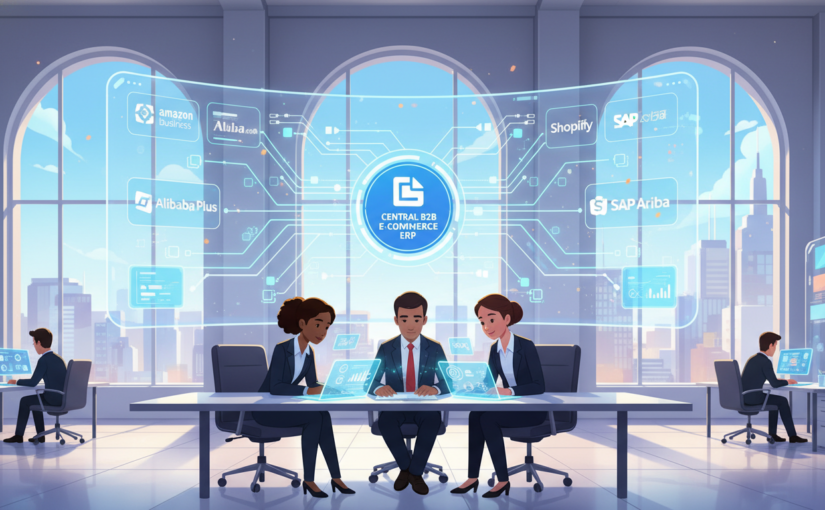
Modern B2B companies face a big challenge as they grow online. They often deal with scattered data that slows them down. We think that streamlining your backend infrastructure is key to staying ahead in today’s fast world.
Using a Multi-channel e-commerce ERP can unite your different systems into one strong center. This change helps you grow and make smart choices with your data. Our guide aims to help US businesses improve their work flow and grow steadily with one central control.
Key Takeaways
- Eliminate operational silos to improve overall business efficiency.
- Leverage a unified system to support long-term scalability.
- Gain real-time visibility into inventory and customer data.
- Reduce manual errors by automating core backend processes.
- Strengthen your competitive position in the digital marketplace.
Understanding Multi-Channel E-Commerce ERP Solutions
Managing sales across many platforms can be tough without the right tools. B2B firms growing online face a big problem: manual data entry. A multi-channel e-commerce ERP helps by uniting and automating processes.
What is Multi-Channel E-Commerce?
Selling products on different digital stores at once is multi-channel e-commerce. This includes your own site, mobile apps, and places like Amazon Business. It helps you reach more people and sell more.
But, managing each channel separately can lead to data problems. If inventory or prices aren’t in sync, you might sell too much or give wrong info. Consistency is the key to a strong brand image everywhere.
Importance of ERP in E-Commerce
An ERP is like the brain of your business. It links your sales with accounting, inventory, and logistics. Without a multi-channel e-commerce ERP, your team wastes time on spreadsheets instead of growing.
This integration makes sure every order goes smoothly into your system. It keeps data up-to-date in real-time. This is crucial for B2B firms wanting to grow.
Key Features of E-Commerce ERP Systems
To pick the right software, know what makes it work well. A top multi-channel e-commerce ERP has key features:
- Automated Inventory Sync: Keeps stock levels right across all channels to avoid overselling.
- Centralized Order Management: Combines orders from all platforms into one place for easier handling.
- Real-Time Data Analytics: Gives insights into sales and customer behavior.
- Unified Financial Reporting: Makes accounting easier by combining all revenue data in one place.
Benefits of a Unified ERP for B2B Operations
Switching to a unified system changes how we work every day. It combines different tasks into one place, making things faster. This lets teams focus on big plans, not just typing numbers.
Streamlining Inventory Management
Keeping a unified inventory is key for companies with many online stores. When we keep stock levels up to date, we avoid selling out. This makes our supply chain quick and ready for what customers want.
Having one place for all warehouse info is a big plus. It cuts down on mistakes and keeps everyone on the same page. This builds trust with our partners and customers.
Improving Data Accuracy and Accessibility
Data silos slow down a big B2B wholesale platform. When data is stuck in separate places, making decisions is hard. A unified ERP fixes this, giving users quick access to important info.
Our sales team gets a lot from seeing order history and what’s in stock. This lets them answer customer questions fast and right. With accurate data, we can predict trends and plan better.
Enhancing Customer Relationship Management
Putting customer info into our ERP makes our service more personal. We can see what customers like and plan our outreach better. This builds strong relationships and brings in more business.
| Feature | Manual Systems | Unified ERP |
|---|---|---|
| Data Entry | High Error Rate | Automated Accuracy |
| Inventory View | Fragmented | Real-time Sync |
| Response Time | Slow/Delayed | Instant Access |
| Scalability | Limited | High |
Choosing a centralized system is a smart move for our future. With a strong B2B wholesale platform, we stay quick and competitive. We keep focusing on unified inventory to lead in the market.
Key Components of Multi-Channel E-Commerce ERP
A strong digital setup needs key parts that link sales channels with back-office work. With a solid multi-channel e-commerce ERP, we make sure our tech supports complex B2B tasks well. These systems are like the brain of our daily business.

Integration with E-Commerce Platforms
Being connected smoothly is key in today’s quick market. Our systems focus on Amazon vendor central integration to keep product info, stock levels, and order updates in sync. This avoids selling too much and keeps our B2B partners happy with reliable service.
Financial Management Features
Our financial modules are crucial for keeping our finances healthy. They automate reconciliations, cutting down on human error in accounting. This lets our finance team work on growth strategies, not just data entry.
Supply Chain Management Capabilities
Our advanced supply chain tools help us track goods from start to finish clearly. We use them to watch stock moves in different warehouses and on the way. Real-time visibility is key for better logistics and meeting delivery times. A full multi-channel e-commerce ERP helps us handle today’s supply chain issues well.
How ERP Enhances Customer Experience
An ERP system works behind the scenes to boost customer happiness. It aligns our internal work with what our customers need. This makes their journey smooth and builds loyalty.
By being open about how we work, we add value to our relationship with customers. This transparency makes every interaction better.
Personalized Customer Interactions
Today’s B2B buyers want fast and accurate service. Our unified inventory data gives them real-time updates on stock and delivery times. This builds trust since they know exactly what they can expect.
Our systems talk to each other well, so we can tailor our messages to each customer. Personalization is now standard, not just an extra. This way, we meet our clients’ needs before they even ask.
Faster Order Processing
Our warehouse runs smoothly thanks to ERP. It automates order fulfillment, cutting down the time from order to delivery. This means our customers get what they need quickly.
In a fast-paced market, being quick is key. Our automated systems cut down on mistakes and improve accuracy. Reliable delivery schedules set us apart from the competition.
Improved Support and Service
Our support team can solve problems fast with ERP. They don’t have to search through different systems. They can see everything about a customer’s account in seconds.
This seamless access lets us offer quick, informed, and professional help. It makes every interaction better.
| Metric | Manual Process | ERP-Driven Process |
|---|---|---|
| Order Accuracy | 85% | 99% |
| Processing Time | 48-72 Hours | Under 4 Hours |
| Inventory Visibility | Delayed/Static | Real-Time |
| Customer Retention | Moderate | High |
These improvements lead to happier customers and a stronger brand. By using the right technology, we turn our operations into a key asset. We focus on making our customers happy to drive our growth.
Best Practices for Implementing Multi-Channel ERP
We think the key to a successful digital change is careful planning and looking ahead. Starting a new system is big and needs clear goals and a focus on growing. A step-by-step plan helps avoid problems and makes sure we get the most from our investment.
Conducting a Needs Assessment
Before picking software, we need to check our current ways of working. We look for trouble spots in our supply chain and see what tasks can be automated. Defining clear business goals early helps make sure the software fits our needs.
Choosing the Right ERP Provider
Choosing a vendor is not just about what the software can do. It’s about finding a partner that can grow with us. We look for providers with great support and easy connections for complex systems. For example, a good Amazon vendor central integration is key for smooth B2B operations and keeping data the same everywhere.
We also check if the provider can handle lots of transactions without slowing down. Reliability and flexibility are key for a system that can grow with our business. A partner with a good track record in our field gives us the confidence for a smooth change.
Training Your Team Effectively
Even the best software won’t work if people don’t know how to use it. We see training as a critical part of our digital change, not an extra step. Good training makes sure everyone is comfortable with the new system.
Keeping support and guides going is also important for lasting success. By always learning, we help our team use the ERP system to its fullest. This approach boosts productivity and improves our business results.
Case Studies: Successful ERP Integration
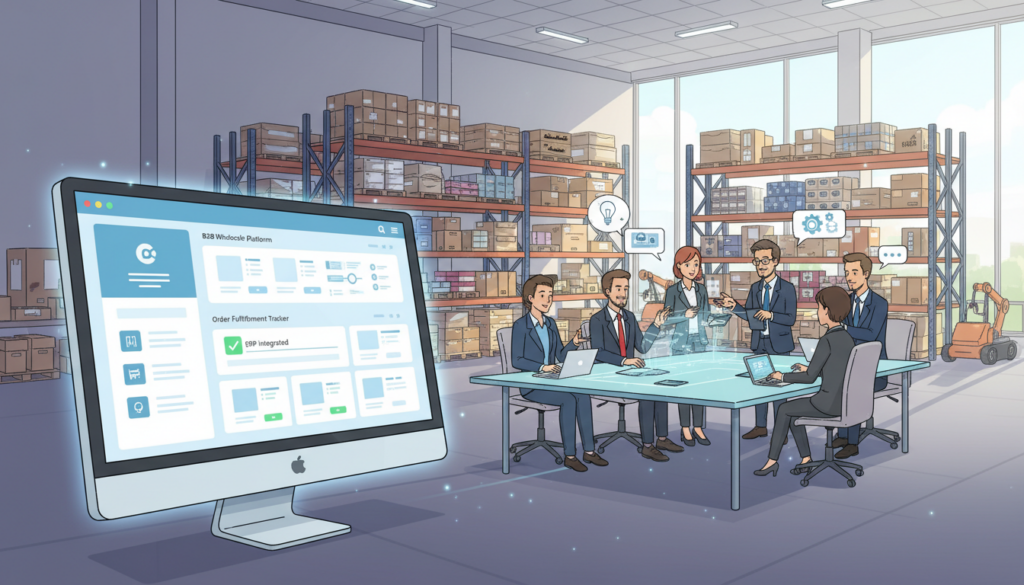
Looking at real-life examples shows how updating your backend can change things. These stories help us see how new software can boost how things work. They offer practical advice for improving your company’s inner workings.
Example of a Leading Retailer
A big national store had trouble with data spread across different places. They fixed this by using one system for all. This made their stock levels match up in real-time.
This change let them grow a lot without adding more people. It shows how the right tech can help a business grow.
Insights from B2B Wholesalers
A B2B wholesale platform wanted to cut down on paperwork. They made their work flow better, making big deals easier. This shows how the right setup can make things simpler.
They focused on making orders go faster. They cut their time to process orders by almost half in a year. This let them spend more time with important clients.
Lessons Learned from Implementation Failures
Not every change works out, but we can learn from mistakes. Many times, the problem is not training the team well. Without good training, even the best software won’t work well.
Common mistakes include:
- Not cleaning up data before starting.
- Not setting clear goals for order fulfillment.
- Thinking it will take less time than it does.
It’s key to avoid these mistakes to get the most from your investment. With clear plans and realistic goals, your B2B wholesale platform can avoid common problems. This keeps your business quick and competitive.
Challenges in Multi-Channel E-Commerce ERP Adoption
Implementing a multi-channel e-commerce ERP is a big change for any organization. It brings many benefits, but the journey is full of challenges. Knowing these obstacles is key to a smooth transition.
Data Migration Issues
Moving old data to the new system is a big task. Often, data from the past is scattered or not the same everywhere. Keeping data accurate is crucial to avoid problems during the switch.
We advise checking your current databases carefully before starting the move. Having clean, uniform data helps your new multi-channel e-commerce ERP work right from the start. This step saves time and avoids mistakes in stock and money tracking.
Resistance to Change from Staff
Getting people to use new technology is just as important as the tech itself. Employees might feel lost or worried that new tools will take their jobs. Talking things through clearly is the best way to handle this.
We recommend letting important team members help pick and test the new system. When they see how it makes their work easier, they’re more likely to accept it. Offering detailed training helps them adjust to the new ways of working.
Continuous Software Updates and Maintenance
Once the system is up and running, the work doesn’t stop. A multi-channel e-commerce ERP needs regular care to stay safe and efficient. We must keep it updated to fight off threats and use new tools.
Regular upkeep keeps your business ahead of technical issues. By focusing on keeping an eye on the system, we can spot problems before they affect customers. Keeping up with software updates is essential to stay competitive.
Future Trends in Multi-Channel E-Commerce ERP
We’re entering a new era where digital tools are key to success in wholesale and retail. As businesses grow, they need better tools to handle more complexity and data. The next Multi-channel e-commerce ERP systems will focus on being agile, smart, and connected across all digital channels.
Impact of Artificial Intelligence
Artificial intelligence is becoming common in enterprise software. It brings predictive analytics for better demand forecasting. These systems use past sales data to help teams manage stock levels better.
AI is also changing customer service. Automated bots and smart systems handle simple questions, freeing up staff for deeper interactions. Adding these smart features to a Multi-channel e-commerce ERP keeps your business ahead in a data-rich market.
Shift Towards Cloud-Based Solutions
The move to cloud-based solutions is clear. This shift cuts costs and boosts scalability for growing companies. Cloud-based Multi-channel e-commerce ERP gives real-time access to important data without the need for expensive servers.
Cloud-based systems also make updates and maintenance easier. They allow for quick deployment of new features, keeping your operations up-to-date with security standards. This flexibility is crucial for a consistent brand experience across different sales channels.
Importance of Mobile Compatibility
In today’s fast world, mobile compatibility is essential, not just a nice-to-have. Teams need to manage operations from anywhere, checking inventory, approving orders, and reviewing reports. A good Multi-channel e-commerce ERP must work well on tablets and smartphones.
Mobile access empowers teams to make quicker decisions and work more efficiently. When staff can use the system anywhere, the whole organization responds faster. A mobile-first design will set successful businesses apart in the future.
Conclusion: The Path Forward for B2B E-Commerce
Modern commerce needs to be quick and precise to keep up with changes. Businesses aiming for long-term success must focus on digital infrastructure. This helps them stay competitive in a crowded market.
Embracing Technology for Business Growth
Using a strong B2B wholesale platform is key to growing your business. Moving to integrated systems lets teams focus on strategy, not just data entry. This change turns challenges into advantages for your company.
Key Takeaways for E-Commerce Success
Success comes from always improving and planning carefully. Leaders should see their B2B wholesale platform as a dynamic asset that grows with customer needs. Keeping up with software trends helps your business stay strong against market changes.
Final Thoughts on ERP Integration
ERP integration is crucial for any company looking to grow sustainably. It centralizes your digital world, making it easy for partners and staff. Begin your digital transformation journey today to secure your spot in the future of global trade.