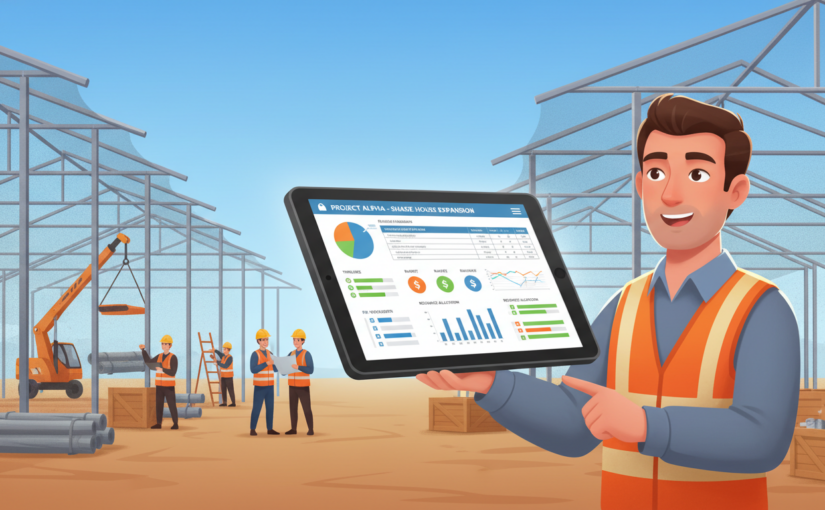
Modern agriculture needs precision and efficiency. Building large-scale shade houses is complex. It involves managing materials, labor, and timelines with great accuracy.
We use a specialized Nursery construction ERP to make these tasks easier. This advanced technology helps us meet the high standards of commercial growers in the United States.
With digital tools, we have full visibility into our work. This approach helps us reduce waste and increase productivity at all our sites.
Our team depends on these systems for quality control. From design to completion, we use data to succeed in today’s market.
Key Takeaways
- Integrated software improves project oversight and resource management.
- Digital solutions help meet the rigorous demands of modern growers.
- Real-time data tracking reduces waste and optimizes labor costs.
- Advanced systems ensure consistency across multiple project sites.
- Technology adoption is essential for scaling agricultural infrastructure projects.
Introduction to Nursery Construction ERP
Building a modern commercial shade house is complex. It needs special software to manage it well. Standard tools can’t handle the big challenges of large agricultural projects. We use advanced systems to link design, buying, and building together.
What is Nursery Construction ERP?
A Nursery construction ERP is a special software for managing agricultural building projects. It’s different from regular project management tools. It combines financial info, buying materials, and scheduling workers into one system.
This software is like a single source of truth. It makes sure everyone involved sees the same information in real-time.
“Digital transformation in construction is not just about adopting new tools; it is about creating a unified environment where data drives every critical decision.”
Benefits of Using ERP in Nursery Construction
Using a Nursery construction ERP brings big benefits for complex projects. It makes data more accurate by cutting down on mistakes and improving communication. Teams work better when they can see costs and timelines easily.
The table below shows how ERP systems differ from regular tools for the agricultural sector:
| Feature | Generic Tools | Nursery Construction ERP |
|---|---|---|
| Data Integration | Fragmented | Centralized |
| Financial Tracking | Manual/Basic | Automated/Real-time |
| Resource Planning | Limited | Advanced/Predictive |
| Regulatory Compliance | Not Supported | Built-in Tracking |
Using a Nursery construction ERP helps us control budgets and timelines better. It keeps information in one place, reducing the chance of delays. This ensures our shade house projects are of high quality and safe.
Key Features of ERP for Shade House Projects
Building a commercial shade house is a tightrope walk between budget and time. To pull it off, firms need shade house construction software made for the agricultural world. This software gives the clear view needed to keep big projects on schedule.
Project Management Tools
Managing many teams on one site is a big job. Our software lets project managers watch how subcontractors do and make sure they follow safety rules. It keeps everyone talking the same language and working towards the same goal.
It also gives updates on how the site is doing. Transparency is key to keeping quality high. When everyone sees the same info, making decisions gets quicker and more right.
Financial Management Components
Going over budget is a big problem in big projects. Our financial tools help teams keep an eye on spending as it happens. They track what’s bought and how much time is spent, making sure the project stays financially viable.
Our software can spot potential cost problems early. This is a big part of what makes our shade house construction software strong. It means every dollar is used wisely during the project.
Resource Allocation and Scheduling
Good scheduling is the core of any construction success. Our ERP solutions help managers plan out when things need to happen. This makes sure materials and people are there when they’re needed, avoiding delays.
Also, clear scheduling helps avoid mess on the site. By matching up when workers are there with when materials arrive, we make the whole process smoother. This means our shade house projects are done on time and as planned.
Selecting the Right ERP Software
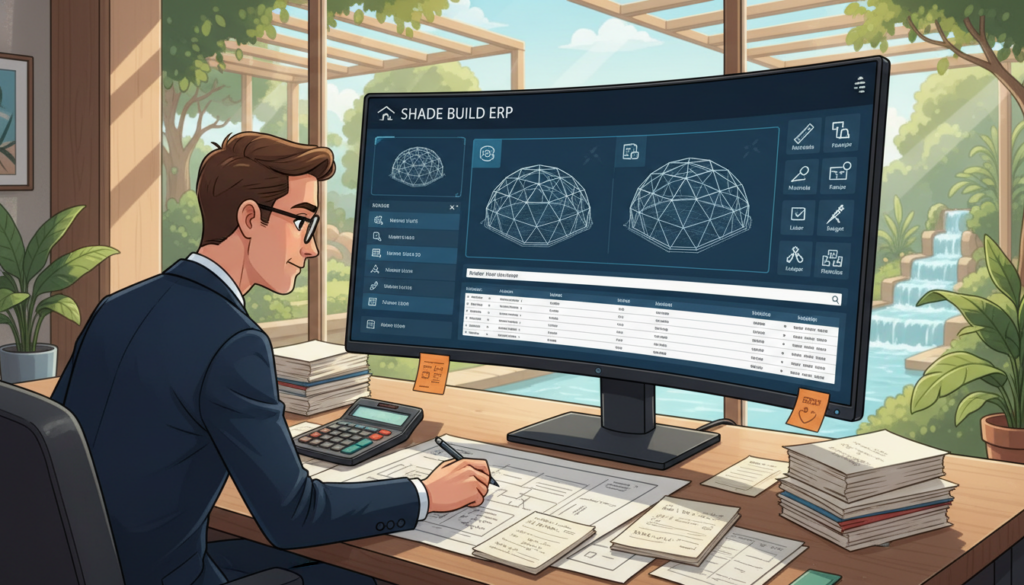
Finding the right digital tool is key to a successful project. Looking for the best shade house construction software needs a clear plan and goals. This ensures your investment is worth it in the long run.
Factors to Consider When Choosing ERP
First, think about operational scalability. Your software should grow with your business. It should handle small and big projects smoothly.
Technical needs are also important. Look for features that meet your specific needs, like tracking materials and managing climate. A good shade house construction software should have:
- Real-time budget tracking for changing costs.
- Integrated scheduling for complex projects.
- Cloud-based access for everyone.
“Technology is best when it brings people together and simplifies the complex nature of modern construction.”
Top ERP Solutions for Nursery Construction
Many platforms lead the market with tailored modules for agriculture. Choosing a dedicated shade house construction software can be more beneficial in the long run.
Look at different solutions based on your needs:
| Solution Type | Primary Benefit | Best For |
|---|---|---|
| Enterprise Suites | Full Integration | Large-scale firms |
| Cloud-Native Platforms | Remote Accessibility | Multi-site operations |
| Specialized Ag-Tech | Niche Compliance | Custom nursery builds |
The best software fits your team’s workflow. By using data-driven decision-making, your team stays productive and profitable at every stage.
Integration with Existing Systems
Building shade houses means we need data to flow smoothly between systems. When your agricultural infrastructure ERP connects with other software, it creates a single digital space. This space lets everyone work with the same, up-to-date information.
Importance of Seamless Integration
Seamless integration is key to avoiding data silos in big projects. When systems don’t talk to each other, teams face costly mistakes and extra work. By linking them, we keep financial, material, and design info in sync from start to finish.
“The true power of technology lies not in the individual tools we use, but in how effectively those tools communicate to drive collective progress.”
A good agricultural infrastructure ERP streamlines work, saving time and reducing mistakes. If design changes happen, the system updates what needs to be bought, avoiding wrong materials. This coordination is crucial for keeping projects on time and within budget.
Common Challenges in Integration
Teams often struggle to link new systems with old software. Older systems might not have the right APIs for new agricultural infrastructure ERP connections. We need to check our current setup to find any issues before we start.
Another big challenge is moving data from old spreadsheets to a new system. This needs careful planning and checking to keep data safe and avoid disrupting work. We suggest doing this in steps to keep everything running smoothly.
Streamlining Project Collaboration
The key to successful nursery projects is clear communication. When teams don’t talk, mistakes pile up and deadlines get missed. We keep everyone on the same page by centralizing our work.
Enhancing Communication Among Teams
Good communication is crucial on any construction site. A strong project management ERP lets our teams share updates instantly. This cuts down on phone calls and paper work.
Clear data flow stops misunderstandings that can cost a lot. When everyone sees the same info, we make decisions quicker and better. Digital tools help our shade house projects stay on track.
“Great things in business are never done by one person; they’re done by a team of people.”
Utilizing Cloud Technology for Collaboration
Cloud tech has changed how we manage contractor management on site. We keep blueprints and reports online, so everyone has the latest info. This keeps our standards high during construction.
Our teams get many benefits from cloud systems:
- Instant access to the latest plans and updates.
- Easier contractor management with one place for tasks.
- Less chance of mistakes from old project info.
- Better accountability with all ERP modules.
Using these digital tools helps us avoid mistakes. We can make quick decisions, keeping our projects on time and budget.
Compliance and Regulatory Considerations
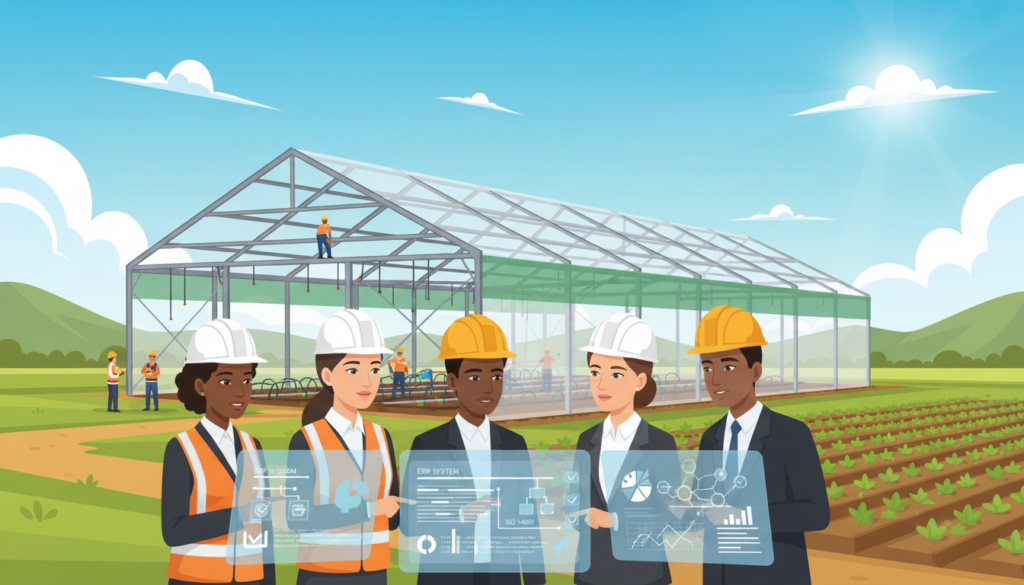
Building commercial nursery structures is complex. It’s not just about the materials; it’s about following safety and environmental rules. An agricultural infrastructure ERP helps firms stay ahead of legal issues.
Understanding Industry Regulations
Shade house projects face many rules. These cover things like building strength, fire safety, and water management. Keeping up with these rules is key to avoid delays or fines.
Not following these rules can cost a lot. We make sure to check these rules every day. This keeps our reputation safe and our projects running smoothly.
How ERP Helps in Compliance Management
Today’s software helps track rules in real-time. An agricultural infrastructure ERP keeps everyone updated on safety and permits. This makes it easier to pass audits.
Our system sends alerts for permits and inspections. This proactive approach helps avoid mistakes. Here’s how it beats old ways of tracking:
| Feature | Manual Tracking | ERP-Based Tracking |
|---|---|---|
| Audit Readiness | Low (Fragmented files) | High (Centralized logs) |
| Alerts | Reactive (Manual reminders) | Proactive (Automated) |
| Data Accuracy | Prone to human error | High (Real-time updates) |
| Regulatory Updates | Slow to implement | Instant synchronization |
Using an agricultural infrastructure ERP makes following rules easier. It helps us build strong, safe shade houses.
Data Analytics and Reporting
The best nursery projects start with clear, useful data. A strong project management ERP gives us the view we need. It helps us manage complex shade house projects from the beginning to the end.
Importance of Data Insights in Decision-Making
Using data to make decisions is key in construction. A project management ERP turns simple data into useful insights. These insights guide our daily work.
With these insights, we spot problems early. We look at past data to make smart choices. This helps us cut waste and work more efficiently.
Key Performance Indicators for Shade House Projects
We track important metrics to keep our projects top-notch. These metrics help our teams stay on track with goals and budgets.
Here are the Key Performance Indicators we focus on:
- Budget Variance: We compare what we spend to the original plan.
- Schedule Adherence: We track when milestones are met to avoid delays.
- Resource Utilization: We see how well we use labor and materials.
- Safety Incident Rate: We keep an eye on site safety for everyone’s well-being.
The table below shows how we group these metrics to control our work:
| Metric Category | Primary Goal | Frequency of Review |
|---|---|---|
| Financial | Cost Control | Weekly |
| Operational | Efficiency | Daily |
| Compliance | Risk Mitigation | Monthly |
By regularly checking these numbers in our project management ERP, we get better at what we do. This cycle of checking and improving helps our nursery projects grow and succeed.
Training and Support for ERP Users
The real value of digital change is in how well your team uses new tools. Software sets the stage for efficiency, but your team brings it to life. We focus on making sure everyone is confident with our greenhouse building IT solutions.
Ensuring Successful Implementation
Getting started with a clear plan is key. We break down big modules into smaller learning chunks. This way, your team won’t feel overwhelmed. Consistency is key when introducing new digital workflows to your construction teams.
To get your team up to speed, consider these tips:
- Role-based training: Make sessions fit what each team member does every day.
- Hands-on workshops: Use practice areas where employees can try things out without affecting real projects.
- Certification milestones: Give rewards for completing training to keep everyone engaged.
Ongoing Support and Resources
Even after the initial setup, your team will have questions. Having reliable tech support is crucial for keeping your greenhouse building IT useful. Set up a help desk or a go-to person for quick answers.
It’s also good to have a collection of digital resources. Things like video tutorials, updated manuals, and frequently asked questions help staff solve small problems on their own. By keeping up with learning, your greenhouse building IT stays a valuable tool for your business.
Conclusion: The Future of Nursery Construction with ERP
The world of commercial shade house building is changing. It’s moving towards a more precise and data-driven approach. Companies are leaving behind old ways of tracking to use new, all-in-one platforms.
Having a strong nursery construction ERP is key to this change.
Emerging Industry Shifts
Automation and real-time data are the future for agricultural builders. Companies are looking for software that can predict needs and track work accurately. This change helps ensure quality and cuts down on waste.
Strategic Adoption for Market Leadership
To stay ahead in the US agricultural market, digital transformation is crucial. Old spreadsheets hold back growth and can lead to expensive mistakes. A specialized nursery construction ERP brings clarity to manage complex projects.
Our experience shows that using these tools gives a big edge in delivering projects and making clients happy. We suggest checking your current methods and seeing how new software can improve your work. Adopting these technologies is essential for leading the industry.