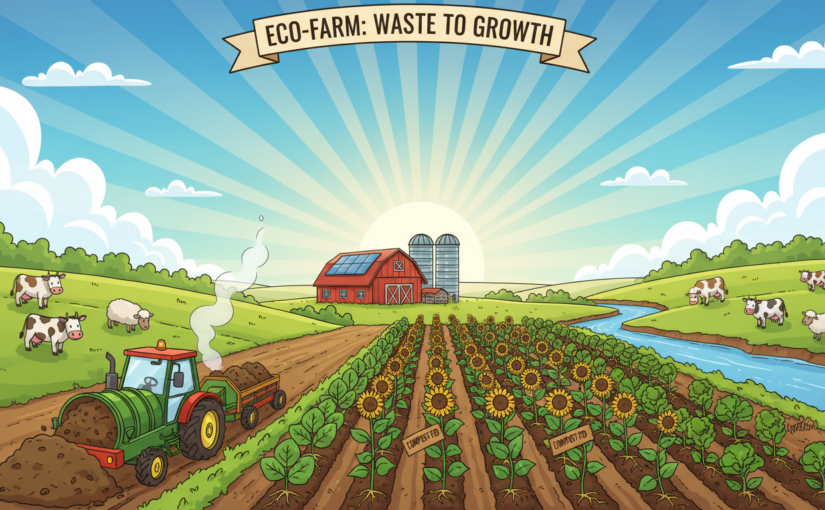
Modern farming needs to be precise and efficient. Technology is key in turning waste into valuable resources. With sustainable farming IT, farmers can manage waste better.
Our method uses integrated farming software to simplify complex tasks. A strong livestock ERP lets you track nutrients easily. This is crucial for growing your farm.
Managing waste well is now a strategic benefit, not just a rule. With organic fertilizer tracking, you can make money from waste. An Organic farming ERP keeps your data right and useful at every step.
Key Takeaways
- Technology bridges the gap between agricultural waste and valuable organic resources.
- Digital systems provide the oversight necessary for sustainable production cycles.
- Tracking nutrient conversion helps turn farm byproducts into high-value assets.
- Modern software solutions streamline complex waste management workflows.
- Data-driven decisions improve the overall profitability of your operation.
What is Organic Farming ERP?
An Organic farming ERP is like the brain of today’s farms. It brings together all the farm’s data into one place. This makes managing daily tasks easier and more efficient.
This system is the backbone of our farm. It tracks and optimizes every action for better results. It connects manual work with smart decisions.
Definition and Overview
This software is made just for organic farms. It keeps track of soil, crops, and animals in one place. It’s all about making organic farming easier.
We use it to keep everything transparent. It helps us follow organic rules from start to finish. This way, we ensure our farm is always up to standard.
Benefits of Organic Farming ERP
Using an Organic farming ERP gives us a clear view of our farm. We can see where resources are going in real-time. This helps us avoid waste and use what we have wisely.
It also makes keeping records easier. This lets our team focus on growing better crops and making our farm more sustainable.
Key Features to Consider
When choosing an Organic farming ERP, we look for easy-to-use systems. It’s important that our team can use it well, especially during busy times.
We also want systems that can analyze data well. This helps us predict trends and find problems before they happen. Here’s what we think are the most important features:
| Feature Category | Primary Function | Operational Impact |
|---|---|---|
| Resource Tracking | Monitor water and fertilizer usage | Reduces input costs |
| Compliance Module | Automate certification logs | Ensures audit readiness |
| Predictive Analytics | Analyze historical yield data | Optimizes future planning |
The right technology helps us make smart choices for our farm. It keeps our land healthy and our business strong. Investing in good tools now means a better future for our farm.
The Importance of Livestock Waste Management
Effective agricultural waste management turns potential problems into valuable resources. We see manure and bedding as key parts of a sustainable farm. This change needs careful tracking and smart decisions to get the most from these resources.
Understanding Livestock Waste
Livestock waste includes manure, urine, and old bedding. Managing it well is a big challenge. We use a livestock ERP to keep track of waste and how it changes. This helps us make plans that really work.
“The true measure of a sustainable farm is not just what it produces, but how it manages the byproducts of its production cycle.”
Environmental Impact
Bad waste management harms the environment, like polluting water and releasing methane. We focus on mitigation strategies to protect our ecosystems and keep soil healthy. Our strict monitoring cuts down on pollution and greenhouse gases.
Economic Benefits
Seeing waste as a resource boosts our farm’s finances. Turning waste into organic fertilizer saves money on synthetic fertilizers. The table below shows how smart waste management can save money.
| Metric | Traditional Disposal | ERP-Managed Recovery |
|---|---|---|
| Fertilizer Costs | High (Purchased) | Low (Self-Produced) |
| Waste Handling | Labor Intensive | Automated/Optimized |
| Nutrient Value | Lost/Wasted | Captured/Applied |
| Compliance Risk | High | Minimal |
With a livestock ERP, we can make the most of our data. This tech helps us turn daily data into long-term profits. It shows that caring for the land is key to a successful farm.
Components of an Integrated Farming ERP System
Building a successful farm needs a strong digital base. Integrated farming software helps bring together different tasks into one system. This boosts productivity and supports sustainable farming.
Modules to Include
A good system must tackle today’s farming challenges. We focus on modules for managing inventory, tracking livestock, and mapping fields. This ensures we don’t miss anything important.
These tools help us manage resources better and cut down on waste. Having all these functions in one place keeps our team focused on our goals.
| Module Name | Primary Function | Key Benefit |
|---|---|---|
| Inventory Control | Tracks feed and supplies | Prevents overstocking |
| Field Mapping | Visualizes crop health | Optimizes land use |
| Waste Management | Monitors fertilizer output | Ensures compliance |
User-Friendly Interfaces
Even the best integrated farming software is useless if it’s hard to use. So, we make sure our tools are easy for everyone to use. This means our field workers can start using them right away.
Our simple dashboards let our team enter data fast while they’re out in the field. This keeps our records current and accurate, without slowing down our work.
“The true power of technology lies in its ability to simplify complex tasks, allowing farmers to focus on what they do best: growing.”
Data Analytics Capabilities
Our advanced data tools help us make smart choices based on farm data. By looking at soil health and livestock numbers, we can tweak our plans to boost yields.
This data-driven way turns numbers into useful advice. Our integrated farming software is like a partner, helping us handle the challenges of organic farming confidently.
Regulatory Compliance in Organic Farming
We know that following strict rules is key to a successful organic farm. It can be tough to keep up with all the rules, but it’s crucial for selling our products. We use digital tools to make sure our farm meets all the legal standards.
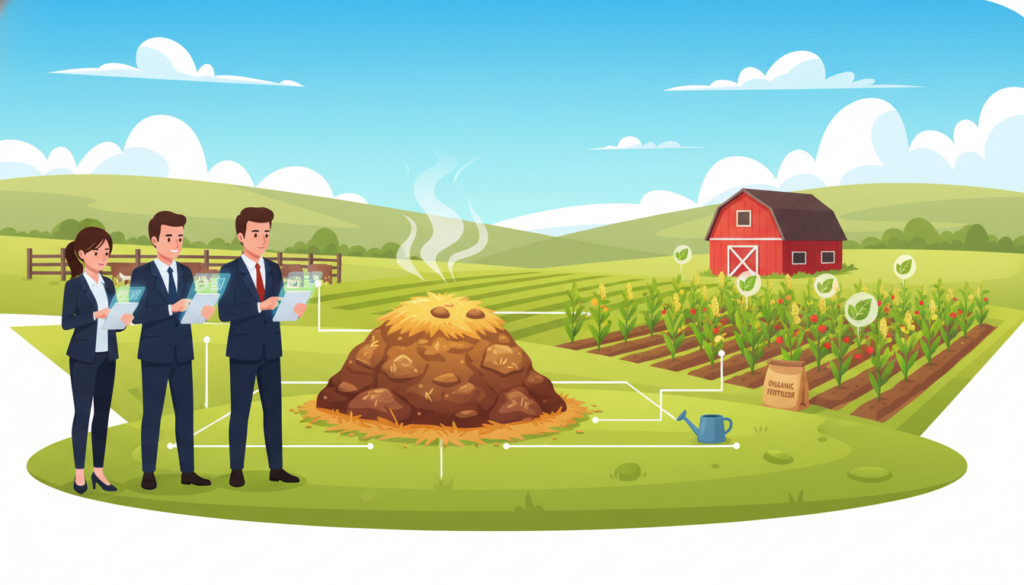
Certifications Needed
To be a certified organic farm in the U.S., we must follow certain rules. These rules help us keep our soil and animals healthy without using harmful chemicals. We focus on getting these important certifications:
- USDA Organic Certification: The top choice for organic farming in the U.S.
- OMRI Listed Inputs: Making sure our fertilizers and soil amendments are okay for organic farming.
- Non-GMO Project Verification: Checking that our food and crops are GMO-free.
Compliance Tracking Features
Keeping accurate records is the hardest part of following the rules. Our systems help us track organic fertilizer tracking precisely. This way, we avoid mistakes and stick to our organic plan.
These tools help us record every batch of compost or manure. By using organic fertilizer tracking technology, we avoid mistakes during planting. This makes us feel confident during audits.
Reporting Tools
When auditors come, we need to show proof of our farming methods. Our reporting tools make this easy by creating detailed reports quickly. We can make these reports in seconds, showing we follow the rules.
These tools turn our data into professional reports that meet all standards. By making our organic fertilizer tracking easier, we save time. This lets us focus on growing healthy, sustainable food for our community.
How to Choose the Right Organic Farming ERP
Finding the right digital tools for farming means knowing what you need. We must check if a Organic farming ERP fits our daily tasks and future goals. Making the right choice helps us work better and follow rules more easily.
Assessing Your Farming Needs
Before picking a platform, we need to look at our current setup. We should think about our herd size, crop types, and waste management. Knowing these details helps us find the right software for our needs.
It’s also important to think about growth. The Organic farming ERP should grow with us. It should handle our expansion without needing a big change.
Key Features to Look For
A good system does more than just keep records. We look for tools that connect our livestock and fertilizer work smoothly. Real-time analytics help us keep an eye on soil health and follow environmental rules.
Here’s what we check when looking at software for our farm:
| Evaluation Criteria | High Priority | Medium Priority | Low Priority |
|---|---|---|---|
| Data Integration | Full Sync | Partial Sync | Manual Entry |
| Compliance Tools | Automated | Semi-Automated | Manual |
| Technical Support | 24/7 Access | Business Hours | Email Only |
Vendor Reputation and Support
Choosing a vendor is as crucial as picking the software. We seek partners with a strong track record in farming and a promise of long-term support. A good partner keeps our Organic farming ERP up to date with new rules.
“The success of any digital transformation in agriculture depends on the strength of the partnership between the farmer and the technology provider.”
We check if the vendor offers training and support. Having expert help ensures our team uses the system well. This makes our investment in farming sustainable.
Implementing an Organic Farming ERP System
We take a careful approach to introduce a new Organic farming ERP system. This is a big step that needs a solid plan. We make sure each step helps us reach our sustainability goals.
Steps to Successful Implementation
First, we check our data to prepare for the change. Then, we match our current ways with the new system. This helps us see what needs to change.
Next, we set up the system to fit our needs. We test it thoroughly to make sure it works right. This includes checking how it handles waste and fertilizer.
Training Staff and Stakeholders
Our team needs to know how to use the new system. We hold workshops to teach them. These cover how to use the system for everyday tasks.
We also offer help and guides online. This keeps everyone informed and working together. It shows how the Organic farming ERP helps us work better.
Overcoming Common Challenges
Change can be hard for some. We show them how the system will make things easier. We listen to their concerns and make changes.
We start small to help everyone get used to it. This way, we can fix small problems before they get big. Being flexible helps us smoothly add the new tools to our work.
| Phase | Primary Focus | Expected Outcome |
|---|---|---|
| Planning | Data Audit | Clean Data Migration |
| Configuration | System Setup | Customized Workflows |
| Training | Staff Workshops | High User Adoption |
| Optimization | Performance Review | Increased Efficiency |
Case Studies: Success Stories in Organic Farming
Real-world success stories show us how farms can improve their waste-to-fertilizer workflows. By looking at the paths of early adopters, we learn how integrated systems change daily operations.
Real-World Examples
Green Valley Dairy changed how they manage manure with a livestock ERP. They now track nutrient levels automatically. This helps them turn waste into top-notch organic fertilizer that meets high standards.
Sunny Acres Organic also made a big change. They started using a comprehensive digital platform to keep an eye on their herd’s output. This allowed them to match their composting with planting, making sure nutrients are used when the soil needs them most.
Quantifiable Benefits
Using a livestock ERP brings clear benefits. Farms see better efficiency and environmental health. They also cut down on synthetic input costs by managing waste better.
| Metric | Before ERP | After ERP |
|---|---|---|
| Input Costs | High | Reduced by 25% |
| Soil Nutrient Balance | Inconsistent | Optimized |
| Waste Processing Time | Manual/Slow | Automated/Fast |
Lessons Learned
Our study shows that staff engagement is key. A livestock ERP works best when the team enters accurate data. So, training is crucial.
Another important lesson is to start small. Trying to digitize everything at once can be overwhelming. Begin with waste management to build confidence before expanding the system.
The Role of Technology in Organic Farming
The world of agricultural waste management is changing fast thanks to new tech. We now have digital tools that change how we handle organic waste on farms. These systems help us stay productive and protect the environment.
Innovative Tools and Technology
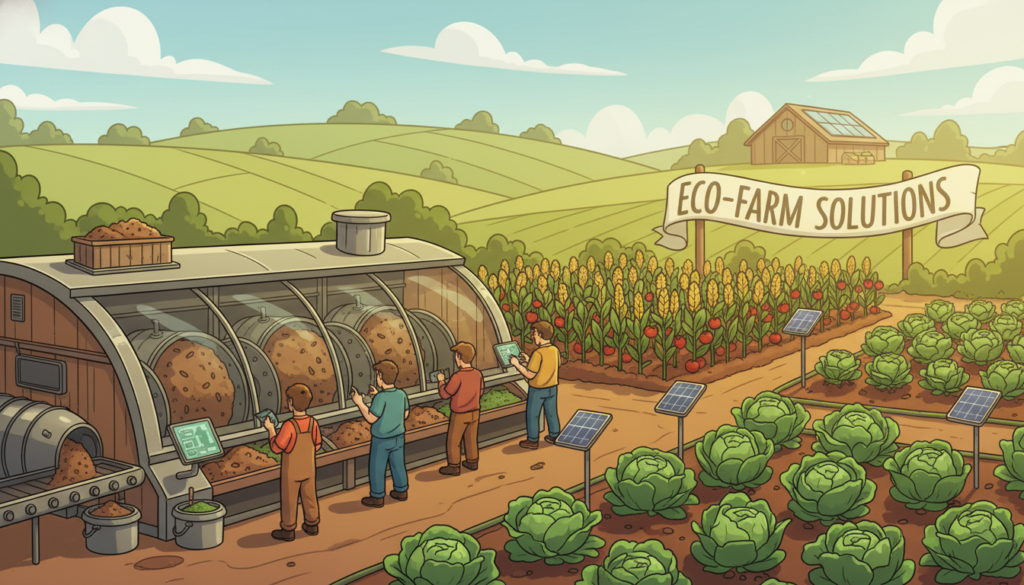
Modern farms use advanced software to track nutrient cycles in real time. This software lets us monitor organic matter decomposition with great precision. Efficiency is now a measurable goal in our daily work.
We use special software to map nutrient distribution in our fields. This ensures organic fertilizer is applied where it’s most needed. By reducing waste, we cut costs and improve soil health.
Automation in Waste Management
Automation is key in managing waste on farms. It reduces the need for manual labor, cutting down on human error in agricultural waste management. These systems work all day to turn waste into quality fertilizer fast.
Our automated composting units make nutrient-rich soil amendments automatically. This steady process ensures our fertilizer meets organic standards. We count on these machines to keep a steady supply of fertilizer all season.
IoT Applications
IoT sensors give us deep insights into our farm’s ecosystem. They track moisture, temperature, and gas emissions in our compost piles. We get alerts to adjust conditions for better organic material breakdown.
We make data-driven decisions thanks to these connected devices. They let us monitor our waste systems remotely. This helps us keep consistent quality in all our organic production.
| Feature | Traditional Method | Tech-Driven Approach |
|---|---|---|
| Monitoring | Manual Inspection | IoT Sensor Data |
| Processing | Labor Intensive | Automated Systems |
| Efficiency | Variable | High and Consistent |
| Waste Management | Reactive | Proactive |
Monitoring and Evaluating ERP Performance
Checking how well our technology works is key in farm management today. We need to make sure our integrated farming software gives us the insights we need. By looking at certain data, we can see if our digital tools are worth it.
Key Performance Indicators (KPIs)
We track important numbers to see how well we’re doing. We look at how much waste we cut down, how steady our fertilizer output is, and how many hours we save with automation. These essential indicators tell us if our software is helping us meet our goals.
We also keep an eye on how much it costs to make a ton of organic fertilizer. This lets us compare our digital methods to old ways. Keeping these KPIs up helps us manage resources well and stay profitable.
Regular Audits and Updates
Our digital tools need regular checks to keep working well. We do audits every three months to find and fix problems or outdated parts. These checks help us stay current and secure.
These audits also make sure our data is safe. By keeping our systems updated, we protect our farm data from threats. This keeps our operations running smoothly all year round.
Feedback Mechanisms
We think the best ideas come from those who use our system every day. We have a system for getting feedback from our team and managers. This collaborative process helps our software grow with our farm needs.
| Metric Category | Primary Goal | Evaluation Frequency |
|---|---|---|
| Waste Processing | Maximize Conversion | Monthly |
| System Uptime | Ensure Reliability | Weekly |
| User Efficiency | Reduce Manual Input | Quarterly |
| ROI Tracking | Verify Profitability | Annually |
Future Trends in Organic Farming ERP
The world of farming is changing fast with new digital tools. Sustainable farming IT will soon be key for all organic farms. This will help us stay profitable and protect the environment.
Emerging Technologies
Artificial intelligence and machine learning will soon change our work. They help us guess crop yields and use resources better. Blockchain technology is also important for clear supply chains.
These tools help us track everything from soil to product. This gives our customers trust in our organic products. We think sustainable farming IT will keep getting better, making data easy to manage.
Growing Market Demand
More people want organic products, so we need better ERP systems. Our software must handle big data well. Cloud-based platforms are becoming popular for working together across farms.
“The future of agriculture lies in our ability to bridge the gap between traditional wisdom and modern digital precision.”
We need systems that are both strong and flexible. Investing in sustainable farming IT helps us lead in the market. Our systems must support growth while keeping our organic values.
Sustainability Focus
We aim to farm without harming the planet by managing resources better. Future ERP systems will help us track our carbon footprint. This focus on long-term ecological health means we’ll leave the land in better shape.
The table below shows how our systems will change to meet these goals:
| Feature Category | Current Standard | Future Capability |
|---|---|---|
| Data Processing | Manual Entry | Automated IoT Sync |
| Carbon Tracking | Annual Audits | Real-time Monitoring |
| Supply Chain | Basic Traceability | Blockchain Verification |
| Resource Use | Static Planning | AI-Driven Optimization |
By following these trends, we show our commitment to the planet. We’re sure sustainable farming IT will be key for our success.
Enhancing Soil Health through Effective Waste Management
Turning livestock waste into valuable resources changes how we see farm productivity. Seeing waste as an asset, not a problem, creates a sustainable cycle. This change is key to keeping our agricultural systems in balance.
Benefits of Organic Fertilizer
Organic fertilizer gives plants the nutrients they need, unlike synthetic options. It makes soil better, holds more water, and boosts long-term fertility. This natural approach ensures our crops get the nutrients they need all season long.
“The soil is the great connector of lives, the source and destination of all.”
Using organic matter builds a strong base for future crops. Healthy soil is the heartbeat of a thriving farm. Our focus on natural enrichment shows our commitment to this.
Implementing Composting and Recycling
Good waste management needs careful tracking to keep composting efficient. We use organic fertilizer tracking to watch how our compost breaks down and what nutrients it has. This helps us apply nutrients at the right time.
Recycling farm waste cuts down on outside inputs and our environmental impact. Our organic fertilizer tracking lets us check that every application meets our high standards. This ensures our soil gets exactly what it needs to thrive.
Enhancing Biodiversity
A diverse soil microbiome shows a healthy farm. Adding organic matter gives a home to good bacteria, fungi, and worms. These creatures help break down nutrients for our crops.
More biodiversity means stronger plant immunity and better pest resistance. By supporting a lively underground world, we protect our land for the future. We’re proud to support a system that values nature’s complexity and our harvest’s yield.
Building Community Support for Organic Practices
We aim to change agriculture with the help of our local ties. We think being open is key to earning trust from our neighbors and supporters.
Our use of strong sustainable farming IT lets us share our waste and soil health data. This openness lets people see our dedication to the environment for themselves.
Seeing our organic journey as a shared effort helps our whole area. Using advanced tech in our work shows we’re accountable and care about our community.
Strong partnerships grow when we’re open about our progress and goals. Our use of sustainable farming IT makes sure everyone sees the good we’re doing with our organic fertilizers.
We welcome you to join us in making a greener future. Together, we can build a healthier environment for our farm and our community.