
In today’s market, reaching prospects is more than just a good message. We need sophisticated automation for consistent engagement without losing quality. A strong B2B email CRM helps us communicate better and makes sure our emails reach the right inbox.
Keeping a good sender reputation is key for any outreach team. Manual processes can miss important signs that lead to delivery problems. A B2B email CRM lets us watch our performance and change our approach as needed.
We aim to guide you through digital communication in the United States. By focusing on deliverability and personalization, we can turn cold outreach into a growth engine. Staying out of the spam folder is crucial for lasting success.
Key Takeaways
- Sophisticated workflows are essential for modern outreach success.
- A dedicated platform helps protect your sender reputation.
- Real-time monitoring prevents messages from landing in spam folders.
- Personalization remains the most effective way to drive engagement.
- Strategic automation saves time while improving overall campaign results.
Understanding the Importance of B2B Email CRM
A strong B2B email CRM is key for your sales team. It’s better than using spreadsheets or simple contact lists. These tools help you keep all your data in one place, making your sales pipeline more reliable and scalable.
What is B2B Email CRM?
A B2B email CRM is a platform for managing complex business relationships. It’s not just for storing names and numbers. It tracks every interaction, ensuring no lead is missed.
These systems handle the complexities of corporate buying cycles. They log every email, call, and meeting. This gives your team a complete history of each prospect, keeping context even when different people handle the same account.
Key Features of B2B Email CRMs
Today’s platforms offer more than just data entry. They have automated activity logging, saving your team time. This means they can focus on closing deals instead of updating records.
Advanced segmentation is another key feature. It lets you group leads based on behavior or firmographic data. This way, you can tailor your messages to fit different industries’ needs.
| Feature | Basic Contact List | B2B Email CRM |
|---|---|---|
| Data Storage | Static contact info | Dynamic interaction history |
| Automation | Manual updates | Automated activity tracking |
| Sales Insights | None | Predictive analytics |
| Team Collaboration | Limited | Real-time shared access |
Benefits of Using B2B Email CRM in Cold Campaigns
Using a B2B email CRM gives you a big edge. It keeps your outreach consistent, professional, and relevant. With a centralized database, your team can easily reference past interactions for better follow-ups.
These systems also help keep your sender reputation clean by managing opt-outs and bounce rates. They use data to improve your strategy, leading to better engagement. This organized data is what makes successful outreach programs stand out.
Crafting the Perfect Cold Email
We think a great email is clear and offers real value. When you email a prospect, your message needs to stand out. Use concise messaging and a clear call to action for success.
Essential Elements of a Cold Email
A good cold email respects the reader’s time. Keep it short, under 150 words, for easy reading on phones.
- A hook: A personalized opening that shows you have done your research.
- The value proposition: A clear explanation of how you solve a specific pain point.
- Social proof: A brief mention of results or clients to build credibility.
- A low-friction CTA: A simple question that is easy to answer.
Personalization Techniques that Work
True personalization is more than just using a prospect’s name. It’s about showing you care by mentioning their company or recent news. Cold outreach automation helps make this personal touch possible.
Use data to tailor your message. Look for recent LinkedIn posts or company news. This makes your email feel more human and increases your reply rate.
The Art of Writing Compelling Subject Lines
The subject line is crucial. If it doesn’t grab attention, your email won’t be read. The best subject lines are short, interesting, and relevant to the recipient’s challenges.
Avoid spammy language. Instead, use curiosity or direct benefits that fit your cold outreach automation plan. Test different subject lines to find what works best for your audience.
Building a Targeted Email List
Success in B2B outreach starts before you send your first email. The quality of your database is key to your marketing success. By focusing on precision, we lower bounce rates and reach the right people.

Importance of Audience Segmentation
Segmentation breaks down your market into smaller groups. Tailoring messages to these groups boosts engagement. Relevant content connects more with prospects who see it as made for them.
Good segmentation includes industry, company size, and job title. This avoids generic emails that often land in spam. Our targeted approach keeps messages valuable and professional.
Strategies for Finding Prospective Leads
Finding quality leads needs a proactive and systematic plan. We mix inbound and outbound strategies to keep your pipeline full. Here are some effective ways to find potential clients:
- LinkedIn Sales Navigator: Use filters to find decision-makers in your target industries.
- Industry Events: Get contact info from networking and trade shows.
- Content Gating: Give whitepapers or case studies for contact details.
- Referral Programs: Use current clients for warm introductions to new prospects.
Tools to Enhance Your Lead Generation Efforts
Modern tech is crucial for a clean and effective database. We use strong platforms to automate lead data collection and verification. Integrating your CRM with email sequence software helps track interactions and nurture leads.
Choosing the right tools is vital for growth. Look for solutions that integrate well with your current systems. Good tools save time on data entry and help build strong relationships.
Setting Up Automated Email Campaigns
Modern B2B success depends on cold outreach automation. Technology helps us send messages that are timely and relevant. This way, we can talk to more people without losing personal touch.
Our teams can focus on important talks, not just sending emails. Efficiency is key when we make our daily tasks easier. This helps us grow faster.
What is Email Automation in B2B?
Email automation in B2B means using software to send messages based on actions or time. It’s not about sending the same email to many people at once.
It’s about creating a personalized journey for each lead. When someone interacts with our content, we respond automatically. This keeps our brand in their mind without needing us to do it all the time.
“Automation is not a replacement for human connection; it is a tool to amplify our ability to connect at scale.”
Tools for Effective Email Automation
Choosing the right platform is crucial for cold outreach automation. We look for tools that work well with our CRM. This ensures our data is accurate and our workflow keeps moving.
Here’s a table showing popular platforms used by top sales teams:
| Tool Name | Primary Strength | Best For |
|---|---|---|
| HubSpot | All-in-one CRM integration | Mid-sized businesses |
| Outreach | Advanced sales sequencing | Enterprise sales teams |
| Salesloft | Multi-channel engagement | High-velocity sales |
Best Practices for Automation Workflows
Creating effective workflows needs to understand how prospects behave. We map out the customer journey before setting up sequences. This keeps our messaging clear.
Timing is key in cold outreach automation. We send follow-ups based on actions, not just time. This makes our messages more relevant.
We always add a human touch to our automated messages. This makes the recipient feel like they’re talking to a real person who gets their business.
Analyzing Cold Email Performance Metrics
Data is key for a successful B2B cold email strategy. By tracking certain metrics, we turn numbers into useful insights. These insights help us grow our revenue.
Using a strong sales engagement platform gives us a clear view of our outreach. This helps us make quick changes if a campaign doesn’t work out.
Key Metrics to Track in B2B Email Campaigns
We look beyond just numbers to check our outreach’s health. Here are the key data points we focus on:
- Bounce Rate: Shows the quality of our lead list and technical health.
- Reply Rate: Tells us if our message hits the mark with our audience.
- Conversion Rate: Tracks how many leads turn into booked meetings.
Regularly tracking these metrics helps us spot problems in our funnel. A high bounce rate means it’s time to update our data.
Understanding Open and Click-Through Rates
Open rates and click-through rates give us a peek into our audience’s interest. An open rate shows if our subject line grabs attention. The CTR tells us if our content is worth clicking.
“The goal is not to get more emails opened, but to get more meaningful conversations started.”
In B2B, a good open rate is between 30% and 50%. If yours is lower, it might mean your subject lines need more personalization or your sender reputation needs work.
How to Improve Your Email Performance Based on Data
Improving based on data is what a top sales team does. We use our sales engagement platform to test different things, like call-to-action placement or email length.
If our performance drops, we dive deep into the data to find the cause. Then, we tweak our messaging to better match our prospects’ needs.
Improvement is a cycle of testing, measuring, and tweaking. By being diligent with our analysis, we keep our outreach fresh and effective in a busy digital world.
Avoiding Spam Filters with Best Practices
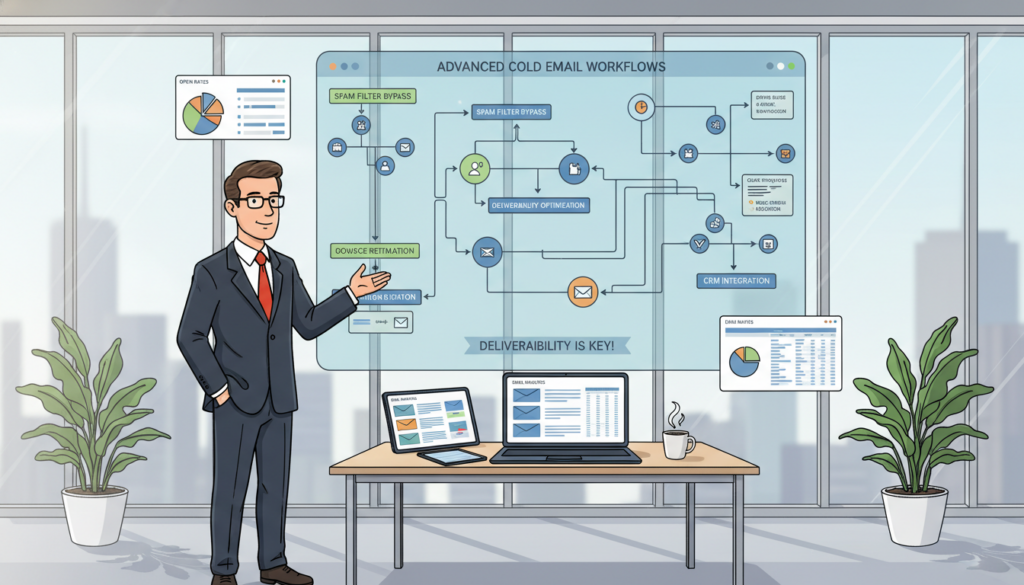
To get your emails delivered, you need to manage your sender reputation well. If your emails don’t reach the inbox, your outreach plan fails. We must know what triggers spam filters to keep our messages effective.
Common Triggers for Spam Filters
Spam filters check emails for certain things to keep users safe. Using too much promotional language, like “guaranteed” or “free,” can mark your email as spam. Also, too many links or attachments can look like a security risk.
Technical mistakes can also hurt your email delivery. Without SPF, DKIM, or DMARC, email providers might not trust your messages. These issues are why many B2B emails end up in spam.
Tips to Optimize Deliverability
To boost your CRM deliverability, focus on your email list quality. Clean your database often to avoid high bounce rates. High bounce rates are a big warning sign for email providers.
Personalizing your emails can also help. Tailor your message to each recipient’s needs. This makes your emails more engaging and shows they’re wanted.
Using a Clean Sender Reputation
Your sender reputation is like a credit score for emails. It shows how reliable you are as a sender. Keeping an eye on your domain health is key to avoiding reputation issues.
To keep a good reputation, warm up new domains before sending lots of emails. Start with a few emails and slowly increase the number. This builds trust with email providers over time.
| Spam Trigger | Best Practice | Impact Level |
|---|---|---|
| Excessive promotional words | Use professional, value-driven language | High |
| Missing authentication (SPF/DKIM) | Configure DNS records correctly | Critical |
| High bounce rates | Regularly clean your email list | High |
| Inconsistent sending volume | Implement a gradual warm-up plan | Medium |
A/B Testing for Cold Emails
Improvement is key for teams using email sequence software. By comparing different versions of your outreach, you move from guessing to data-driven strategies. This process helps us refine our messages for better engagement.
What is A/B Testing in Email Campaigns?
A/B testing sends two email versions to a small audience. We compare them to see which one does better. This method is essential for scaling B2B outreach.
Using email sequence software makes this process accurate. By changing one thing at a time, we learn what works best. This way, we avoid making assumptions about our audience.
Elements to Test in Your Cold Emails
Focus on testing key parts of your messages. Small changes can make a big difference. Here’s a table to help plan your tests:
| Element | Variation A | Variation B | Expected Impact |
|---|---|---|---|
| Subject Line | Direct/Professional | Question-based | Open Rate |
| Call-to-Action | Soft Request | Direct Meeting Link | Click-Through Rate |
| Body Copy | Short/Concise | Value-focused/Longer | Response Rate |
Interpreting A/B Test Results for Improvement
Looking at data is more than just seeing which email got more clicks. We need to make sure the results are statistically significant. This means the change we made likely caused the difference, not chance.
When you find a winning variation, use those insights right away. If a certain subject line style gets more opens, update your templates. This continuous testing keeps our outreach sharp and effective.
Integrating Email CRM with Other Tools
The best sales teams connect their B2B email CRM with their marketing tools. This connection saves time and catches important signals. It makes sure everyone works from the same information.
Benefits of CRM and Marketing Tool Integration
Linking your platforms means seamless data syncing. This cuts down on errors and lets your team focus on important tasks. Your B2B email CRM updates records in real-time, making your work smoother.
Integration also makes your sales team more responsive. You can set up automatic actions across channels quickly. This keeps leads moving smoothly from marketing to sales.
Recommended Integrations for B2B CRM
To work better, connect your main platform with tools for better communication and lead info. Some top picks are:
- Zapier: Great for linking many apps without coding.
- Slack: Sends quick alerts for important lead actions.
- LinkedIn Sales Navigator: Keeps your prospect info current.
These integrations make your B2B email CRM a central hub. It unifies your team’s workflow, making things more cohesive.
Streamlining Your Marketing Efforts
Having a clear view of the customer journey is key for B2B success. Integrating your tech stack lets you see how prospects move from first contact to sale. This helps you tailor your messages and boost your ROI.
Streamlining your operations is crucial for a growing sales team. The right integrations keep your B2B email CRM driving growth. Consistent tools mean better data, happier customers, and more wins.
Building Relationships Beyond Cold Emails
Turning a cold lead into a loyal client needs a human touch. Your first message is just the start. The real value comes from keeping in touch consistently. We think persistence must be balanced with genuine utility to keep a good brand image.
Today’s teams use a strong sales engagement platform to keep in touch. This tool helps you follow up at the right time. It keeps your messages professional without being too pushy.
Following Up Effectively After Initial Outreach
The key to good follow-ups is adding value in every message. Instead of just asking if they saw your email, share something new or useful. This makes the focus on their problems, not just your sales.
Keep your follow-up emails short and clear. Always have a clear call to action that shows respect for their time. Short messages get more thoughtful replies.
Nurturing Leads through Email Engagement
Nurturing means guiding a prospect through their buying journey. With a sales engagement platform, you can tailor messages based on their past interactions. This makes your messages more relevant to their needs.
Regular contact keeps your brand in mind when they’re ready to buy. Share relevant content like case studies or webinars. Building trust takes time, but it shortens your sales cycle.
The Importance of Relationship Building in B2B
In B2B, people trust and buy from those they know. While data and automation are key, they can’t replace the human touch. Long-term partnerships are built on respect and understanding of the client’s goals.
We focus on empathy in every conversation to build lasting connections. Treating every lead as a potential long-term partner boosts your conversion rates. The goal is to build a network of brand advocates.
Staying Compliant with Email Regulations
Legal standards guide how we contact potential clients in the United States. We must follow these rules to keep our brand image positive and ensure long-term success.
Legal Framework for Commercial Messaging
The CAN-SPAM Act outlines clear rules for communication with prospects. We make sure our messages have accurate header info and a valid address. It’s also crucial to provide a clear way for people to opt out of future emails.
Protecting Your Sender Reputation
Following the law is key to high CRM deliverability. We avoid legal trouble by quickly honoring unsubscribe requests and being clear in our subject lines. These practices help keep our domain reputation strong and our emails out of spam folders.
Commitment to Professional Standards
We see following the law as essential for our B2B strategy. By doing so, we build trust with our audience and boost our CRM deliverability. We encourage you to check your email workflows to make sure they meet these important legal standards.