Integrated Farming ERP: Managing Livestock Waste for Organic Fertilizer

Modern farming needs to be precise and efficient. Technology is key in turning waste into valuable resources. With sustainable farming IT, farmers can manage waste better.

Our method uses integrated farming software to simplify complex tasks. A strong livestock ERP lets you track nutrients easily. This is crucial for growing your farm.

Managing waste well is now a strategic benefit, not just a rule. With organic fertilizer tracking, you can make money from waste. An Organic farming ERP keeps your data right and useful at every step.

Key Takeaways

  • Technology bridges the gap between agricultural waste and valuable organic resources.
  • Digital systems provide the oversight necessary for sustainable production cycles.
  • Tracking nutrient conversion helps turn farm byproducts into high-value assets.
  • Modern software solutions streamline complex waste management workflows.
  • Data-driven decisions improve the overall profitability of your operation.

What is Organic Farming ERP?

An Organic farming ERP is like the brain of today’s farms. It brings together all the farm’s data into one place. This makes managing daily tasks easier and more efficient.

This system is the backbone of our farm. It tracks and optimizes every action for better results. It connects manual work with smart decisions.

Definition and Overview

This software is made just for organic farms. It keeps track of soil, crops, and animals in one place. It’s all about making organic farming easier.

We use it to keep everything transparent. It helps us follow organic rules from start to finish. This way, we ensure our farm is always up to standard.

Benefits of Organic Farming ERP

Using an Organic farming ERP gives us a clear view of our farm. We can see where resources are going in real-time. This helps us avoid waste and use what we have wisely.

It also makes keeping records easier. This lets our team focus on growing better crops and making our farm more sustainable.

Key Features to Consider

When choosing an Organic farming ERP, we look for easy-to-use systems. It’s important that our team can use it well, especially during busy times.

We also want systems that can analyze data well. This helps us predict trends and find problems before they happen. Here’s what we think are the most important features:

Feature Category Primary Function Operational Impact
Resource Tracking Monitor water and fertilizer usage Reduces input costs
Compliance Module Automate certification logs Ensures audit readiness
Predictive Analytics Analyze historical yield data Optimizes future planning

The right technology helps us make smart choices for our farm. It keeps our land healthy and our business strong. Investing in good tools now means a better future for our farm.

The Importance of Livestock Waste Management

Effective agricultural waste management turns potential problems into valuable resources. We see manure and bedding as key parts of a sustainable farm. This change needs careful tracking and smart decisions to get the most from these resources.

Understanding Livestock Waste

Livestock waste includes manure, urine, and old bedding. Managing it well is a big challenge. We use a livestock ERP to keep track of waste and how it changes. This helps us make plans that really work.

“The true measure of a sustainable farm is not just what it produces, but how it manages the byproducts of its production cycle.”

Environmental Impact

Bad waste management harms the environment, like polluting water and releasing methane. We focus on mitigation strategies to protect our ecosystems and keep soil healthy. Our strict monitoring cuts down on pollution and greenhouse gases.

Economic Benefits

Seeing waste as a resource boosts our farm’s finances. Turning waste into organic fertilizer saves money on synthetic fertilizers. The table below shows how smart waste management can save money.

Metric Traditional Disposal ERP-Managed Recovery
Fertilizer Costs High (Purchased) Low (Self-Produced)
Waste Handling Labor Intensive Automated/Optimized
Nutrient Value Lost/Wasted Captured/Applied
Compliance Risk High Minimal

With a livestock ERP, we can make the most of our data. This tech helps us turn daily data into long-term profits. It shows that caring for the land is key to a successful farm.

Components of an Integrated Farming ERP System

Building a successful farm needs a strong digital base. Integrated farming software helps bring together different tasks into one system. This boosts productivity and supports sustainable farming.

Modules to Include

A good system must tackle today’s farming challenges. We focus on modules for managing inventory, tracking livestock, and mapping fields. This ensures we don’t miss anything important.

These tools help us manage resources better and cut down on waste. Having all these functions in one place keeps our team focused on our goals.

Module Name Primary Function Key Benefit
Inventory Control Tracks feed and supplies Prevents overstocking
Field Mapping Visualizes crop health Optimizes land use
Waste Management Monitors fertilizer output Ensures compliance

User-Friendly Interfaces

Even the best integrated farming software is useless if it’s hard to use. So, we make sure our tools are easy for everyone to use. This means our field workers can start using them right away.

Our simple dashboards let our team enter data fast while they’re out in the field. This keeps our records current and accurate, without slowing down our work.

“The true power of technology lies in its ability to simplify complex tasks, allowing farmers to focus on what they do best: growing.”

— Agricultural Tech Insights

Data Analytics Capabilities

Our advanced data tools help us make smart choices based on farm data. By looking at soil health and livestock numbers, we can tweak our plans to boost yields.

This data-driven way turns numbers into useful advice. Our integrated farming software is like a partner, helping us handle the challenges of organic farming confidently.

Regulatory Compliance in Organic Farming

We know that following strict rules is key to a successful organic farm. It can be tough to keep up with all the rules, but it’s crucial for selling our products. We use digital tools to make sure our farm meets all the legal standards.

organic fertilizer tracking

Certifications Needed

To be a certified organic farm in the U.S., we must follow certain rules. These rules help us keep our soil and animals healthy without using harmful chemicals. We focus on getting these important certifications:

  • USDA Organic Certification: The top choice for organic farming in the U.S.
  • OMRI Listed Inputs: Making sure our fertilizers and soil amendments are okay for organic farming.
  • Non-GMO Project Verification: Checking that our food and crops are GMO-free.

Compliance Tracking Features

Keeping accurate records is the hardest part of following the rules. Our systems help us track organic fertilizer tracking precisely. This way, we avoid mistakes and stick to our organic plan.

These tools help us record every batch of compost or manure. By using organic fertilizer tracking technology, we avoid mistakes during planting. This makes us feel confident during audits.

Reporting Tools

When auditors come, we need to show proof of our farming methods. Our reporting tools make this easy by creating detailed reports quickly. We can make these reports in seconds, showing we follow the rules.

These tools turn our data into professional reports that meet all standards. By making our organic fertilizer tracking easier, we save time. This lets us focus on growing healthy, sustainable food for our community.

How to Choose the Right Organic Farming ERP

Finding the right digital tools for farming means knowing what you need. We must check if a Organic farming ERP fits our daily tasks and future goals. Making the right choice helps us work better and follow rules more easily.

Assessing Your Farming Needs

Before picking a platform, we need to look at our current setup. We should think about our herd size, crop types, and waste management. Knowing these details helps us find the right software for our needs.

It’s also important to think about growth. The Organic farming ERP should grow with us. It should handle our expansion without needing a big change.

Key Features to Look For

A good system does more than just keep records. We look for tools that connect our livestock and fertilizer work smoothly. Real-time analytics help us keep an eye on soil health and follow environmental rules.

Here’s what we check when looking at software for our farm:

Evaluation Criteria High Priority Medium Priority Low Priority
Data Integration Full Sync Partial Sync Manual Entry
Compliance Tools Automated Semi-Automated Manual
Technical Support 24/7 Access Business Hours Email Only

Vendor Reputation and Support

Choosing a vendor is as crucial as picking the software. We seek partners with a strong track record in farming and a promise of long-term support. A good partner keeps our Organic farming ERP up to date with new rules.

“The success of any digital transformation in agriculture depends on the strength of the partnership between the farmer and the technology provider.”

— Industry Expert

We check if the vendor offers training and support. Having expert help ensures our team uses the system well. This makes our investment in farming sustainable.

Implementing an Organic Farming ERP System

We take a careful approach to introduce a new Organic farming ERP system. This is a big step that needs a solid plan. We make sure each step helps us reach our sustainability goals.

Steps to Successful Implementation

First, we check our data to prepare for the change. Then, we match our current ways with the new system. This helps us see what needs to change.

Next, we set up the system to fit our needs. We test it thoroughly to make sure it works right. This includes checking how it handles waste and fertilizer.

Training Staff and Stakeholders

Our team needs to know how to use the new system. We hold workshops to teach them. These cover how to use the system for everyday tasks.

We also offer help and guides online. This keeps everyone informed and working together. It shows how the Organic farming ERP helps us work better.

Overcoming Common Challenges

Change can be hard for some. We show them how the system will make things easier. We listen to their concerns and make changes.

We start small to help everyone get used to it. This way, we can fix small problems before they get big. Being flexible helps us smoothly add the new tools to our work.

Phase Primary Focus Expected Outcome
Planning Data Audit Clean Data Migration
Configuration System Setup Customized Workflows
Training Staff Workshops High User Adoption
Optimization Performance Review Increased Efficiency

Case Studies: Success Stories in Organic Farming

Real-world success stories show us how farms can improve their waste-to-fertilizer workflows. By looking at the paths of early adopters, we learn how integrated systems change daily operations.

Real-World Examples

Green Valley Dairy changed how they manage manure with a livestock ERP. They now track nutrient levels automatically. This helps them turn waste into top-notch organic fertilizer that meets high standards.

Sunny Acres Organic also made a big change. They started using a comprehensive digital platform to keep an eye on their herd’s output. This allowed them to match their composting with planting, making sure nutrients are used when the soil needs them most.

Quantifiable Benefits

Using a livestock ERP brings clear benefits. Farms see better efficiency and environmental health. They also cut down on synthetic input costs by managing waste better.

Metric Before ERP After ERP
Input Costs High Reduced by 25%
Soil Nutrient Balance Inconsistent Optimized
Waste Processing Time Manual/Slow Automated/Fast

Lessons Learned

Our study shows that staff engagement is key. A livestock ERP works best when the team enters accurate data. So, training is crucial.

Another important lesson is to start small. Trying to digitize everything at once can be overwhelming. Begin with waste management to build confidence before expanding the system.

The Role of Technology in Organic Farming

The world of agricultural waste management is changing fast thanks to new tech. We now have digital tools that change how we handle organic waste on farms. These systems help us stay productive and protect the environment.
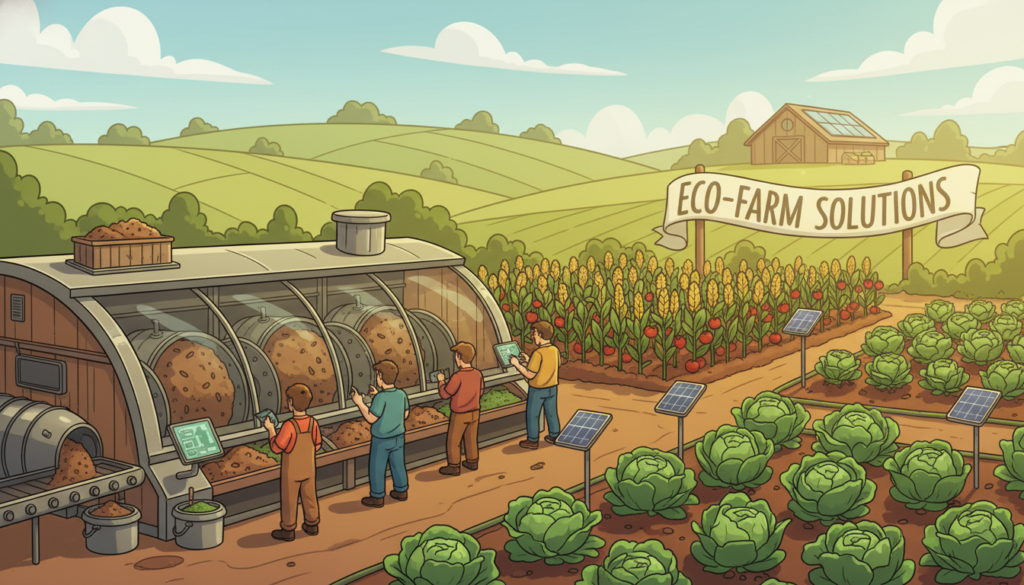
agricultural waste management

Innovative Tools and Technology

Modern farms use advanced software to track nutrient cycles in real time. This software lets us monitor organic matter decomposition with great precision. Efficiency is now a measurable goal in our daily work.

We use special software to map nutrient distribution in our fields. This ensures organic fertilizer is applied where it’s most needed. By reducing waste, we cut costs and improve soil health.

Automation in Waste Management

Automation is key in managing waste on farms. It reduces the need for manual labor, cutting down on human error in agricultural waste management. These systems work all day to turn waste into quality fertilizer fast.

Our automated composting units make nutrient-rich soil amendments automatically. This steady process ensures our fertilizer meets organic standards. We count on these machines to keep a steady supply of fertilizer all season.

IoT Applications

IoT sensors give us deep insights into our farm’s ecosystem. They track moisture, temperature, and gas emissions in our compost piles. We get alerts to adjust conditions for better organic material breakdown.

We make data-driven decisions thanks to these connected devices. They let us monitor our waste systems remotely. This helps us keep consistent quality in all our organic production.

Feature Traditional Method Tech-Driven Approach
Monitoring Manual Inspection IoT Sensor Data
Processing Labor Intensive Automated Systems
Efficiency Variable High and Consistent
Waste Management Reactive Proactive

Monitoring and Evaluating ERP Performance

Checking how well our technology works is key in farm management today. We need to make sure our integrated farming software gives us the insights we need. By looking at certain data, we can see if our digital tools are worth it.

Key Performance Indicators (KPIs)

We track important numbers to see how well we’re doing. We look at how much waste we cut down, how steady our fertilizer output is, and how many hours we save with automation. These essential indicators tell us if our software is helping us meet our goals.

We also keep an eye on how much it costs to make a ton of organic fertilizer. This lets us compare our digital methods to old ways. Keeping these KPIs up helps us manage resources well and stay profitable.

Regular Audits and Updates

Our digital tools need regular checks to keep working well. We do audits every three months to find and fix problems or outdated parts. These checks help us stay current and secure.

These audits also make sure our data is safe. By keeping our systems updated, we protect our farm data from threats. This keeps our operations running smoothly all year round.

Feedback Mechanisms

We think the best ideas come from those who use our system every day. We have a system for getting feedback from our team and managers. This collaborative process helps our software grow with our farm needs.

Metric Category Primary Goal Evaluation Frequency
Waste Processing Maximize Conversion Monthly
System Uptime Ensure Reliability Weekly
User Efficiency Reduce Manual Input Quarterly
ROI Tracking Verify Profitability Annually

Future Trends in Organic Farming ERP

The world of farming is changing fast with new digital tools. Sustainable farming IT will soon be key for all organic farms. This will help us stay profitable and protect the environment.

Emerging Technologies

Artificial intelligence and machine learning will soon change our work. They help us guess crop yields and use resources better. Blockchain technology is also important for clear supply chains.

These tools help us track everything from soil to product. This gives our customers trust in our organic products. We think sustainable farming IT will keep getting better, making data easy to manage.

Growing Market Demand

More people want organic products, so we need better ERP systems. Our software must handle big data well. Cloud-based platforms are becoming popular for working together across farms.

“The future of agriculture lies in our ability to bridge the gap between traditional wisdom and modern digital precision.”

— Industry Expert

We need systems that are both strong and flexible. Investing in sustainable farming IT helps us lead in the market. Our systems must support growth while keeping our organic values.

Sustainability Focus

We aim to farm without harming the planet by managing resources better. Future ERP systems will help us track our carbon footprint. This focus on long-term ecological health means we’ll leave the land in better shape.

The table below shows how our systems will change to meet these goals:

Feature Category Current Standard Future Capability
Data Processing Manual Entry Automated IoT Sync
Carbon Tracking Annual Audits Real-time Monitoring
Supply Chain Basic Traceability Blockchain Verification
Resource Use Static Planning AI-Driven Optimization

By following these trends, we show our commitment to the planet. We’re sure sustainable farming IT will be key for our success.

Enhancing Soil Health through Effective Waste Management

Turning livestock waste into valuable resources changes how we see farm productivity. Seeing waste as an asset, not a problem, creates a sustainable cycle. This change is key to keeping our agricultural systems in balance.

Benefits of Organic Fertilizer

Organic fertilizer gives plants the nutrients they need, unlike synthetic options. It makes soil better, holds more water, and boosts long-term fertility. This natural approach ensures our crops get the nutrients they need all season long.

“The soil is the great connector of lives, the source and destination of all.”

— Wendell Berry

Using organic matter builds a strong base for future crops. Healthy soil is the heartbeat of a thriving farm. Our focus on natural enrichment shows our commitment to this.

Implementing Composting and Recycling

Good waste management needs careful tracking to keep composting efficient. We use organic fertilizer tracking to watch how our compost breaks down and what nutrients it has. This helps us apply nutrients at the right time.

Recycling farm waste cuts down on outside inputs and our environmental impact. Our organic fertilizer tracking lets us check that every application meets our high standards. This ensures our soil gets exactly what it needs to thrive.

Enhancing Biodiversity

A diverse soil microbiome shows a healthy farm. Adding organic matter gives a home to good bacteria, fungi, and worms. These creatures help break down nutrients for our crops.

More biodiversity means stronger plant immunity and better pest resistance. By supporting a lively underground world, we protect our land for the future. We’re proud to support a system that values nature’s complexity and our harvest’s yield.

Building Community Support for Organic Practices

We aim to change agriculture with the help of our local ties. We think being open is key to earning trust from our neighbors and supporters.

Our use of strong sustainable farming IT lets us share our waste and soil health data. This openness lets people see our dedication to the environment for themselves.

Seeing our organic journey as a shared effort helps our whole area. Using advanced tech in our work shows we’re accountable and care about our community.

Strong partnerships grow when we’re open about our progress and goals. Our use of sustainable farming IT makes sure everyone sees the good we’re doing with our organic fertilizers.

We welcome you to join us in making a greener future. Together, we can build a healthier environment for our farm and our community.

FAQ

What is the primary role of an Organic farming ERP in modern agriculture?

An Organic farming ERP is key in today’s farming. It puts all farm data in one place, like SAP S/4HANA for Agriculture or Oracle NetSuite. This makes sure we track every step, from planting to selling.

This tech helps us turn waste into valuable resources. It makes our work better and more open.

How does a livestock ERP improve agricultural waste management?

A livestock ERP helps us keep track of waste and how it changes. It makes waste into something useful, not just trash. With tools like AgriWebb, we can use more of what we have.

This makes farming more affordable and sustainable.

What are the essential modules to look for in integrated farming software?

Look for software with modules for managing inventory, mapping fields, and checking animal health. Trimble Ag Software is a good example. It helps manage complex tasks.

The software should also be easy to use. This way, our team can record data without needing to learn a lot.

How does organic fertilizer tracking simplify the regulatory compliance process?

Tracking organic fertilizer helps us follow rules from places like the USDA Organic program. Our systems keep records of every nutrient used. This makes sure we meet standards.

With tools for reporting, we can quickly get the papers needed for audits. This saves time and cuts down on mistakes.

What factors should we consider when choosing a sustainable farming IT solution?

First, think about what you need, like how many animals you have and what you grow. Look at the reputation of the IT provider and if they offer support for a long time. Choosing big names like Microsoft Dynamics 365 means your software can grow with you.

It also gives you advanced tools for analyzing data.

What are the most common challenges when implementing an Organic farming ERP?

Moving data from old systems and getting staff to change can be tough. We tackle these by starting small and training everyone well. Showing how it saves time and money helps everyone get on board.

How are IoT and automation enhancing livestock waste processing?

IoT sensors and machines from DeLaval and John Deere make waste handling better. They give us real-time info, helping us work more efficiently. Automation makes sure waste is turned into fertilizer consistently and based on data.

How does effective waste management contribute to long-term soil health?

How we handle waste affects our soil’s health. Our ERP helps us manage compost and recycling. This gives our soil the right nutrients.

It boosts crop growth, biodiversity, and makes our land more resilient.

What future trends can we expect in sustainable farming IT?

We’ll see more focus on farming that’s good for the planet and using AI for planning. As demand for organic grows, IT will give us more detailed info on how we impact the environment. Systems will connect organic fertilizer tracking with global supply chains more closely.


CRM for Digital Media Agencies: Managing Multi-Channel YouTube Assets

Managing many YouTube channels needs precision and constant watch. As we grow, tracking performance across different platforms gets harder. Manual tracking often misses chances and mixes up data.

A specialized media agency CRM is key for success. It centralizes our work, giving us the clear view to improve content strategies. Technology is the backbone of our daily tasks, making sure every asset is tracked in real-time.

Today’s teams must use strong systems to stay ahead. Without a single platform, growing becomes a mess, not a strategic move. We think the right setup is the most crucial step for lasting success.

Key Takeaways

  • Centralized systems improve oversight for multiple YouTube channels.
  • Manual tracking processes often lead to significant data fragmentation.
  • Specialized software is vital for scaling operations effectively.
  • Real-time data access allows for better content optimization.
  • Robust infrastructure provides a competitive advantage in digital markets.

Understanding Media Agency CRM Solutions

Standard business software often can’t keep up with creative production’s unique pace. Unlike traditional tools, a media agency CRM is made for the complex world of content and talent.

Switching to digital media platforms lets us track assets across many platforms at once. This move helps us leave behind scattered spreadsheets for a single, unified source of truth.

What is a Media Agency CRM?

A media agency CRM is a central hub for managing client relationships and content. It’s designed for agencies that handle lots of video and influencer work.

These tools are also known as creator CRM. They help manage talent, track influencer performance, and keep in touch with creators in real-time.

Key Features to Look For

When looking at solutions, we focus on features that boost our daily work. A good creator CRM should integrate well with major social media APIs. This ensures our engagement data is always up-to-date.

It’s also important to have advanced asset management. This lets us quickly find and use content versions. Plus, automated reporting saves us from hours of manual work, showing our clients’ value easily.

Benefits of Using CRM for Media Agencies

Using a media agency CRM makes our work much more efficient. It frees up our team to focus on strategy and creativity.

With a clear view of our projects, we can better use our resources. This means we can match the right talent with the right tasks, making sure every campaign is a success.

Lastly, a creator CRM helps us build stronger, more open relationships with clients. We can share updates and insights in real-time, which builds long-term trust and encourages clients to come back.

The Importance of Multi-Channel Management

Managing many YouTube assets without a single system causes a lot of trouble. As agencies grow, having a centralized approach is key to success. Without one place to manage everything, teams find it hard to keep up with today’s fast-paced digital world.

Why Multi-Channel Matters

Handling different channels is crucial for reaching more people. By using many platforms, we can maximize our reach and spread out our content to avoid risks from algorithm changes. A unified system keeps our data consistent everywhere.

Aligning our efforts across channels gives us a clearer picture of performance trends. This clarity helps us make better decisions that boost our ROI. Multi-channel management is about creating a strong brand presence that connects with viewers everywhere.

Challenges of Managing Multiple Platforms

Working on several platforms can slow down even the best teams. The main problem is data fragmentation, where important insights are hard to find. Without a central system, keeping content in sync and tracking engagement is a manual, error-prone task.

Teams struggle to keep the brand consistent while meeting different platform needs. Operational fatigue happens when staff must switch between dashboards to update or respond. By tackling these issues, we see why using strong CRM tools is essential for our daily work.

Integrating YouTube Assets into Your CRM

By linking your video channels to your CRM, you get a full view of your online presence. This connection helps us combine data from different sources into one workflow. It keeps our creative teams focused on our marketing goals.

Linking YouTube Accounts

We start by setting up a secure link between your video platform and CRM. We use YouTube channel management software to make this process easy and safe. This way, we can get data in real-time without any issues.

Once linked, your CRM becomes the main hub for all video tasks. No more switching tabs to check updates or schedules. This seamless integration saves us a lot of time, especially during busy campaign times.

Tracking Engagement Metrics

We focus on real-time data to guide our decisions. By linking our channels, we can see views, watch time, and more in our dashboard. This quick access to analytics lets us adjust our strategy fast if needed.

Having these metrics in our CRM makes reporting easier for our clients. We can create detailed reports that show how video content helps generate leads. This transparency builds trust and shows the tangible value of our video strategy.

Organizing Content for Easy Access

Good digital asset management is key for a consistent brand voice. We use a standard tagging system in our CRM to organize videos. This makes it easy for everyone to find what they need, no matter their role.

With a solid digital asset management system, we avoid lost files and outdated versions. This keeps our creative work smooth and free from mistakes. Below is a table showing how our integrated system beats old-school manual methods.

Feature Manual Management Integrated CRM
Data Syncing Delayed/Manual Real-time
Asset Retrieval Time-consuming Instant Search
Reporting Fragmented Unified/Automated
Team Access Restricted Collaborative

Streamlining Campaign Management with CRM

Switching to automated systems lets agencies grow without losing their creative edge. Moving from manual spreadsheets to automated systems helps us manage complex projects better and faster.

Planning Effective Campaigns

Good video marketing starts with a solid content strategy. Using YouTube channel management software in our CRM helps us keep track of every asset. This is from the first idea to when we upload it.

We can plan when to release videos, assign tasks, and set deadlines. This keeps our workflow smooth and our creative vision clear across all channels.

Collaborating in Real-Time

Today’s agencies do best when they talk constantly. Our CRM makes media workflow automation easy, so teams can work together no matter where they are.

With everyone on the same page, we avoid confusion from old emails or mismatched files. This lets our team give quick feedback on projects.

Monitoring Campaign Performance

It’s key to track the right data to improve our work. We look at things like how long people watch, how many click, and total watch time. This tells us how our content is doing.

By putting these metrics in our CRM, we get reports that show what’s working and what’s not. This helps us change fast and get the best results.

Feature Manual Management CRM Automation
Task Tracking Spreadsheets Real-time Dashboards
Team Feedback Email Chains Integrated Comments
Data Reporting Manual Entry Automated Analytics
Asset Storage Local Drives Cloud-based Library

Enhancing Client Relationships through CRM

In the competitive world of digital media, understanding client needs is key to keeping them. We focus on building long-term partnerships for sustainable growth. A specialized media agency CRM changes how we connect with partners every day.

Personalizing Client Interactions

Every client wants a service that meets their brand goals. With a creator CRM, we have a full history of conversations and milestones. This lets us offer meaningful, proactive insights that match the client’s vision.

These insights help us meet client needs before they ask. This builds trust and keeps our service relevant. We use data-backed strategies for consistent results, not just memory.

Keeping Track of Client Preferences

Managing client preferences is complex. A strong system tracks creative styles, reporting, and communication for each account. This ensures we never miss a detail in the fast-paced production cycle.

The table below shows how we’ve moved from old tracking methods to a modern, automated system:

Feature Manual Tracking CRM-Driven Management
Data Access Fragmented/Spreadsheets Centralized/Real-time
Client History Inconsistent Comprehensive/Detailed
Response Time Delayed Immediate/Proactive
Personalization Low High/Automated

Using a media agency CRM lets us focus on creative work. It streamlines client data, helping our team build stronger relationships. A creator CRM is more than organization; it’s about delivering a top-notch experience that keeps clients coming back.

Automating Routine Tasks with CRM

Many talented creative teams waste hours on the same tasks every day. By focusing on media workflow automation, agencies can save time for more important creative work. This change lets your team focus on new ideas instead of just entering data.

media workflow automation

Scheduling Content Releases

Keeping a consistent schedule is key for reaching people all over the world. With YouTube channel management software, you can set up video releases in advance. This way, your content goes live at the best time, even when you’re not online.

Setting up content in advance keeps your schedule full, even on weekends or holidays. This helps you avoid the rush of last-minute posts and missed chances.

“Time is the most precious resource for any creative agency; automation is the tool that protects it.”

Generating Reports Effortlessly

Tracking how well your content does shouldn’t take up all your team’s time. With the right setup, your CRM can make detailed reports easily. These reports give you insights into who’s watching and how far your content is reaching.

Using YouTube channel management software, you can make dashboards that update instantly. This lets your team make quick, informed decisions. Here’s how automating tasks can make your work more efficient.

Task Type Manual Process Automated Process
Content Scheduling High effort, error-prone Instant, error-free
Data Collection Hours of manual work Real-time updates
Report Creation Weekly manual compilation One-click generation
Workflow Efficiency Low High

By using media workflow automation, your agency works better every day. When your CRM handles routine tasks, your team can focus on what really matters: connecting with your audience.

Ensuring Compliance and Data Security

We know that trust comes from keeping data safe. Keeping client info and ideas secure is a non-negotiable responsibility for us. We make sure our work is safe from cyber threats.

Good digital asset management is key to a safe CRM. We handle sensitive data with care, stopping bad access while keeping work smooth. This mix is crucial for success in a tough market.

Understanding Privacy Regulations

It’s important to know global privacy laws for any agency in the U.S. and worldwide. Laws like GDPR and CCPA tell us how to handle user info. Following these laws is a commitment to our clients’ privacy.

We keep up with law changes to avoid big fines and harm to our reputation. Our team checks our data handling often. Transparency with our clients about their data is our top goal.

Best Practices for Data Protection

Protecting your CRM needs a strong plan that covers people and tech. We suggest role-based access controls to limit who sees what. This helps avoid data leaks.

Encryption is a big part of our defense. It keeps data safe from hackers. Also, using top digital asset management tools helps us track who can change important files.

  • Do regular security checks to find weak spots.
  • Make sure all CRM users have strong, multi-factor login.
  • Keep training staff on avoiding phishing and social engineering.

Being proactive about security builds stronger client ties. When clients feel their data is safe, they’re more likely to work with us long-term. We’re always improving our security to face future challenges.

Training Your Team on CRM Tools

Teaching your team well is key to getting the most out of your digital tools. Even the best creator CRM won’t work if people don’t know how to use it. Without training, your team might not use all the features, leading to lost chances and slow work.

Importance of Team Training

Having a good training plan is the first step to success. When your team knows how to use the platform, they can work faster and more accurately. This means every campaign meets your agency’s high standards.

Training also makes your team more confident and happy. When they’re good with their tools, they can come up with new ideas to solve problems. A well-trained team is a big advantage in today’s fast digital world.

Resources for Learning

For lasting skill improvement, use a mix of learning methods. Begin with the vendor’s official guides and video tutorials. These are key for teaching new staff and keeping current employees up-to-date.

But don’t stop there. Here are some ways to keep learning going:

  • Peer-to-peer workshops: Have experienced users share their best tips and tricks.
  • Internal knowledge base: Make a place where you can store guides specific to your agency.
  • Regular certification checks: Hold reviews every few months to make sure everyone knows about new features.

By focusing on training, your agency will stay quick and ready for big projects. Regular training makes a creator CRM a powerful tool for growth and success with clients.

Future Trends in Media Agency CRM

Looking ahead, advanced intelligence will change how agencies work. The media world is moving fast, from manual checks to systems that learn and adapt with us.

Now, software does more than just store data. It helps in the creative process. This keeps agencies quick and sharp in a busy digital world.

The Role of AI in CRM Solutions

Artificial intelligence is key in today’s client relationship management. With digital asset management, agencies can find important content fast, not slow.

This tech also makes media workflow automation possible. It lets teams skip boring tasks. So, our creative people can work on big ideas and making clients happy.

digital asset management

“The future of business is not just about collecting data, but about turning that data into actionable intelligence that moves the needle for our clients.”

Predictive Analytics for Better Decision Making

Predictive analytics shows us what’s coming next. It looks at past trends to guess future audience behavior.

This way, we can improve our digital asset management plans. We don’t just guess what works. We use data to boost engagement and sales.

Also, media workflow automation lets us use these insights right away. With these tools, our teams make quicker, smarter choices. This keeps our agency leading the way.

Choosing the Right CRM for Your Media Agency

Getting the right software changes how your team works with digital assets. It’s important to pick a media agency CRM that fits your growth plans and needs.

Comparing Top Platforms

Look for tools that work well with YouTube and Google Ads. Salesforce and HubSpot are great because they grow with your business. Try their trial versions to see if they fit your workflow.

Balancing Budget and Support

Your CRM choice should match your budget and needs. Find providers with good customer support and training. This helps your team stay productive and manage campaigns well.

Before choosing a vendor, check your current processes. The right system boosts your agency’s efficiency and client satisfaction. Begin your search now to strengthen your digital media operations.

FAQ

What distinguishes a specialized media agency CRM from a traditional sales tool?

A media agency CRM is made for content-heavy workflows, unlike standard sales software. It helps manage digital assets and track video performance across channels. This ensures our teams work together smoothly.

Why is YouTube channel management software essential for scaling our agency?

Managing many YouTube accounts manually is hard as we grow. YouTube channel management software helps us oversee all channels from one place. It keeps our brand voice consistent across all client YouTube assets.

How does a creator CRM improve our team’s daily productivity?

A creator CRM makes moving from production to publication easier. It links accounts and tracks metrics automatically. This saves time, letting our team focus on creative strategy and client relations.

What are the primary benefits of implementing digital asset management within our CRM?

Digital asset management in our CRM means everyone can find the right file fast. It cuts down errors and keeps our valuable assets safe and easy to find for future campaigns.

Can we use media workflow automation to handle content scheduling and reporting?

Yes, media workflow automation is key. It schedules content and makes detailed reports easy to generate. This gives our clients clear, data-driven insights without manual effort.

How do we ensure the security and compliance of our clients’ data?

We use CRM platforms that follow global privacy rules like GDPR. Our systems use advanced encryption and access controls to protect client data. We also do regular security checks to keep everything safe.

What future trends should we expect in media management technology?

AI and predictive analytics will soon lead the media management tech world. Our tools will likely include AI for content optimization and automated tagging. This will help us make better decisions and improve campaign results for our clients.

How do we choose the right CRM for our specific agency needs?

We look for scalability, easy integration with tools like Google Workspace or Adobe Creative Cloud, and strong support. The right platform must handle our current YouTube assets and grow with us.

Tracking Water Efficiency: Perforated Drip Systems in AgTech ERP

Modern farming is all about getting high yields while saving resources. We think the key to success is linking top-notch equipment with digital tools.

With Perforated drip irrigation IoT, farmers can track moisture levels very accurately. This tech gives them the data they need to make smart choices right away.

We’re working on combining these tools with a strong water management ERP. This digital link helps turn old farming ways into a modern, data-based system.

Technology is making farming more precise and green. By using these tools, we make sure every drop of water is used wisely in our big operations.

Key Takeaways

  • Advanced hardware provides the foundation for precise water monitoring.
  • Digital platforms help translate raw field data into actionable insights.
  • Integrating systems reduces waste and improves overall crop health.
  • Modern enterprises rely on data to scale their operations effectively.
  • Technology bridges the gap between traditional methods and future sustainability.

Introduction to Perforated Drip Irrigation IoT

Digital intelligence is changing American farming. We’re moving from old, manual watering to smart systems that adjust to the weather. This change helps farmers keep up with water scarcity and stay competitive.

What is Perforated Drip Irrigation?

Perforated drip irrigation uses special tubing with holes to water plants directly. It’s better than old methods because it saves water by watering only where needed. This way, we waste less and keep plants hydrated.

These systems are the base for smart water management. Adding sensors and internet makes them into a perforated drip irrigation IoT network. Now, we can check water flow and soil moisture like never before.

Benefits of IoT in Agriculture

Connected hardware lets us control water better. We can change irrigation plans from anywhere, based on weather and soil. This is now a must for farms to stay green.

The table below shows how IoT systems are better than old ways:

Feature Traditional Irrigation IoT-Enabled System
Control Method Manual/Timer-based Automated/Data-driven
Water Efficiency Moderate High (Precision)
Data Insights None Real-time Analytics
Maintenance Reactive Predictive

Using these tools helps farms succeed, even with tough weather. Moving to perforated drip irrigation IoT shows our dedication to saving water and farming well.

Understanding the Role of IoT in Agriculture

By adding digital smarts to our fields, we can control water use like never before. Smart farming IoT connects raw data to smart field decisions. This change is a big deal for managing resources in big operations.

How IoT Enhances Drip Irrigation

IoT systems keep soil moisture just right, thanks to real-time feedback. We ditch fixed schedules for dynamic soil needs. Our systems adjust fast to ensure water goes where it’s needed most.

This precision helps crops stay healthy and saves water. By matching irrigation to soil needs, we avoid too much or too little water. Efficiency is now the norm in our work.

Connected Devices and Data Collection

Connected devices are key for our water management ERP. They track soil tension, temperature, and humidity. This info goes to a central hub, guiding our irrigation without manual help.

These devices work together on a strong water management ERP. This lets us track every drop of water. With this system, we can predict irrigation needs based on past data. This approach is key to modern farming.

Feature Traditional Irrigation IoT-Enabled System
Data Collection Manual/Periodic Real-time/Automated
Decision Making Fixed Schedules Dynamic/Sensor-based
Resource Waste High Minimal
System Oversight On-site Presence Remote Management

Key Components of Perforated Drip Systems

Creating an efficient irrigation system needs a good understanding of its parts. We use strong materials and smart tech to make sure water gets where it needs to go.

Perforated drip irrigation helps us make a system that’s both tough and precise. This setup is key for today’s farming.

Tubing and Emitters Overview

Our system’s heart is in the special polyethylene tubing. It’s made to last in tough field conditions. The tubes have holes or emitters that control water flow over different landscapes.

Consistency is key in a pro setup. High-quality emitters stop clogs and make sure each plant gets the same water. This doesn’t matter where the plant is on the line.

perforated drip irrigation

“The future of agriculture lies in the marriage of robust physical infrastructure and intelligent data analysis.”

— Industry Expert

Role of Sensors in Water Management

Just hardware isn’t enough for top efficiency. We add advanced soil moisture and flow sensors for accurate resource tracking.

These sensors are our system’s eyes and ears. They watch the soil and water flow in real-time. This lets us adjust water based on what the soil really needs, not just guess.

Component Primary Function Benefit
Soil Sensors Measure moisture levels Prevents over-watering
Flow Meters Track water volume Enables resource tracking
Precision Emitters Control output Ensures uniform growth

With these parts, we control our water use perfectly. The mix of physical parts and digital monitoring is vital for green farming in the U.S.

Benefits of Using Perforated Drip Irrigation

Using perforated drip irrigation changes how we manage resources every day. It delivers water right to the roots, cutting down on loss from wind and evaporation. This helps keep the soil moist, perfect for plant growth.

Resource tracking is key to this method. It lets us track water use closely, making smart choices to save money. This way, we make sure every acre is used well without wasting water.

Water Conservation Techniques

Old irrigation ways often cause a lot of runoff and waste. But perforated drip irrigation systems release water just right for the crop. This avoids soaking areas that don’t need it.

These systems cut down water use a lot. They reduce the area that gets wet, lowering evaporation. This is crucial for farms in areas with little water or strict rules.

Improved Crop Yields and Quality

Even moisture means healthier roots and stronger plants. Giving water just when and how much needed improves our harvest. This consistency helps us get better prices for our crops.

By tracking resources well, we can also time nutrient delivery right. This mix of water and nutrients boosts crop quality. Here’s how it beats old methods.

Feature Traditional Irrigation Perforated Drip System
Water Efficiency Low (High Evaporation) High (Targeted Delivery)
Crop Uniformity Variable Consistent
Operational Cost High (Resource Waste) Low (Optimized Usage)
Soil Health Risk of Erosion Improved Structure

Integration of IoT with Drip Irrigation Systems

Connecting field sensors to an AgTech ERP platform is key in modern irrigation management. It links physical hardware with digital software, creating a system that uses resources better. This perforated drip irrigation IoT setup turns field data into useful insights, boosting farm productivity.

Real-time Monitoring and Analytics

Our systems need constant data to work at their best. Advanced sensors help us spot issues like pressure drops or flow problems right away. This is essential for catching leaks or blockages early, protecting crops.

Our analytics platforms analyze this data, giving us a clear view of field health. We don’t need to do manual checks anymore. Our software alerts us quickly if something’s off.

Automated Irrigation Systems

We use automation to set up watering schedules based on the environment. These systems adjust water flow as needed, giving crops just the right amount of moisture. We keep detailed records of every watering event with automated watering logs.

These logs are crucial for checking our long-term operations and meeting regulations. They help us improve our strategies and show how we use water sustainably. Here’s how our system differs from old methods.

Feature Traditional Irrigation Integrated IoT System
Data Collection Manual/Periodic Real-time/Continuous
Leak Detection Reactive/Visual Proactive/Automated
Record Keeping Paper-based Logs Automated Watering Logs
Efficiency Variable High/Optimized

Challenges in Implementing IoT Solutions

Adopting advanced irrigation systems needs careful planning. The promise of more efficiency is great, but the switch to digital farming has its own challenges.

Initial Investment and Cost Factors

The biggest hurdle is the initial capital expenditure needed to change old systems. Buying sensors, controllers, and software is a big expense for farms.

It’s important to see the long-term benefits. A good water management ERP can make these costs worth it by saving water and time over many seasons.

Technical and Connectivity Issues

Getting reliable data in rural areas is a big problem. Without strong cell or satellite signals, automated irrigation can’t work as it should.

Also, linking new tech with old systems is tricky. Good resource tracking needs smooth data flow from sensors to your main dashboard.

To avoid these problems, start with a small test area. This way, you can fix any issues before using the tech on the whole farm.

Case Studies: Successful Implementations

Recent agricultural projects show how precision tools change farming. By looking at early adopters, we see key strategies for growth. These operations prove smart farming IoT is a shift in managing resources.

Innovative Farms Utilizing IoT

In the United States, some farms use connected sensors to better manage water. For example, large vertical farms use automated feedback loops to check moisture levels. This lets managers adjust water flow instantly based on plant needs.

These farms also use cloud-based dashboards to track performance. This centralizes data, reducing the need for guesswork in irrigation. It ensures water is used effectively in the growth cycle.

“The transition to data-driven irrigation has allowed us to reduce our water footprint by nearly forty percent while simultaneously increasing our harvest consistency.”

— Lead Agronomist, Sustainable Harvest Systems

Impact on Water Efficiency and Crop Health

These systems offer more than just water savings. They also reduce nutrient runoff and soil erosion. This leads to healthier roots and stronger crops.

Data from pilot programs shows the real benefits of these technologies. The table below compares traditional methods with sensor-integrated systems.

Metric Traditional Irrigation IoT-Integrated System
Water Usage High (Baseline) Reduced by 35%
Crop Yield Standard Increased by 15%
Labor Costs Manual Monitoring Automated Alerts
System Longevity Moderate High (Predictive Maint.)

The success of early adopters shows a clear path for the industry. By focusing on smart farming IoT, farmers can produce more while protecting the environment. These results make a strong case for wider adoption.

The Future of Agriculture: Trends to Watch

The future of irrigation technology is exciting. It promises to make farming more efficient in the United States. Traditional methods are being updated with digital solutions to boost output. It’s key for farmers to stay updated, especially with perforated drip irrigation systems.

Advancements in Drip Irrigation Technology

New hardware is all about being tough and precise. Makers are creating materials that don’t clog or wear out easily. This means perforated drip irrigation can keep delivering water well, even in tough soils.

We’ll see systems that are easy to grow or change. This lets farmers adjust to new crop needs without big changes. It’s all about flexibility and ease.

The Role of AI and Machine Learning

Artificial intelligence is changing how we manage water. AI uses lots of data to predict when crops need water. This shift from just reacting to proactive management is huge for saving resources.

“The future of agriculture lies in the marriage of biological wisdom and digital precision, where every drop of water is accounted for by intelligent systems.”

Machine learning gets better over time, using past data and current conditions. It makes sure perforated drip irrigation gives the right amount of water. By using these smart tools, we can make farming more sustainable and profitable.

Best Practices for Implementing Drip Irrigation IoT

Setting up a modern irrigation system is more than just buying parts. It’s about planning and caring for it over time. Successful farms see their systems as living, growing parts of their operation. By focusing on precision from the start, we use resources wisely and grow more crops.

Perforated drip irrigation IoT

Planning and System Design

The key to a good perforated drip irrigation IoT system is a solid design. We need to map out our fields carefully. This ensures every sensor and emitter is in the right spot for the best coverage.

By planning ahead, we avoid wasting water and make sure each plant gets the right amount of moisture. We also think about how to grow and connect our system. This way, we can add more easily and keep up with our farm’s needs.

“Precision agriculture is not just about the technology you buy, but how you integrate that technology into the natural rhythm of your soil and crops.”

— Agricultural Systems Analyst

Maintenance and Upkeep

Once our system is up and running, we focus on keeping it in top shape. We review automated watering logs regularly. These logs help us see how much water we’re using and spot any leaks.

Regular checks help us find and fix problems before they cause big issues. This includes making sure emitters are clear and sensors are working right. By staying on top of maintenance, we avoid downtime during the busiest times.

Task Category Frequency Primary Goal
Sensor Calibration Monthly Data Accuracy
Emitter Inspection Bi-weekly Flow Consistency
Log Review Weekly Efficiency Tracking
Firmware Updates Quarterly System Security

By keeping a close eye on our automated watering logs and doing regular maintenance, we get the most out of our perforated drip irrigation IoT. This careful approach helps us control our water use and stay ahead of the competition.

Conclusion: Water Efficiency and Sustainable Practices

Modern agriculture is at a turning point, where water scarcity meets new technology. We’ve seen how precision tools change how we handle water. This shift helps protect our land and keeps farming alive for future generations.

The Importance of Technology in Agriculture

Digital solutions are key to modern water management in farming. Efficiency is crucial for success in today’s market. Advanced systems let us track water use with great detail.

Using smart farming IoT means making choices based on actual data, not guesses. This change is vital for farms to succeed in a world with less resources. We must use these tools to keep yields high and harm to the environment low.

Looking Ahead: The Future of Sustainable Farming

We’re entering a new era of food production, marked by connection and smarts. The success of our industry depends on using smart farming IoT every day. As these technologies improve, they’ll give us deeper insights into crops and soil.

Our dedication to green practices will shape our farms’ future. By leading in innovation, we keep farming both productive and eco-friendly. We’re excited for a future where data-driven farming makes the world more resilient and efficient for all.

Call to Action: Join the Movement Towards Efficient Irrigation

Modern farming needs precision to protect our vital natural assets. We invite you to explore our recommended perforated drip systems. This is a step towards better water management.

Our team offers tools to modernize your fields and boost your profits. With our automated watering logs, you get clear insights into your daily work. This data helps you make better choices for your crops.

Explore Perforated Drip Systems Today

Upgrading your setup leads to better resource tracking on every acre. We have scalable solutions for your farm’s specific needs. These systems cut down on waste and ensure your plants get the right moisture for growth.

Connect with Agriculture Technology Experts

We’re here to help you add these advanced technologies to your workflow. Contact our specialists to see how we can help with your irrigation upgrade. Together, we can achieve top performance and a greener future for farming.

FAQ

How does perforated drip irrigation differ from standard surface irrigation?

We use perforated drip irrigation to water plants directly at their roots. This method is different from standard irrigation, which wastes a lot of water. Our system uses smart farming IoT to control water flow precisely.

What is the benefit of integrating a water management ERP into our daily operations?

A water management ERP is like the brain of our farm. It connects field data with our business goals. This helps us track water use efficiently and meet financial and sustainability targets.

How do automated watering logs improve accountability?

A: Automated watering logs reduce errors in record-keeping. They provide a digital record of water use. This helps us meet environmental standards for global partners like Walmart or Nestlé.

Can smart farming IoT help us identify system failures?

Yes, our smart farming IoT system has sensors that check the irrigation network. If there’s a problem, it alerts us right away. This lets our team fix issues quickly, saving water and crops.

Are these technologies compatible with existing hardware from brands like Netafim or John Deere?

We make sure our systems work with other brands. Modern water management ERP platforms can use data from many sources, including Netafim, Lindsay Corporation, and John Deere. This means we can update our systems without replacing everything.

What role does AI play in the future of resource tracking?

AI helps us understand the data from our smart farming IoT devices. It predicts when we’ll need to water by looking at weather forecasts. This helps us save water and improve crop health.

Is the investment in an AgTech ERP justifiable for mid-sized farms?

We think a water management ERP is essential for any farm. It may cost money upfront, but it saves water and improves crop quality. It also helps us show we’re sustainable, which is important for getting loans from places like Rabobank.

Lean Manufacturing in 2026: How Cloud ERPs Eliminate Operational Waste

The world of production is changing fast as we head into 2026. Companies using old lean methods find it hard to meet today’s demands. To stay ahead, we must focus on digital transformation in our operations.

Having a strong Manufacturing ERP is now a must for smart businesses. It helps cut down on hidden waste and boosts efficiency in the supply chain. With real-time data, we can link lean theory to everyday actions.

This article shows how a modern Manufacturing ERP is key for growth. Cloud tech lets teams spot problems early, saving costs. Let’s explore the future of making things efficiently.

Key Takeaways

  • Cloud-based systems are essential for maintaining a competitive edge in 2026.
  • Digital tools help teams identify and remove operational waste in real time.
  • Lean methodologies require modern software to achieve maximum efficiency.
  • Data-driven decisions lead to more accurate production planning and resource allocation.
  • Adopting new technology is a vital step toward long-term business sustainability.

What is Lean Manufacturing?

Lean manufacturing aims to create more value for customers with fewer resources. It’s a way to find and remove waste in production systems. This approach helps organizations improve their workflows and quality.

Principles of Lean Manufacturing

The core of lean manufacturing includes several key concepts. Value stream mapping helps us see the whole production process. This way, we can find and fix bottlenecks.

We also focus on continuous improvement, or Kaizen. This means making small changes to achieve big improvements over time.

Today, teams use lean manufacturing software to track these improvements. This technology keeps everyone working towards our efficiency goals. Standardizing tasks helps reduce variability and makes our work environment more predictable.

Benefits of Lean Manufacturing

Implementing lean manufacturing can greatly benefit our bottom line. We see lower operational costs and better product quality. Plus, lean manufacturing software helps us stay competitive in a fast market.

The table below shows how our lean approach differs from traditional methods:

Metric Traditional Model Lean Approach
Inventory Levels High (Buffer Stock) Low (Just-in-Time)
Waste Management Reactive Proactive/Eliminated
Process Flow Batch Processing Continuous Flow
Quality Control End-of-Line Inspection Built-in Quality

By using these strategies, our teams can work more efficiently. The right lean manufacturing software helps us keep these benefits as our production needs change.

Understanding Cloud ERP Systems

Manufacturers are now using flexible cloud-based systems to stay ahead. They’re moving from old, fixed software to new, cloud-based Manufacturing ERP solutions. This change helps companies work better together and be more agile.

Key Features of Cloud ERP

Cloud platforms today have tools to bring business operations together. They offer seamless integration across teams, so everyone works from the same place. This way, companies avoid mistakes from old systems or manual entry.

These platforms grow with your business. They can handle more data as you need it, without the need for expensive upgrades. This flexibility lets your technology grow with your goals.

Benefits of Cloud ERP for Manufacturers

One big plus is how they improve material requirements planning (MRP). They automate tracking and schedules, cutting down on waste and ensuring materials arrive on time. This is key for keeping operations lean and costs low.

Cloud-based Manufacturing ERP also gives real-time views of the shop floor. Leaders can see important metrics from anywhere, making quick decisions in case of supply chain issues. Using strong material requirements planning (MRP) tools helps us make better choices, improving quality and efficiency.

The Role of Technology in Lean Manufacturing

Advanced digital tools are changing how we plan production and manage shop floor control. These systems help us spot waste early, saving money. Technology boosts efficiency, making sure every resource is used well.

Automation in Manufacturing

Automation cuts down on repetitive tasks that can lead to mistakes. It lets our teams focus on solving big problems, not just entering data. This makes our operations faster.

Automating helps in many ways:

  • Increased consistency in quality, no matter the shift.
  • Less downtime between stages of the assembly line.
  • Improved safety by keeping workers out of danger or boring jobs.

Data Analytics for Decision Making

Advanced data analytics give us the clear view needed for production planning. We use these insights to adjust quickly when needed. This is key for keeping our operations lean.

With advanced analytics, we control shop floor control better. We spot bottlenecks early, keeping our resources in sync with demand. This sharp focus helps us stay ahead in a quick market.

“Data is the new oil, but it is only valuable if you have the tools to refine it into actionable insights for your manufacturing floor.”

— Industry Analyst

Identifying Operational Waste

To reach true manufacturing excellence, we must first find and remove hidden inefficiencies. In our quest for a leaner facility, we see waste, or muda, as a silent drain on our resources and output. By exposing these hidden issues, we lay the groundwork for sustainable growth and better performance.

“Waste is a tax on the whole organization, and it is our responsibility to identify and eliminate it at every level.”

— Anonymous

Types of Waste in Manufacturing

Modern production environments face several types of waste that slow progress. Overproduction is particularly damaging, as it locks up capital in goods not yet needed. Also, excess inventory burdens storage and hides process flaws.

Unnecessary motion is another common waste, where workers spend time moving materials or searching for tools. These small actions add up, causing fatigue and reducing output. By tackling these areas, we can regain lost time and better use our human resources.

material requirements planning (MRP)

Tools for Waste Identification

To see these inefficiencies clearly, we use powerful diagnostic tools. A key tool is material requirements planning (MRP), which shows inventory levels and production schedules. This helps us spot supply chain imbalances.

We also use advanced software to map workflows and find bottlenecks. By adding material requirements planning (MRP) data to these maps, our teams can focus on improvements with the biggest impact. This data-driven method ensures we invest in the most effective lean initiatives.

How Cloud ERPs Support Lean Practices

Lean manufacturing software is key for today’s fast-moving factories. It brings together different systems into one place. This creates a digital backbone that keeps lean principles alive from start to finish. It helps us switch from manual tracking to automated, precise work.

Streamlining Processes with ERP

Software and lean practices go hand in hand. By automating tasks, we cut down on waste. Efficiency gains are clear when we get rid of unnecessary steps.

Cloud-based systems make sure everyone works the same way. This keeps production flowing smoothly. Our aim is to make sure every action on the floor adds value to the product.

Real-Time Data Accessibility

Shop floor control needs real-time data. Cloud ERPs give managers instant updates on stock, machine status, and worker output. This lets us make quick decisions about resources.

By watching key metrics live, we can fix problems fast. This keeps production running smoothly and meets customer needs. The table below shows how digital tools change the game.

Feature Traditional Method Cloud ERP Approach
Data Updates Batch processing (daily) Instant (real-time)
Visibility Siloed departments Unified dashboard
Waste Reduction Reactive adjustments Proactive optimization
Decision Making Historical analysis Predictive insights

Integrating Cloud ERP into Lean Manufacturing

We focus on linking cloud ERP with shop floor efficiency. A successful transition needs more than new software. It requires aligning digital tools with lean goals. We aim for seamless connectivity to reduce waste.

Steps for Successful Integration

First, we audit your workflows to find where digital automation can help most. We start with a pilot program on one production line. This lets your team test and refine before rolling it out everywhere.

Then, we tackle data migration and system sync. It’s crucial to have accurate historical data for your new cloud setup. After the data is moved, we train staff to use real-time insights for daily decisions.

Overcoming Common Integration Challenges

Shifting to cloud platforms can face resistance. We overcome this by clearly explaining the benefits of production planning software. By involving team members in the process, we build a culture of improvement.

Technical silos are another challenge. We solve this with strong API connections for smooth data sharing. Standardizing data protocols ensures everyone works from the same reliable source.

Lastly, we address data quality issues. Poor input data can hinder lean goals. We enforce strict validation rules to ensure your cloud technology investment pays off.

Case Studies: Cloud ERP Success Stories

Real-world success stories are the best guide for manufacturers wanting to cut waste. By seeing how leaders make digital changes, we learn how to improve operations. These stories show that technology is more than a tool; it’s a key to growing your business.

Real-World Examples of Efficiency

Many companies have changed their production by using material requirements planning (MRP) in cloud-based ERPs. For example, mid-sized car part suppliers cut their inventory costs by 20% by automating buying. They made sure materials arrived just in time.

A custom furniture maker also improved by using a cloud platform. They could see all their shop floor activities clearly. This helped them find and fix problems fast, making more products.

“Efficiency is doing things right; effectiveness is doing the right things.”

— Peter Drucker

Lessons Learned from Successful Implementations

Companies that succeed say changing to material requirements planning (MRP) is more than just installing software. It’s about changing how you make decisions with data. Here are some important lessons from these changes:

  • Data Integrity is Paramount: You need accurate data for automated systems to work well.
  • Phased Rollouts Reduce Risk: Adding modules step by step helps teams adjust without stopping work.
  • Employee Buy-in Drives Adoption: Training staff early helps them accept new technology, not fight it.

The best manufacturers see ERP as a long-term journey, not a quick fix. They keep improving based on what their data shows. This keeps them ahead in a fast-changing world.

Measuring Success in Lean Manufacturing

To truly understand the impact of our lean initiatives, we must rely on accurate, real-time data. Digital tools give us the visibility needed to refine our production planning. This ensures that every process adds value. Success is not just about output; it’s about the precision of our operations.

production planning

Key Performance Indicators (KPIs)

We track specific metrics to see if our lean journey is on track. Cycle time and first-pass yield show how efficiently we turn raw materials into finished goods. With these metrics tied to our production planning software, we can spot bottlenecks early.

Overall Equipment Effectiveness (OEE) is another key KPI. It shows how well our machinery performs compared to its maximum potential. Monitoring OEE ensures our technology investments pay off in productivity and waste reduction.

Continuous Improvement Strategies

Continuous improvement, or Kaizen, thrives with high-quality data. We use our ERP system to find where waste occurs. This data-driven approach leads to significant long-term results through small, incremental changes.

Effective production planning is key for these improvement cycles. Knowing our inventory levels and demand forecasts helps us adjust workflows. This proactive strategy keeps our team focused on high-value tasks, not managing unnecessary stock.

The ultimate goal is to create a culture where everyone uses data to solve problems. By making performance metrics accessible to all, we empower our workforce. This commitment to continuous learning sets industry leaders apart.

Future Trends in Manufacturing ERP

We are on the edge of a new era where digital innovation changes factory floors. The role of a Manufacturing ERP will grow. It will become the brain of the whole company.

Keeping up with these tech changes is now essential. It’s a critical requirement for any business wanting to stay ahead globally.

Emerging Technologies Impacting ERP

Artificial Intelligence and the Industrial Internet of Things (IIoT) are changing production management. These tools help a modern Manufacturing ERP handle lots of sensor data in real time.

With machine learning, systems can forecast equipment failures ahead of time. This move from fixing things after they break to proactive maintenance cuts down on downtime and waste.

Predictions for Lean Manufacturing in the Next Decade

In the next years, lean methods will be fully automated with smart software. The use of Manufacturing ERP platforms will lead to production cycles tailored to each customer’s needs.

We predict data-driven decisions will become even more precise. Businesses adopting these changes will likely see a big boost in how well their equipment and resources are used.

The next decade will reward those who see their digital systems as dynamic assets. Improvement will come from algorithms that find and fix inefficiencies in the supply chain.

Employee Training and Involvement

We know that people are key in any digital change. Software helps, but your team drives real change. Without a team that knows the tools, even the best systems won’t work.

Importance of Training for ERP Success

Good training is the base for any software success. We need to make sure everyone can use the new system well. This keeps shop floor control high.

Training is more than just clicking buttons. It’s about teaching staff to use data to make smart choices. Hands-on learning makes new tech easier to use.

Engaging Employees in Lean Practices

Creating a culture of engagement is key. Leaders should let team members help improve processes. When workers feel heard, they spot and fix waste in their work.

True shop floor control happens when everyone works for efficiency. We suggest letting employees suggest improvements. This makes the ERP a shared tool for ongoing betterment.

Challenges and Solutions in Implementing Cloud ERP

The journey to digital transformation is filled with technical and cultural hurdles. The benefits of lean manufacturing software are clear, but the path to adoption is complex. Understanding these challenges helps prepare our teams for a smooth transition.

Common Barriers to Adoption

One major obstacle is resistance to change among long-term staff. Employees may feel comfortable with old systems and see new tech as a threat. This can slow down progress and limit the effectiveness of digital tools.

Another big challenge is data migration. Moving old data to a new cloud system is complex. If the data is messy, the new system may not work well, affecting lean manufacturing software.

Strategies for Smooth Implementation

We suggest a phased implementation strategy. Instead of changing everything at once, break it into smaller parts. This helps your team adjust slowly and builds confidence in the new system.

Having strong executive support is key for success. When leaders back lean manufacturing software, it shows everyone it’s a priority. Offering detailed training helps users get the most out of the system.

Challenge Primary Impact Recommended Solution
Employee Resistance Low User Adoption Change Management Programs
Data Migration System Inaccuracy Data Cleansing & Mapping
High Initial Costs Budgetary Strain Phased Rollout Strategy
Process Complexity Operational Delays Standardized Workflow Design

Conclusion: Embracing Lean Manufacturing with Cloud ERP

Modern manufacturing needs smarter, leaner workflows. By combining lean methods with cloud ERP like NetSuite or SAP S/4HANA, businesses can stay ahead. This mix turns data into a valuable asset for every production floor.

Leaders who focus on reducing waste and improving processes have a clear path. Using digital tools helps teams spot inefficiencies early. This sets the stage for growth that keeps up with the world’s changes.

Success depends on a culture that values always getting better and being tech-savvy. Encourage your team to learn and use real-time insights. This ensures your operations stay strong and competitive in a changing world.

Start your digital transformation now. Check your systems and make sure they match your lean goals. Your commitment to innovation will make you a leader in manufacturing for years.

## FAQ

### Q: Why is the transition to a Cloud Manufacturing ERP considered essential by 2026?

A: By 2026, the global supply chain will still be volatile. This makes being agile in operations crucial. A modern Manufacturing ERP helps us combine different data into one place. This digital shift helps us cut waste in real-time, keeping us competitive.

### Q: How do we define Lean Manufacturing in the context of modern production?

A: Lean manufacturing aims to remove waste without losing productivity. It uses software to apply key principles like value stream mapping. This ensures every resource is used to add value for the customer.

### Q: What role does Material Requirements Planning (MRP) play in a lean environment?

A: MRP is key to our efficiency. It helps us figure out what materials we need and when. This avoids the waste of having too much inventory, aligning with lean principles.

### Q: How can automation and data analytics improve our production planning?

A: Automation cuts down on errors in repetitive tasks. Data analytics gives us a clear view of our production cycles. These tools in our ERP help us find and fix problems before they cost us money.

### Q: What are the primary types of operational waste we can identify with an ERP?

A: We identify waste in overproduction, excess inventory, unnecessary motion, and waiting. Our shop floor control modules help us find these issues. For example, we can see if a machine is idle or if we have too much stock.

### Q: How does lean manufacturing software enhance shop floor control?

A: Lean software gives everyone real-time data access. This makes it easier to control the shop floor. With live dashboards, teams can make quick decisions to keep lean practices going.

### Q: What are the key steps for successfully integrating a Cloud ERP into lean workflows?

A: First, we create a plan that matches our digital tools with lean goals. Then, we map our processes, clean data, and set up the software. It’s also important to overcome any resistance by showing the benefits of the new system.

### Q: Can you provide examples of real-world success with these digital lean strategies?

A: Many companies have seen big improvements. For example, using Oracle NetSuite or SAP S/4HANA has cut lead times and inventory costs. Even Toyota keeps improving with digital tools to stay efficient.

### Q: Which KPIs should we track to measure the success of our lean initiatives?

A: We track KPIs like TEEP, Lead Time, Cycle Time, and Inventory Turnover. This helps us see if our improvements are lasting. It also helps us plan for continuous improvement.

### Q: How will emerging technologies like AI and IIoT impact Lean Manufacturing?

A: AI and IIoT will make our lean methods even better. AI will help with predictive maintenance and smarter planning. IIoT sensors will give us more data from the shop floor. Staying up-to-date with these trends is key to our success.

### Q: Why is employee engagement critical for the success of lean manufacturing software?

A: The right people are essential for technology to work well. We train our staff to use the ERP for daily tasks. This way, everyone can help improve our lean efforts.

### Q: What are the most common barriers to Cloud ERP adoption, and how do we solve them?

A: Common challenges include data migration and resistance to change. We overcome these with strong leadership and a change management plan. By choosing easy-to-use software and supporting our team, we make the transition smooth.

Integrating Crypto Trading APIs with Corporate Treasury ERP Systems

Modern businesses are quickly changing how they handle digital assets. They are moving away from traditional banking to the fast pace of the digital market. To stay ahead, companies need to update their financial systems to handle quick transactions.

This change needs a robust framework that links digital asset management with current systems. Using a Crypto treasury ERP, companies can connect volatile market data with their accounting systems. Strategic integration is now a must for large-scale firms.

We think linking these systems is key for growth. A reliable Crypto treasury ERP helps us automate tasks and cut down on mistakes. This change makes our financial work agile and safe in a changing world.

Key Takeaways

  • Digital assets need modern tools to handle ups and downs well.
  • APIs are key in connecting trading platforms with internal systems.
  • Automation cuts down on mistakes in complex financial reports.
  • Strategic integration helps finance teams make better choices.
  • Updating financial systems is crucial for staying competitive.

What is a Crypto Treasury ERP?

A crypto treasury ERP is a new step in managing money for businesses. As more companies use digital assets, they need better tools than old accounting software.

These systems are like the brain of managing digital money. They connect blockchain networks with company financial records. This helps businesses understand today’s financial world better.

Definition and Purpose

A crypto treasury ERP is a special version of enterprise resource planning for digital assets. It has unique features for tracking tokens, stablecoins, and other digital assets.

The main goal is to have unified oversight. We use these systems to manage digital assets as carefully as traditional money. This keeps everything in line and efficient for the whole company.

Key Features and Functions

To manage digital money well, these platforms need strong connections. A top-notch crypto treasury ERP works with big exchanges and secure custody providers.

Key features that treasury teams count on include:

  • Automated Wallet Management: It controls many hot and cold wallets together.
  • Real-Time Exchange Connectivity: It lets for quick trades and keeping money balanced.
  • Unified Reporting: It puts data from both traditional and digital money into one place.

By automating these tasks, companies can cut down on mistakes. They get a clear view of their money situation. This is essential for growing in the digital asset world.

Importance of Integrating Crypto Trading APIs

For firms with a corporate crypto treasury, using trading APIs is now essential. Digital assets are becoming a big part of what institutions own. They need direct, reliable data to manage these assets well.

We think it’s key to connect volatile markets with internal systems. This is the heart of modern finance.

Enhancing Financial Transparency

Having real-time data is crucial for a clear view of your assets. By linking your ERP to exchange APIs, you get instant visibility into how your assets are doing. This keeps your corporate crypto treasury up-to-date and ready for audits.

“Transparency is the bedrock of trust in the digital asset economy, allowing stakeholders to see the true value of their holdings in real time.”

Streamlining Operations

Manual data entry is slow and often leads to mistakes. Automating data flow helps companies avoid these issues. This makes your corporate crypto treasury work as smoothly as traditional systems.

Systems talking to each other means fewer mistakes. This is a big step toward better efficiency and control. Your team can then focus on big-picture planning, not just checking numbers.

Reducing Operational Risks

Handling digital assets comes with its own set of challenges, like market ups and downs and security risks. A strong API integration helps keep an eye on transactions and manage money well. By putting all your corporate crypto treasury data in one place, you reduce risks from scattered systems and manual checks.

Proactive risk management gets easier with a single dashboard. We suggest focusing on secure, encrypted API connections to safeguard your assets. This keeps your financial data safe while allowing you to quickly adapt to the fast crypto market.

Key Considerations for Integration

Planning is key for a successful blockchain ERP integration. We need to check if new tools work well with our financial systems. This ensures smooth operations.

Introducing new API connections without a plan can cause problems. We aim to improve efficiency and keep our business stable.

Compatibility with Existing Systems

Making sure old software works with new crypto APIs is a big challenge. We focus on seamless interoperability to avoid data issues.

To succeed, we check our current systems and databases. This helps us find and fix problems early. We then create special connectors to link old and new systems.

Data Security and Compliance

Keeping digital assets safe is our main goal. We use robust encryption and multi-signature access to protect our funds.

We also follow strict rules like AML and KYC. This is crucial for building trust with our stakeholders.

Performance and Scalability

Our system must grow with our business. We look for solutions that can handle more data as we grow.

Choosing the right blockchain ERP integration helps us stay efficient. This way, we can grow without changing our whole system.

Popular Crypto Trading APIs

Modern treasury departments need strong API systems to connect traditional ERPs with digital exchanges. Choosing the right API for your digital assets is key for operational efficiency and security in today’s fast market.

Binance API ERP

Overview of Leading Providers

Many major exchanges offer top-notch API connections for big institutions. For example, the Binance API ERP is known for its huge liquidity and deep market access. It’s a favorite among global companies.

Other big names like Coinbase Prime and Kraken also cater to corporate clients. They focus on stability and offer special support to keep your treasury running smoothly, even when markets are volatile.

Features to Look For

When looking for a partner, focus on low latency and clear documentation. A detailed API lets your tech team set up systems quickly, saving time.

It’s also important to check if the provider can handle lots of requests at once. Your financial data should always be safe.

Cost Considerations

Planning your budget for these services means more than just transaction fees. Most providers charge based on your monthly trading volume and the level of dedicated support you need.

We’ve made a table to help you understand typical costs:

Provider Fee Structure Support Level Best For
Binance API ERP Volume-based Enterprise High-frequency
Coinbase Prime Flat/Tiered Dedicated Institutional
Kraken Competitive Priority Mid-Market

Benefits of Integration

Businesses see a big change in managing money when they connect with digital asset markets. By linking treasury ERP systems to exchange platforms, we get better control over our corporate digital assets. This connection makes it easier to handle digital finance tools in a traditional setting.

Real-Time Data Access

Getting market data fast is key for today’s treasury teams. With trading APIs, we get updates on prices and market depth for our corporate digital assets right away. This keeps our records in sync with global markets.

Improved Decision Making

Good data helps our leaders make quicker, better choices on how to use our money. Using these API links, we can check our cash flow needs more accurately. This smart way of handling corporate digital assets helps us grab chances and avoid risks.

Automation of Financial Tasks

Automation cuts down on the time spent on routine financial tasks. This lets our finance team work on big ideas that grow the company. With these systems, corporate digital assets are managed well and with less mistake.

Feature Manual Workflow Automated API Integration
Data Latency High (Delayed updates) Low (Real-time)
Execution Speed Slow (Human intervention) Instant (Programmatic)
Error Risk High (Manual entry) Low (System-validated)
Strategic Focus Limited (Task-heavy) High (Analysis-driven)

Challenges in Integration

The move to digital assets is not always easy. Companies face big challenges when switching from old finance systems to blockchain ERP integration. We need to get ready for many obstacles during this time.

Technical Challenges

The main problem is the incompatibility between old software and new blockchain tech. Many systems are decades old and can’t talk to crypto APIs easily. Making sure data flows smoothly is key for a good blockchain ERP integration.

Without the right tools, data can get stuck in silos. This leads to broken financial reports. It’s wise to check your current setup before trying to link it with blockchain.

Regulatory Compliance Issues

Working in different places means dealing with many laws. Teams must keep up with tax rules, AML, and reporting standards that change often. A good blockchain ERP system must handle these rules to avoid big fines.

  • Data Privacy: Making sure ledger entries follow GDPR or CCPA.
  • Reporting Standards: Matching crypto deals with GAAP or IFRS.
  • Auditability: Keeping a clear, unchangeable record for auditors.

Market Volatility Risks

Digital assets’ price changes can shake up a company’s treasury. These swings can mess with asset values on the balance sheet. To deal with this, using automated hedging strategies is a good idea.

By spotting these problems early, we can equip our teams to build strong financial systems. Being proactive is the best way to face the crypto market’s ups and downs.

Case Studies of Successful Integrations

We’ve looked at how big companies handle digital assets. By seeing how they use a Crypto treasury ERP, we learn what makes them efficient. These examples show that success is not just luck.

Large Enterprises Adopting Crypto ERP

Big companies look for scalability and security in new tools. They use special platforms for enterprise crypto accounting to track every transaction accurately. They also link their old systems with new APIs for one place of truth.

Small to Mid-Sized Businesses

Smaller businesses want to be quick and save money. They use a Crypto treasury ERP to handle digital assets easily. This lets them stay competitive without spending too much.

Lessons Learned from Mixed Results

Not every project goes smoothly. Some face issues with data or training. But the best teams see enterprise crypto accounting as a journey, not a one-time task.

Business Size Primary Goal Outcome
Large Enterprise Global Compliance High Efficiency
Mid-Sized Firm Operational Speed Improved Accuracy
Small Business Cost Reduction Simplified Reporting

Good communication between tech and finance teams is key. Companies that test well before going live have fewer mistakes. Learning from these experiences helps us grow better.

The Future of Crypto Treasury ERP Systems

We are entering a new era where digital assets are part of everyday business. The Crypto treasury ERP is changing to meet the needs of today’s fast-paced world.

Crypto treasury ERP

Emerging Trends in Crypto Integration

The future brings seamless interoperability between old banking systems and new digital finance. We’ll see tools that make reconciliations easier and cut down on mistakes.

Artificial intelligence will also play a big role. It will help predict market changes. With a Crypto treasury ERP, companies can handle complex strategies in real-time.

Potential Market Growth

More companies want to use digital assets, which means they need better software. As digital currencies become common on corporate balance sheets, the demand for Crypto treasury ERP will grow fast.

This growth is also driven by the need for better reporting and tax tools. Companies that use these systems first will have an edge in the global market.

Role of Blockchain Technology

Blockchain is key to the future of finance. It offers transparency and immutability that traditional systems can’t match.

Smart contracts will make treasury tasks like dividend payments easier. They do this without needing middlemen. Adding these to a Crypto treasury ERP will change how we manage money and assets.

Development Phase Primary Focus Expected Impact
Short-Term Basic Integration Improved Visibility
Mid-Term AI Automation Operational Efficiency
Long-Term Smart Contracts Autonomous Treasury

Best Practices for Successful Integration

We believe that the foundation of any successful financial transformation lies in meticulous planning and collaborative execution. When organizations decide to modernize their infrastructure, the blockchain ERP integration process stands out as the most critical phase for long-term stability.

Developing a Clear Strategy

A well-defined roadmap is essential before you begin any technical implementation. We recommend identifying specific business objectives, such as improved liquidity tracking or enhanced audit trails, to guide your enterprise crypto accounting efforts.

Your strategy should account for potential market shifts and regulatory changes. By setting clear milestones, you ensure that the project remains focused on delivering measurable value to your stakeholders.

Engaging Cross-Functional Teams

Successful deployment requires input from various departments across your organization. We suggest forming a dedicated task force that includes members from IT, finance, and legal teams to address unique challenges.

IT professionals focus on system architecture, while finance teams ensure that enterprise crypto accounting standards are met. Legal experts provide the necessary oversight to keep your operations compliant with local and federal regulations.

Regular Updates and Maintenance

Technology in the digital asset space evolves rapidly, making ongoing maintenance a necessity. We advise establishing a routine schedule for system patches and security audits to protect your data integrity.

Consistent monitoring helps you identify performance bottlenecks before they impact your daily operations. By prioritizing blockchain ERP integration health, you maintain a competitive edge in a fast-paced market.

Practice Area Primary Focus Expected Outcome
Strategic Planning Goal Alignment Reduced Project Risk
Team Collaboration Cross-Department Input Improved Compliance
System Maintenance Security & Updates High System Uptime

Tools and Software for Integration

Choosing the right technology is key to linking digital asset management with traditional accounting. We need to pick software that keeps our treasury operations fast and safe. This way, we make our financial data more useful.

Recommended Software Solutions

Today’s businesses use special software to connect crypto markets with ERP systems. A good Binance API ERP connector is essential for this. It helps match trade history and wallet balances smoothly. We look for solutions that work well with big exchanges and follow financial standards closely.

“The true value of a treasury system lies in its ability to translate complex blockchain data into actionable financial insights without manual intervention.”

— Financial Systems Architect

Metrics to Measure Success

To check if our integration is working well, we watch certain signs. Data accuracy rates are very important. Small errors can cause big problems during tax time. We also check how fast transactions are processed to keep our money flow smooth.

Here’s a table showing the key signs we look at for our integration tools:

Metric Target Goal Priority Level
Data Accuracy 99.99% Critical
Latency < 200ms High
Uptime 99.9% High

User Support and Resources

Setting up technology is not a one-time job. That’s why good support is essential. We choose partners with comprehensive documentation and dedicated help for their Binance API ERP tools. Having a quick support team helps us fix problems fast.

We also want vendors with active developer communities and regular updates. These help our teams keep up with new rules and security fixes. Investing in well-supported software saves us money in the long run and makes our systems more reliable.

The Role of Cryptocurrency in Corporate Finance

We’re seeing a big change in how companies manage money with digital assets. Traditional banks are struggling to keep up, and corporate digital assets are becoming a key option for managing cash. These tools give companies more control over their money in a global market.

Impact on Cash Management

Using a corporate crypto treasury lets companies avoid old banking issues. They can make fast, global payments thanks to blockchain. This makes their cash flow much better.

This speed is essential for fast-paced industries. It’s all about timing. Plus, blockchain makes tracking money easier. Finance teams can see where money is going in real-time. This cuts down on paperwork and keeps financial records accurate.

Leveraging Crypto Assets for Growth

Companies are now seeing crypto as more than just for transactions. A smart corporate crypto treasury can protect against inflation or add diversity to a company’s finances. By holding corporate digital assets, companies can grow with the decentralized economy.

Investing in these assets can also lead to new income sources. Activities like staking or providing liquidity in decentralized finance can be risky but also very rewarding. Companies that use these strategies are leading the way in the digital economy.

Conclusion: A Forward-Looking Perspective

Modern finance needs quick and precise actions in a digital world. Adding trading APIs to your setup changes how you manage digital assets.

Summary of Integration Benefits

Automating connections makes your workflows smoother. This creates a strong corporate crypto treasury. It brings speed, accuracy, and real-time data to your finance team.

These systems cut down on manual mistakes. They also give the data needed for big strategic plans.

Encouraging Adoption Among Businesses

Market leaders know that not updating is risky. Building a strong corporate crypto treasury needs innovation and secure tech. We encourage your leaders to make these integrations a priority for a lasting edge.

Your journey to excellence begins with a clear plan for digital asset management. By using these tools now, you set your company up for growth in the global economy. We encourage you to start this shift to keep your financial systems up-to-date and efficient.

FAQ

What exactly is a crypto treasury ERP and how does it differ from traditional systems?

A crypto treasury ERP is a new way to manage money. It’s made for companies that use digital assets. Unlike old systems, it handles digital money and traditional cash together.

Why is a Binance API ERP integration considered a strategic necessity for modern businesses?

Using the Binance API ERP helps us keep our financial records up to date. It connects us to the market in real-time. This is key for managing digital assets accurately.

How does blockchain ERP integration improve enterprise crypto accounting accuracy?

Blockchain ERP makes accounting for digital assets more reliable. It links transactions directly to our financial records. This makes our accounting ready for audits and ensures all digital asset movements are tracked.

What are the primary security considerations we must address during integration?

Security is our main concern. We use advanced methods like Multi-Party Computation and hardware security modules. Working with trusted custodians like Fireblocks keeps our assets safe while connecting to our ERP.

What challenges should we expect when connecting decentralized assets to legacy financial infrastructure?

Connecting digital assets to old systems can be tricky. We face issues like data delays and keeping up with regulations. We tackle these by planning carefully and involving different teams.

How can real-time data access transform our corporate finance decision-making?

Real-time data lets our treasury team make quicker, smarter choices. They can adjust portfolios and manage risks fast. This helps us stay ahead of market changes and improve our strategies.

What metrics should we use to measure the success of our crypto treasury integration?

We look at how fast we process transactions, how accurate our data is, and how much time we save. We also check our API connections and data updates to ensure we’re always up to date.

ERP Modules for Managing Commercial Shade House Construction Projects

Modern agriculture needs precision and efficiency. Building large-scale shade houses is complex. It involves managing materials, labor, and timelines with great accuracy.

We use a specialized Nursery construction ERP to make these tasks easier. This advanced technology helps us meet the high standards of commercial growers in the United States.

With digital tools, we have full visibility into our work. This approach helps us reduce waste and increase productivity at all our sites.

Our team depends on these systems for quality control. From design to completion, we use data to succeed in today’s market.

Key Takeaways

  • Integrated software improves project oversight and resource management.
  • Digital solutions help meet the rigorous demands of modern growers.
  • Real-time data tracking reduces waste and optimizes labor costs.
  • Advanced systems ensure consistency across multiple project sites.
  • Technology adoption is essential for scaling agricultural infrastructure projects.

Introduction to Nursery Construction ERP

Building a modern commercial shade house is complex. It needs special software to manage it well. Standard tools can’t handle the big challenges of large agricultural projects. We use advanced systems to link design, buying, and building together.

What is Nursery Construction ERP?

A Nursery construction ERP is a special software for managing agricultural building projects. It’s different from regular project management tools. It combines financial info, buying materials, and scheduling workers into one system.

This software is like a single source of truth. It makes sure everyone involved sees the same information in real-time.

“Digital transformation in construction is not just about adopting new tools; it is about creating a unified environment where data drives every critical decision.”

Benefits of Using ERP in Nursery Construction

Using a Nursery construction ERP brings big benefits for complex projects. It makes data more accurate by cutting down on mistakes and improving communication. Teams work better when they can see costs and timelines easily.

The table below shows how ERP systems differ from regular tools for the agricultural sector:

Feature Generic Tools Nursery Construction ERP
Data Integration Fragmented Centralized
Financial Tracking Manual/Basic Automated/Real-time
Resource Planning Limited Advanced/Predictive
Regulatory Compliance Not Supported Built-in Tracking

Using a Nursery construction ERP helps us control budgets and timelines better. It keeps information in one place, reducing the chance of delays. This ensures our shade house projects are of high quality and safe.

Key Features of ERP for Shade House Projects

Building a commercial shade house is a tightrope walk between budget and time. To pull it off, firms need shade house construction software made for the agricultural world. This software gives the clear view needed to keep big projects on schedule.

Project Management Tools

Managing many teams on one site is a big job. Our software lets project managers watch how subcontractors do and make sure they follow safety rules. It keeps everyone talking the same language and working towards the same goal.

It also gives updates on how the site is doing. Transparency is key to keeping quality high. When everyone sees the same info, making decisions gets quicker and more right.

Financial Management Components

Going over budget is a big problem in big projects. Our financial tools help teams keep an eye on spending as it happens. They track what’s bought and how much time is spent, making sure the project stays financially viable.

Our software can spot potential cost problems early. This is a big part of what makes our shade house construction software strong. It means every dollar is used wisely during the project.

Resource Allocation and Scheduling

Good scheduling is the core of any construction success. Our ERP solutions help managers plan out when things need to happen. This makes sure materials and people are there when they’re needed, avoiding delays.

Also, clear scheduling helps avoid mess on the site. By matching up when workers are there with when materials arrive, we make the whole process smoother. This means our shade house projects are done on time and as planned.

Selecting the Right ERP Software

Finding the right digital tool is key to a successful project. Looking for the best shade house construction software needs a clear plan and goals. This ensures your investment is worth it in the long run.

shade house construction software

Factors to Consider When Choosing ERP

First, think about operational scalability. Your software should grow with your business. It should handle small and big projects smoothly.

Technical needs are also important. Look for features that meet your specific needs, like tracking materials and managing climate. A good shade house construction software should have:

  • Real-time budget tracking for changing costs.
  • Integrated scheduling for complex projects.
  • Cloud-based access for everyone.

“Technology is best when it brings people together and simplifies the complex nature of modern construction.”

— Industry Expert

Top ERP Solutions for Nursery Construction

Many platforms lead the market with tailored modules for agriculture. Choosing a dedicated shade house construction software can be more beneficial in the long run.

Look at different solutions based on your needs:

Solution Type Primary Benefit Best For
Enterprise Suites Full Integration Large-scale firms
Cloud-Native Platforms Remote Accessibility Multi-site operations
Specialized Ag-Tech Niche Compliance Custom nursery builds

The best software fits your team’s workflow. By using data-driven decision-making, your team stays productive and profitable at every stage.

Integration with Existing Systems

Building shade houses means we need data to flow smoothly between systems. When your agricultural infrastructure ERP connects with other software, it creates a single digital space. This space lets everyone work with the same, up-to-date information.

Importance of Seamless Integration

Seamless integration is key to avoiding data silos in big projects. When systems don’t talk to each other, teams face costly mistakes and extra work. By linking them, we keep financial, material, and design info in sync from start to finish.

“The true power of technology lies not in the individual tools we use, but in how effectively those tools communicate to drive collective progress.”

A good agricultural infrastructure ERP streamlines work, saving time and reducing mistakes. If design changes happen, the system updates what needs to be bought, avoiding wrong materials. This coordination is crucial for keeping projects on time and within budget.

Common Challenges in Integration

Teams often struggle to link new systems with old software. Older systems might not have the right APIs for new agricultural infrastructure ERP connections. We need to check our current setup to find any issues before we start.

Another big challenge is moving data from old spreadsheets to a new system. This needs careful planning and checking to keep data safe and avoid disrupting work. We suggest doing this in steps to keep everything running smoothly.

Streamlining Project Collaboration

The key to successful nursery projects is clear communication. When teams don’t talk, mistakes pile up and deadlines get missed. We keep everyone on the same page by centralizing our work.

Enhancing Communication Among Teams

Good communication is crucial on any construction site. A strong project management ERP lets our teams share updates instantly. This cuts down on phone calls and paper work.

Clear data flow stops misunderstandings that can cost a lot. When everyone sees the same info, we make decisions quicker and better. Digital tools help our shade house projects stay on track.

“Great things in business are never done by one person; they’re done by a team of people.”

Steve Jobs

Utilizing Cloud Technology for Collaboration

Cloud tech has changed how we manage contractor management on site. We keep blueprints and reports online, so everyone has the latest info. This keeps our standards high during construction.

Our teams get many benefits from cloud systems:

  • Instant access to the latest plans and updates.
  • Easier contractor management with one place for tasks.
  • Less chance of mistakes from old project info.
  • Better accountability with all ERP modules.

Using these digital tools helps us avoid mistakes. We can make quick decisions, keeping our projects on time and budget.

Compliance and Regulatory Considerations

Building commercial nursery structures is complex. It’s not just about the materials; it’s about following safety and environmental rules. An agricultural infrastructure ERP helps firms stay ahead of legal issues.

agricultural infrastructure ERP

Understanding Industry Regulations

Shade house projects face many rules. These cover things like building strength, fire safety, and water management. Keeping up with these rules is key to avoid delays or fines.

Not following these rules can cost a lot. We make sure to check these rules every day. This keeps our reputation safe and our projects running smoothly.

How ERP Helps in Compliance Management

Today’s software helps track rules in real-time. An agricultural infrastructure ERP keeps everyone updated on safety and permits. This makes it easier to pass audits.

Our system sends alerts for permits and inspections. This proactive approach helps avoid mistakes. Here’s how it beats old ways of tracking:

Feature Manual Tracking ERP-Based Tracking
Audit Readiness Low (Fragmented files) High (Centralized logs)
Alerts Reactive (Manual reminders) Proactive (Automated)
Data Accuracy Prone to human error High (Real-time updates)
Regulatory Updates Slow to implement Instant synchronization

Using an agricultural infrastructure ERP makes following rules easier. It helps us build strong, safe shade houses.

Data Analytics and Reporting

The best nursery projects start with clear, useful data. A strong project management ERP gives us the view we need. It helps us manage complex shade house projects from the beginning to the end.

Importance of Data Insights in Decision-Making

Using data to make decisions is key in construction. A project management ERP turns simple data into useful insights. These insights guide our daily work.

With these insights, we spot problems early. We look at past data to make smart choices. This helps us cut waste and work more efficiently.

Key Performance Indicators for Shade House Projects

We track important metrics to keep our projects top-notch. These metrics help our teams stay on track with goals and budgets.

Here are the Key Performance Indicators we focus on:

  • Budget Variance: We compare what we spend to the original plan.
  • Schedule Adherence: We track when milestones are met to avoid delays.
  • Resource Utilization: We see how well we use labor and materials.
  • Safety Incident Rate: We keep an eye on site safety for everyone’s well-being.

The table below shows how we group these metrics to control our work:

Metric Category Primary Goal Frequency of Review
Financial Cost Control Weekly
Operational Efficiency Daily
Compliance Risk Mitigation Monthly

By regularly checking these numbers in our project management ERP, we get better at what we do. This cycle of checking and improving helps our nursery projects grow and succeed.

Training and Support for ERP Users

The real value of digital change is in how well your team uses new tools. Software sets the stage for efficiency, but your team brings it to life. We focus on making sure everyone is confident with our greenhouse building IT solutions.

Ensuring Successful Implementation

Getting started with a clear plan is key. We break down big modules into smaller learning chunks. This way, your team won’t feel overwhelmed. Consistency is key when introducing new digital workflows to your construction teams.

To get your team up to speed, consider these tips:

  • Role-based training: Make sessions fit what each team member does every day.
  • Hands-on workshops: Use practice areas where employees can try things out without affecting real projects.
  • Certification milestones: Give rewards for completing training to keep everyone engaged.

Ongoing Support and Resources

Even after the initial setup, your team will have questions. Having reliable tech support is crucial for keeping your greenhouse building IT useful. Set up a help desk or a go-to person for quick answers.

It’s also good to have a collection of digital resources. Things like video tutorials, updated manuals, and frequently asked questions help staff solve small problems on their own. By keeping up with learning, your greenhouse building IT stays a valuable tool for your business.

Conclusion: The Future of Nursery Construction with ERP

The world of commercial shade house building is changing. It’s moving towards a more precise and data-driven approach. Companies are leaving behind old ways of tracking to use new, all-in-one platforms.

Having a strong nursery construction ERP is key to this change.

Emerging Industry Shifts

Automation and real-time data are the future for agricultural builders. Companies are looking for software that can predict needs and track work accurately. This change helps ensure quality and cuts down on waste.

Strategic Adoption for Market Leadership

To stay ahead in the US agricultural market, digital transformation is crucial. Old spreadsheets hold back growth and can lead to expensive mistakes. A specialized nursery construction ERP brings clarity to manage complex projects.

Our experience shows that using these tools gives a big edge in delivering projects and making clients happy. We suggest checking your current methods and seeing how new software can improve your work. Adopting these technologies is essential for leading the industry.

FAQ

Why should our firm invest in specialized nursery construction ERP instead of generic project management tools?

Generic tools don’t meet the needs of agricultural builds. A dedicated ERP for agriculture helps manage complex issues like environmental rules and special material needs. It offers a single source of truth for all stakeholders, from site engineers to commercial growers.

How does shade house construction software help in preventing budget overruns?

Our shade house software tracks spending against budgets in real-time. It also manages resource allocation and scheduling. This helps spot cost issues early, like labor or material delays, so we can adjust before it affects the budget.

What role does contractor management play within a project management ERP?

Contractor management is key for large agricultural projects. Our ERP has features for managing subcontractors, tracking labor hours, and ensuring safety and timeline compliance. This central management reduces communication errors and ensures quality work.

Can we integrate these new modules with our existing accounting and design software?

Yes, integration is a top priority for us. Our greenhouse IT solutions work with platforms like Autodesk Revit and Sage 300 CRE. This connects departments, reducing errors and keeping financial records up to date.

How does cloud-based greenhouse building IT improve field-to-office communication?

Cloud technology in our ERP gives real-time access to plans and updates. Field teams can update project status instantly. This keeps office managers informed, speeding up decision-making and keeping projects on track.

What are the critical factors we should consider when selecting the right shade house construction software?

When choosing software, we look for operational scalability and specialized agricultural needs. The platform should manage contractors well and grow with our firm. We prefer solutions with a strong track record in the United States agricultural sector.

How does the ERP assist us in maintaining regulatory and environmental compliance?

Our ERP simplifies regulatory compliance by tracking safety certifications and permits. It keeps a detailed audit trail, preparing us for inspections and ensuring our structures meet commercial nursery standards.

What kind of data analytics can we expect to gain from these digital solutions?

Greenhouse IT gives us detailed analytics on KPIs like resource efficiency and budget utilization. These insights help us improve our construction methods, leading to faster and more reliable projects for our clients.

How do we ensure that our staff is properly trained to use the new ERP modules?

We focus on thorough onboarding with hands-on training and ongoing support. By working with providers that offer strong resources, our team learns the system quickly. Successful use depends on our ongoing learning and using the software’s full features.

Best CRM Features for Managing B2B Field Service Technicians

Today’s industries need to be precise and quick to stay ahead. Managing mobile workers is more than just scheduling. Companies must use special software to keep quality high at every client site.

A strong Field service CRM is key for companies aiming for top performance. It uses advanced data analytics to help solve big problems early. This way, we improve how we handle maintenance and repairs in the industrial world.

Having a B2B service CRM makes talking between dispatchers and technicians easier. Efficiency is no longer optional; it’s what makes technicians more productive. With the right tech, our team’s reliability and customer happiness grow.

Key Takeaways

  • Specialized software is essential for maintaining high-level industrial operations.
  • Digital platforms serve as the backbone for effective mobile workforce management.
  • Advanced analytics help teams resolve technical issues before they become major problems.
  • Streamlined communication between dispatchers and technicians boosts overall productivity.
  • Modern technology integration is critical for achieving long-term operational excellence.

What is Field Service CRM?

A field service CRM is like the brain of a business that sends teams to clients. It connects office staff with field workers, keeping everyone on the same page about goals.

Definition and Purpose

This software is a special tool for managing field service. It’s more than just a contact list. It includes scheduling, tracking, and workflows in one place.

The main goal is to be the single source of truth for all field operations. It helps teams avoid mistakes like double-booking. Key features include:

  • Automated dispatching based on technician skill sets.
  • Real-time updates on job status and site arrival times.
  • Comprehensive history logs for every piece of equipment serviced.

Importance in B2B Services

In the B2B world, a B2B service CRM is key for keeping clients. B2B businesses must meet strict Service Level Agreements (SLAs).

Using a field service CRM shows a company’s reliability. It ensures every interaction is recorded and every promise is kept.

The benefits of a B2B service CRM are:

  • Improved retention through proactive maintenance scheduling.
  • Clear visibility into long-term profitability per client account.
  • Enhanced professional reputation via reliable, data-backed field service management.

Key Features of Field Service CRM

Choosing the right technology is key for field service teams today. The best companies use tools that make daily tasks easier and cut down on mistakes. This lets teams focus on quality service, not just paperwork.

Scheduling and Dispatching

Dispatch software is crucial for any top service team. It helps managers assign tasks based on who’s available and where they are. This way, the right person gets to the job on time.

Using automated scheduling saves a lot of time. It cuts down on phone calls and manual work. With intelligent routing, teams can do more jobs in less time. This is what makes a service team great.

Mobile Access

Tools for mobile workforce management change the game for field work. Technicians can access data on their devices, fixing problems quicker. They can see service history, tech manuals, and update job status right away.

This keeps the office and field in sync. Real-time updates stop communication problems. It lets teams adjust plans if needed. Keeping everyone connected is key to high productivity.

Customer Communication Tools

A good field service CRM has tools for talking to customers. Automated messages about when a technician will arrive or job updates improve service. These tools build trust by being open at every step.

We think talking to customers ahead of time is important for keeping them. A field service management platform makes sending messages and surveys easy. This makes customers feel important and informed, a big plus in today’s market.

Benefits of Using Field Service CRM

Using a field service CRM boosts our long-term success. It helps us move away from slow, manual tasks. This change lets us focus on giving our clients the best service.

Enhanced Efficiency

Old ways of working often cause delays and waste. An FSM CRM cuts down on these problems. It makes our teams work smarter, not harder.

They spend less time on paperwork and more on helping customers. This is a big win for everyone.

“Efficiency is doing things right; effectiveness is doing the right things.”

Peter Drucker

Improved Customer Satisfaction

Being reliable is key to good B2B service. A field service CRM gives our team quick access to customer info. This means we can solve problems faster and build trust.

When customers get updates and know when we’ll arrive, they trust us more. This is thanks to our FSM CRM.

Data-Driven Decision Making

Good planning needs the right data, not guesses. Our FSM CRM tracks important stats. This helps us see trends and improve our services.

We use this data to plan better and use our resources wisely. This keeps us ahead in a quick-changing market. A field service CRM helps us make smart choices for growth.

CRM Integration with Other Software

The real strength of a field service CRM comes from its ability to connect with other key business tools. This creates a single digital space, getting rid of data silos that slow us down. It makes sure all teams work from the same information, keeping service quality high.

Field service CRM

“Integration is not just a technical convenience; it is the backbone of a scalable and responsive business model.”

Accounting Software

Connecting with accounting tools keeps billing on track and on time for every job. When a technician finishes a task, the FSM CRM sends out an invoice right away. This cuts down on mistakes and speeds up money coming in by avoiding manual entry.

Inventory Management Systems

Connecting with inventory systems stops stockouts and makes sure techs have what they need before they go. We can see what’s being used in real time and order more when needed. This saves time and keeps customers happy.

Feature Manual Process Integrated System
Billing Delayed/Error-prone Instant/Accurate
Inventory Guesswork Real-time visibility
Data Entry Redundant Automated

Using these connections, your team gets a big edge over the competition. A well-connected field service CRM changes how we manage resources. It makes sure every minute in the field adds to the profit.

Managing Field Service Teams

Managing field service teams well means clear communication and strong technology. We need to watch our remote workers closely to meet our service standards. A modern field service CRM gives us the visibility to keep things running smoothly.

Technician Performance Tracking

Tracking performance helps us spot training needs and support our team. We use data to see how well our team does their jobs. This way, we reward top-performing employees based on real results.

Using advanced field service management tools, we track important metrics like first-time fix rates and customer feedback. This helps us coach our staff better. When technicians know how they’re doing, they’re more likely to work harder and improve.

Effective Time Management

Maximizing billable hours is key for our business’s financial health. We use smart dispatch software to plan routes and cut down travel time. This means our technicians spend more time working for our clients.

Good time management also means less paperwork for our team. With our field service CRM, they can focus on quality service. Our dispatch software helps us keep a balanced schedule, preventing burnout and keeping our field service management efficient.

Importance of Customer Data Management

Managing customer data well is key to success in field service. Data is the lifeblood of any service organization. It helps teams move from just reacting to proactive actions. A strong Field service CRM turns data into insights that guide daily work.

Centralizing Customer Information

Communication silos slow down work when data is spread out. Putting all data in one place makes it easy for everyone to access. This means dispatchers and technicians can see service history, equipment manuals, and past interactions.

With an FSM CRM, teams don’t waste time looking for info. They can focus on quality service with all the right details. This avoids mistakes and makes sure every visit is well-prepared.

Improving Customer Relationships

In the B2B market, how you interact with customers affects how long they stay with you. A Field service CRM helps offer personalized service that shows you understand their needs. When technicians know the customer’s history, it makes customers feel valued.

Strong relationships need consistent, data-driven communication. An FSM CRM tracks how you engage with customers and predicts what they might need next. This approach keeps customers happy and strengthens your reputation.

Feature Manual Data Tracking Centralized FSM CRM
Data Accessibility Limited to specific users Available to all authorized staff
Historical Records Often fragmented or lost Complete, searchable history
Response Time Slow due to information gaps Fast with real-time data access
Customer Insight Minimal and reactive Deep, predictive, and proactive

Reporting and Analytics Capabilities

Modern businesses do well when they turn raw data into useful insights. To boost service quality, leaders need to measure performance well. A top-notch field service CRM gives you the insight to improve daily and long-term plans.

Tracking Key Performance Indicators (KPIs)

Good management means watching key metrics for your service team’s health. We focus on first-time fix rates and average response times to meet client needs. These metrics guide your team to improve efficiency.

“What gets measured gets managed.”

Peter Drucker

Using advanced dispatch software automates collecting these important stats. This saves time and keeps data accurate. Regular checks help spot problems before they cost you money.

Visual Reporting Tools

Big datasets can be hard to understand without the right tools. Your field service CRM turns numbers into easy-to-read charts and graphs. This makes it simple for everyone to see trends quickly.

The table below shows how certain metrics affect your business when you use modern dispatch software:

Metric Impact on Business Strategic Goal
First-Time Fix Rate High Reduce repeat visits
Response Time Medium Improve customer loyalty
Technician Utilization High Optimize labor costs

Turning data into actionable insights helps your team make smart choices. This forward-thinking keeps your business competitive and flexible. Clear reporting is key to lasting growth and top performance.

Utilizing Mobile Field Service Solutions

Mobile workforce management is now a must for B2B service providers to stay ahead. Using a top-notch field service CRM keeps your team productive, no matter where they are. The best way to make complex service workflows smoother is with the right digital tools.

field service management

Benefits of Mobile Access for Technicians

Mobile access to information greatly improves your technicians’ work. A mobile-optimized field service management platform lets staff get real-time updates to work orders right away. This cuts down on phone calls and office trips.

Technicians also get immediate access to manuals and past service data. This quick access helps them fix problems faster and more accurately. A well-informed team offers better service to your clients.

Offline Functionality

Field work often takes teams to places with no internet. A good field service CRM needs offline functionality. This ensures data is captured correctly, even without internet.

When the technician gets back to a connected area, the system syncs all data. This keeps your records current without manual effort. By focusing on these mobile features, your operations stay consistent and reliable everywhere.

Enhancing Customer Communication

Good communication is key in B2B services. Being open builds lasting trust with your clients. A good field service CRM helps manage these talks without extra work.

Automated Notifications

Manual updates can cause delays and mistakes. Automated alerts keep clients informed about when technicians will arrive and project updates. This keeps everyone in the loop.

Your field service CRM can send texts or emails when a technician is on the way. This cuts down on customer worries and the need for status calls. Clients like the professional updates they get.

Real-Time Communication Tools

Quick teamwork is crucial for complex B2B projects. Real-time tools connect the office, field techs, and clients. They make sure everyone is on the same page.

If a tech runs into a problem, they can share photos or notes right away. This lets the office team help quickly or update the client. Being quick is a big plus in today’s fast world.

Communication Method Primary Benefit Efficiency Level
Automated SMS Alerts Reduces inbound calls High
Real-Time Chat Instant problem solving Very High
Email Status Updates Detailed documentation Medium
Client Portal Access Self-service transparency High

Customization and Scalability

A good B2B service CRM must change as your business does. It should be flexible to meet new needs without hassle. The best companies choose platforms that can be deeply customized.

Adapting the CRM to Business Needs

Every company has its own way of working. A strong field service CRM lets you add custom fields and workflows. This way, your team can focus on helping clients, not just using software.

Customization is key to matching your tools to your business. When your software fits your business, you make fewer mistakes. This lets managers improve operations as challenges come up.

Scaling for Growth

Choosing a CRM that grows with your company is smart. Avoid systems that need a full update every time you grow. A scalable B2B service CRM is an investment in your future.

Think about the future when picking software. Look for systems that can grow with you. This way, you avoid expensive updates later. Here’s a table showing the difference between fixed and scalable systems.

Feature Static System Scalable CRM
Customization Limited/Fixed Highly Flexible
User Capacity Hard Caps Easily Expanded
Workflow Design Rigid/Standard Fully Configurable
Long-term Cost High Replacement Cost Predictable Growth

Training and Support for Field Service CRM

We believe that the bridge between technology and productivity is built through comprehensive training. The successful adoption of a new field service CRM depends on how well your staff understands it. Without proper guidance, even the most advanced tools can become a source of frustration.

Best Practices for Team Training

To ensure high user adoption, we recommend focusing on hands-on learning rather than passive lectures. By simulating real-world scenarios, technicians can practice using the software in a safe environment. This approach helps them feel confident when navigating the complexities of mobile workforce management in the field.

We also suggest creating role-specific workflows that cater to different team members. A dispatcher needs different training modules than a technician on the road. Tailoring the curriculum ensures that every employee understands exactly how the system benefits their daily tasks.

“The capacity to learn is a gift; the ability to learn is a skill; the willingness to learn is a choice.”

Brian Herbert

Ongoing Support Options

Technology evolves, and your team will inevitably have questions as they encounter new challenges. Providing ongoing support is essential to keep your operations running smoothly. Whether through dedicated account managers or self-service portals, having a safety net prevents downtime.

Many organizations benefit from a tiered support structure. This allows you to balance cost with the level of expertise required for your specific business needs. The following table outlines common support models for your field service CRM:

Support Type Primary Benefit Best For
Knowledge Base Instant answers Routine troubleshooting
Dedicated Manager Strategic guidance Complex mobile workforce management
Live Chat Support Real-time resolution Urgent field issues

By combining structured training with reliable support, you empower your team to master their tools. This investment creates a culture of continuous improvement that drives long-term success for your business.

Future Trends in Field Service CRM

The world of maintenance is changing fast with new tech. We’re moving towards smarter operations based on data, not guesses. Getting a strong Field service CRM now gets your business ready for future tech.

Advances in AI and Automation

Artificial intelligence is changing how teams handle daily tasks. Smart algorithms now handle complex scheduling, making sure the right tech is at the right place at the right time. This change in FSM CRM platforms cuts down on mistakes and lets your team focus on important repairs.

Predictive Analytics for Field Services

We’re moving from fixing things after they break to fixing them before they break. Predictive analytics let companies watch equipment health in real time and spot problems before they happen. Using these insights in your B2B service CRM gives you a big edge by keeping your clients’ operations running smoothly.

Starting your journey to being better at operations means picking the right digital tools. Look at your current software and think about how new trends fit your future plans. Talk to leaders like Salesforce or Microsoft Dynamics to see how their updates support these new features.

FAQ

What is the primary role of a B2B service CRM in modern field service management?

A B2B service CRM is like the brain of our operations. It connects our dispatchers with technicians in the field. With field service management software, we track every step, from the first call to the final bill.

This helps us meet our service promises to industrial and commercial clients. We keep our service quality high.

How does modern dispatch software improve our daily scheduling and technician productivity?

Our dispatch software uses smart algorithms to match the right technician with the right job. This cuts down on travel time and boosts billable hours. It’s key to managing our mobile workforce well.

It lets us handle urgent calls quickly without messing up our schedule.

Why is offline functionality a critical feature for our mobile workforce management tools?

Our technicians need tools that work offline. Solutions like ServiceMax or Jobber let them work even without internet. They can record data and get signatures offline.

When internet comes back, the data syncs with our office.

How does integrating our field service CRM with accounting software benefit our business operations?

Connecting our CRM with accounting platforms like QuickBooks Online saves us from manual entry errors. It starts the billing process as soon as a job is done. This makes our cash flow better and our clients get accurate invoices on time.

What specific KPIs should we track using our reporting and analytics tools to ensure growth?

We track KPIs like first-time fix rates and average response times. Tools like Microsoft Dynamics 365 Field Service turn data into useful insights. This helps us reward our best technicians and improve where needed.

How can we manage our inventory more effectively through an FSM platform?

Linking our FSM with inventory tools like Oracle NetSuite keeps our parts in check. It stops stockouts and ensures our technicians have what they need. This boosts our first-visit success and customer happiness.

In what ways do automated notifications improve our B2B customer relationships?

Our CRM sends automated updates to keep clients in the loop. Alerts like “technician en route” build trust and transparency. In the B2B world, this keeps clients happy and loyal.

What are the emerging trends in AI and predictive analytics for the field service industry?

AI and predictive analytics are changing the field service game. Technologies like Salesforce Field Service help us move from fixing things to preventing problems. We can predict failures and schedule maintenance, saving our clients time and money.

Optimizing B2B Procurement: Automated Vendor Management in ERP Systems

In today’s fast-paced world, staying ahead is not just about hard work. Digital transformation is key to modern business success. By using smarter tools, companies can improve their workflows and stay competitive.

B2B sourcing is crucial for any business looking to grow. Streamlining these complex interactions boosts productivity and clarity. This lets teams focus on strategy, not just data entry.

Getting a strong Procurement ERP system is a big step forward. These platforms help manage vendors efficiently. We are committed to guiding you through these changes to help your business succeed in the digital world.

Key Takeaways

  • Digital transformation is essential for maintaining a competitive advantage in global markets.
  • Automated systems significantly reduce the time spent on manual administrative tasks.
  • Strategic sourcing improves overall operational efficiency and vendor relationships.
  • Centralized data platforms provide the visibility required for better decision-making.
  • Modern technology allows teams to focus on high-level growth instead of routine processes.

Understanding Procurement ERP Systems

The modern procurement world is a digital space that needs tight integration to stay ahead. As companies grow, managing buying data across different teams becomes a big challenge. A Procurement ERP acts as the brain of these operations, making sure every deal is tracked, checked, and made more efficient.

Definition of Procurement ERP

A Procurement ERP is a full software package that automates and oversees the whole buying process. It’s a single place where all data from different teams comes together. This tech turns supply chain procurement from a simple task into a key strategic move.

Unlike old systems that use scattered spreadsheets and manual input, these systems offer clear views in real-time. They help us watch spending, handle vendor deals, and follow rules. They link financial planning with day-to-day actions.

Key Features of Procurement ERP

Top systems stand out because they cut down on mistakes and speed up work. When we check a Procurement ERP, we look for deep links with finance and stock modules. These are key for smooth supply chain procurement:

  • Automated Requisition Workflows: Makes the approval process faster.
  • Centralized Vendor Portals: Offers a safe place for talking and sharing documents.
  • Real-Time Analytics Dashboards: Gives insights into spending and supplier performance.
  • Inventory Synchronization: Makes sure buying matches what’s in stock.

With these features, companies can cut down on time spent on manual tasks. This lets our teams work on important tasks like better deals and stronger partnerships. A strong Procurement ERP is key for any business wanting to update its supply chain procurement approach.

Importance of Automated Vendor Management

As our businesses grow, we need to move away from old ways of buying things. Managing many suppliers can get too hard for simple spreadsheets and emails.

Using vendor management software helps us keep things in check. It puts all our buying data in one place. This makes sure every purchase fits with our big goals.

Benefits of Automation

Automated purchasing cuts down on mistakes. No more typos or wrong orders. This saves us money and time.

Automation also makes buying things faster. We can approve orders in minutes, not days. This lets our team do more important work.

“Efficiency is doing things right; effectiveness is doing the right things. Automation allows us to achieve both by streamlining our procurement workflows.”

Some big benefits of using these systems are:

  • Enhanced Accuracy: It stops mistakes and double entries.
  • Faster Cycle Times: It keeps the approval process moving fast.
  • Improved Compliance: It makes sure all buys follow our rules.

Challenges Without Automation

Manual ways of doing things are risky and slow us down. Without a single system, our data is scattered and hard to share.

The table below shows how different manual and automated systems are:

Feature Manual Process Automated System
Data Accuracy High Error Rate High Precision
Processing Speed Slow/Bottlenecked Instant/Streamlined
Visibility Limited/Siloed Real-time/Centralized

Without automated purchasing, we miss chances and spend more. But with good vendor management software, we save money and grow stronger.

How Procurement ERP Enhances Vendor Management

The right technology changes how companies work with their global suppliers. With a Procurement ERP, we move from old, broken systems to a single digital system. This makes managing complex supply chains easier and faster.

Streamlined Communication

Good teamwork needs clear, shared information. Our vendor management software gives buyers and suppliers their own spaces to talk in real-time. This cuts down on the mess of emails and phone calls.

With automated purchasing, we keep track of every order from start to finish. This openness builds trust and helps us keep strong partnerships. The benefits include:

  • Instant updates on order status for everyone.
  • Less chance of mistakes in processing orders.
  • Quicker fixes for any issues with shipments or invoices.

Integrated Data Management

Having one true source of information is key for any business. Our Procurement ERP breaks down barriers and lets everyone see the same vendor data. This helps us make better decisions.

This setup also helps with automated purchasing by giving us solid data for planning. With top-notch vendor management software, we can trust our analysis. This leads to smarter choices that boost our profits.

Selecting the Right Procurement ERP Solution

Choosing the right technology partner is as crucial as the software features. When you invest in a Procurement ERP, you’re not just buying a tool. You’re setting the stage for your future operations. It’s important to make sure your technology fits your supply chain procurement goals.

Key Considerations

Before choosing a platform, check how well it fits with your current systems. Look for scalability since your business will grow. Also, make sure the interface is easy for your team to use.

Procurement ERP

Think about what you need for your daily tasks. A good Procurement ERP gives you real-time views of your inventory and spending. This helps keep your supply chain procurement flexible and ready for changes.

Vendor Reputation

The reliability of your provider is key. Look into the vendor’s history of system stability and their updates. A trusted partner offers consistent support, keeping your workflow smooth.

Also, check if the provider has success stories in your industry. A provider with a strong track record shows they get the challenges of supply chain procurement. Choosing a reliable vendor reduces risks and ensures your Procurement ERP investment pays off in the long run.

Implementation Strategies for Procurement ERP

We think a successful digital change starts with good planning and team unity. A Procurement ERP is more than just new tech; it changes how you manage your supply chain. We focus on smooth change management to keep your transition smooth and effective.

Planning the Implementation Process

Getting new tech right needs careful planning. We suggest dividing the project into clear phases. This way, we can set up your system right from the start.

This method helps us spot and fix problems before they slow you down.

The table below shows the key steps we take when rolling out your new system:

Phase Primary Focus Expected Outcome
Assessment Gap Analysis Clear Requirements
Configuration System Setup Tailored Workflows
Testing Quality Assurance Error-free Processes
Deployment Go-Live Operational Readiness

Training Your Team

Even the best software won’t work if your team doesn’t know how to use it. We offer detailed training plans to help your team get the most out of automated purchasing tools. Training your team is as crucial as buying the software.

We recommend a training plan that fits different roles in your company. Our hands-on workshops make your team feel ready to use the Procurement ERP. Being skilled with the system is key to keeping your automated purchasing data accurate and ensuring you get the most value from it.

Best Practices for Managing Vendors with ERP

Effective vendor management turns your procurement process into a strategic advantage. With our Procurement ERP, we focus on building lasting, profitable partnerships. This approach ensures every supplier interaction supports our overall goals.

Regular Performance Reviews

We conduct regular, data-driven performance reviews to keep our supply chain standards high. These reviews help us hold suppliers to the agreed-upon metrics. Consistency is the key to spotting issues before they become expensive problems.

“Data is the bridge between a simple transaction and a strategic partnership. When we measure performance accurately, we empower our vendors to grow alongside us.”

— Industry Procurement Expert

Our vendor management software automates performance data collection. This removes the uncertainty of manual reviews. We get a clear view of delivery times, quality, and pricing through solid evidence.

Utilizing Dashboards and Reports

Real-time visibility is crucial for today’s procurement teams. Our systems offer dynamic dashboards that show key performance indicators at a glance. These tools give us the insights we need to make quick, informed decisions.

The following table shows how automated tracking beats traditional methods in a professional setting:

Feature Manual Tracking Automated ERP
Data Accuracy High Error Risk High Precision
Update Speed Delayed/Weekly Real-Time
Insight Depth Surface Level Granular Analytics
Accountability Subjective Objective/Evidence-Based

By following these practices, our Procurement ERP becomes a key tool for managing relationships. Advanced vendor management software keeps us ahead of market changes. We’re dedicated to transparency and efficiency in all vendor interactions.

Measuring Success in Vendor Management

To master B2B sourcing, we must focus on key numbers. Intuition is not enough in today’s competitive market. We need to rely on data to keep our vendor relationships profitable and reliable.

Key Performance Indicators (KPIs)

We track specific metrics to check our supply chain’s health. Cost savings show if we’re getting good deals through automated purchasing. This helps us find the best long-term value from our vendors.

Reducing lead time is also key. Shorter delivery times mean we’re more agile. We watch defect rates to make sure our partners meet quality standards.

Tools for Measurement

Modern ERP systems are crucial for tracking these data points. They offer dashboards for real-time B2B sourcing insights. These tools help us see trends and make smart decisions without manual data entry.

Advanced reporting modules help us combine data from different departments. By using automated purchasing workflows, we ensure accurate records for analysis. Below is a table showing the main metrics we use to check our performance.

Metric Category Primary Goal Impact Level
Cost Variance Budget Adherence High
Lead Time Operational Speed Medium
Quality Rate Vendor Reliability High
Order Accuracy Process Efficiency Medium

Case Studies: Successful ERP Implementations

Many companies have overcome B2B sourcing challenges with integrated ERP solutions. Looking at these examples can guide your own digital change. Seeing how leaders improve supply chain procurement shows us how to grow.

Company A: Streamlining Operations

Company A, a mid-sized maker, had data scattered across departments. They got a unified ERP system to bring everything together. This change let them automate tasks and cut down on paperwork time.

Now, they have real-time visibility into stock and vendor performance. This clarity helped them fix slow spots in production. They became more flexible and quick to respond.

supply chain procurement

Company B: Cost Reductions

Company B used ERP data to cut costs through better B2B sourcing. They used analytics to find and fix unnecessary vendors. This smart move helped them reduce their number of suppliers.

They saw a big drop in costs in the first year. They moved from buying on the fly to a proactive procurement strategy. Their story shows how tech can save money in procurement.

Common Pitfalls in Vendor Management

Success in B2B sourcing comes from using both advanced tools and human insight. Modern systems are very efficient but can’t replace good business sense. Technology helps, but it’s not a full substitute for strategic thinking.

Overreliance on Technology

Many companies think vendor management software will fix all problems. But, relying only on tech can miss important details in vendor relationships. Treating procurement as just a tech task can harm long-term partnerships.

“Technology is a useful servant but a dangerous master.”

Christian Lous Lange

It’s key to keep a human touch in the loop. This ensures tech decisions fit with the company’s goals. While tech can spot issues, it can’t always understand the reasons behind them. Regular checks by humans are needed to make sure tech is working right.

Poor Data Quality

The quality of your data limits how well digital tools work. Bad data means your B2B sourcing will have wrong insights. Teams often focus on getting the software right, forgetting to clean their data first.

Bad data leads to wrong choices in buying things. To fix this, set clear rules for how data is entered and kept. Good data is essential for vendor management software to work well.

Risk Factor Impact on Operations Mitigation Strategy
Tech Overreliance Loss of strategic oversight Regular human audits
Inaccurate Data Flawed decision-making Standardized data entry
Process Silos Communication gaps Integrated system training

Future Trends in Procurement ERP

Looking ahead, two big changes are coming to how we manage vendors and supply chains. The Procurement ERP software is evolving fast. It’s not just about making things digital; it’s about creating smart systems that know what we need before we do.

Rise of Artificial Intelligence

Artificial intelligence is changing how we use data in our systems. With predictive analytics, these platforms can predict market changes and vendor issues with great accuracy.

This change helps us switch from fixing problems to making smart choices ahead of time. A modern Procurement ERP can suggest new suppliers or adjust orders based on current trends. This keeps our operations strong against unexpected problems.

Increasing Importance of Sustainability

Sustainability is now key for any top supply chain. We’re seeing more focus on being transparent about the environmental impact of our vendors.

Future Procurement ERP will likely have ESG tracking built in. These tools will help us track carbon emissions and make sure our partners follow ethical labor standards worldwide.

By focusing on green practices, we meet legal needs and build stronger partnerships. These steps make our procurement strategy both profitable and responsible for the future.

Customizing Your Procurement ERP

We think technology’s real strength is in adapting to your goals. A one-size-fits-all approach often falls short. That’s why customizing your Procurement ERP is key to lasting success.

Tailoring Features to Business Needs

Every company has its own way of working. Standard software might not fit perfectly. By configuring specific modules in your Procurement ERP, you make sure it matches your needs.

It’s smart to add custom fields and automated triggers that meet your industry’s needs. This personal touch helps your team streamline complex tasks while sticking to company rules.

User Feedback and Iteration

The work doesn’t stop after you launch the software. We stress the need for consistent user feedback to keep your Procurement ERP up-to-date.

Creating a cycle of ongoing updates helps spot and fix issues that slow you down. Regularly updating your system based on how it’s used keeps your investment valuable as your business expands and markets change.

Conclusion: The Future of Procurement in B2B

Digital transformation changes how we handle our supply chain procurement. Companies that use automated systems stand out in a busy global market.

Embracing Innovation

Technology is key to making businesses more efficient. SAP and Oracle offer tools to improve B2B sourcing. Without technology, growth and quick changes are hard to achieve.

Building Stronger Vendor Relationships

Good partnerships need clear data sharing. We use platforms to build trust and clear talks with suppliers. This makes our supply chain strong against future problems.

We encourage you to check your B2B sourcing workflows for better spots. Investing in these systems now sets you up for success and top performance later.

FAQ

Why is digital transformation essential for modern B2B procurement?

Today’s global market is complex. We need to move beyond old ways to stay ahead. Using advanced technologies, we can handle more and complex tasks better. This leads to better efficiency over time.

What defines a high-performing procurement ERP system?

A top procurement ERP is the core for all buying tasks. Systems like SAP S/4HANA or Oracle Fusion Cloud Procurement are key. They help us manage data better, replacing old ways with new, automated ones.

How does automated purchasing improve our operational efficiency?

Moving to vendor management software is key for growth. Automated buying cuts down on mistakes and speeds up processes. This lets our team focus on important tasks, not just data entry.

How do we ensure consistent communication and data integrity with our suppliers?

We use strong procurement ERP solutions with supplier portals. This makes talking to vendors smooth and keeps all info up to date. It makes sure our talks with suppliers are clear and consistent.

What should we prioritize when selecting vendor management software?

Look beyond just features. Check if the provider is reliable for the long term. Choose well-known vendors like Microsoft Dynamics 365 or NetSuite for stable support.

How do we ensure a successful implementation of a new ERP system?

Success comes from careful planning and training. We set up the ERP right and train our team well. This helps everyone use the new system smoothly.

How can we proactively manage vendor performance using real-time data?

We use dashboards and reports in our software for checks. This lets us keep an eye on how suppliers are doing. It helps us keep our sourcing efficient and on track.

Which metrics are most critical for measuring the success of our B2B sourcing strategy?

We watch things like cost savings, faster delivery, and following contracts. These tools help us see how we’re doing. They show the value of our new buying ways.

Can you provide examples of organizations that have successfully optimized their procurement?

Big names like Intel and Toyota have made big changes with SAP and other tools. Their stories show us how to improve our own operations.

What are the common pitfalls we should avoid when deploying automated procurement tools?

Don’t rely too much on tech without checking it. Also, make sure data is good. Bad data can mess up even the best systems, leading to problems.

How will artificial intelligence and sustainability impact the future of procurement?

AI will change how we use data in procurement. Sustainability is also key. Tools like Coupa help us choose green suppliers, making our supply chain better for the planet.

Why is system customization and user feedback important for long-term ERP success?

A generic system won’t fit everyone’s needs. We tailor our ERP to our business and listen to feedback. This keeps our system working well for us as we grow.

How does technology help us build stronger vendor relationships?

Tech lets us move from just buying to real partnerships. Using new tools and sharing data openly builds trust. This helps our business and our partners grow together.

HIPAA Compliant ERP Systems: Managing Medical Supply Chains Safely

Modern hospitals use complex digital networks to work well. We know that combining technology with strict rules is key to a safe medical supply chain. Keeping patient data safe and operations smooth is our main goal.

Keeping Healthcare ERP compliance is crucial for our systems’ integrity. Using strong digital tools helps all departments work better. This way, we protect patient info and make sure resources get where they need to go.

Secure tech is the heart of today’s patient care. We think that good infrastructure lets us focus on what’s most important: better health for our communities.

Key Takeaways

  • Digital infrastructure is vital for modern hospital operations.
  • Regulatory mandates protect the integrity of the supply network.
  • Robust systems ensure operational efficiency across all departments.
  • Data security remains a top priority for patient-centered care.
  • Investing in secure technology improves overall health outcomes.

Understanding Healthcare ERP Compliance

In the fast-paced world of healthcare, the tools we use to manage resources define our operational success. A healthcare ERP is like the brain of hospitals and clinics. It combines finance, supply chain, and human resources into one platform. These systems are made to handle the unique needs of the medical field.

What is Healthcare ERP?

This software architecture automates complex workflows, reducing human error. It centralizes data, giving organizations real-time visibility into inventory, procurement, and patient billing. This digital change lets medical providers focus on patient care, not paperwork.

Importance of Compliance in Healthcare

Following regulations is not just a legal must; it’s key to trust. A Healthcare ERP compliance strategy keeps sensitive data safe. This trust is vital for lasting patient and regulatory body relationships.

Key Regulations Impacting ERP Systems

Many federal and state laws shape these complex systems. We must make sure our digital tools meet these rules to avoid big fines and damage to our reputation. The table below shows the main regulations affecting our systems.

Regulation Primary Focus Impact on ERP
HIPAA Patient Data Privacy Requires strict encryption and audit logs
HITECH Electronic Health Records Mandates secure data transmission standards
FDA 21 CFR Part 11 Electronic Records/Signatures Ensures integrity of digital documentation
State Privacy Laws Consumer Data Protection Dictates regional data residency requirements

By setting this baseline, we show why compliance is crucial in today’s digital healthcare. We follow these standards to protect our infrastructure and keep our service level high.

The Role of HIPAA in ERP Compliance

Medical organizations face unique challenges at the intersection of federal rules and software design. Keeping to legal standards is key to building trust. When we use a healthcare ERP, we must make sure all digital processes follow HIPAA rules.

Overview of HIPAA Guidelines

HIPAA sets strict rules to protect electronic health info. It demands strong access controls, audit logs, and encryption. Compliance is a continuous journey that needs constant attention to data flow.

Ensuring Patient Data Privacy

We focus on keeping patient info safe by securing every digital touchpoint. Using HIPAA compliance software, we can catch unauthorized access quickly. This keeps patient records safe from breaches or leaks.

The table below shows the key security layers for a compliant environment:

Security Layer Primary Function Implementation Goal
Encryption Data Scrambling Prevent unauthorized reading
Access Control User Authentication Limit data visibility
Audit Trails Activity Logging Track system interactions
Data Backup Redundancy Ensure information recovery

HIPAA and Healthcare ERP Integration

Integrating new solutions with old systems is a big challenge. Older systems often lack the security needed for healthcare ERP standards. We use HIPAA compliance software to secure these systems.

We map data flows to find vulnerabilities during migration. Standardizing these points makes our system strong against cyber threats. Security and efficiency must work in tandem to deliver top care to patients.

Benefits of Using HIPAA-Compliant ERP Systems

Advanced management systems help us meet legal standards and improve how we work. They combine strict data protection with fast, efficient operations.

Enhanced Data Security

HIPAA compliance software is key for keeping patient data safe. It uses top-notch encryption and limits who can access information. This keeps patient health records secure from unauthorized access.

Security is not just a legal requirement; it is a cornerstone of patient trust. Centralizing data in a safe place reduces the chance of mistakes and system weaknesses found in older systems.

HIPAA compliance software

Streamlined Supply Chain Management

A strong medical supply chain needs clear visibility and accurate tracking. Compliant ERP systems let us monitor stock, expiration dates, and what we need to buy with great detail.

This clear view stops shortages of vital items. By automating buying, we cut down on waste and keep our medical supply chain efficient and ready for changing needs.

Improved Patient Care and Service Delivery

Removing administrative delays lets our clinical team focus more on patients. HIPAA compliance software handles routine paperwork, easing the load on healthcare workers.

This change means better health results and a smoother experience for patients. We find a balance where speed helps, not hinders, quality medical care.

Key Features of Compliant ERP Systems

When looking at enterprise resource planning for medical settings, we must focus on top-notch security. A compliant system is key to your digital success. It keeps all transactions safe from cyber threats.

Data Encryption and Security Features

Robust data encryption is the base of any compliant platform. It makes sure sensitive info is safe during and after it’s sent. This keeps it hidden from those who shouldn’t see it.

Keeping medical records safe is also crucial. We suggest systems with strong hashing and firewalls. These protect your database from hackers.

Audit Trails and Access Controls

Good healthcare IT needs detailed audit trails. These logs show who accessed what and when. It helps keep track of all system actions.

Role-based access controls are also key. They let staff see only what they need for their jobs. This lowers the chance of data leaks and wrong changes.

Integration with Electronic Health Records (EHR)

ERP and EHR systems need to work well together. This makes clinical work smoother and cuts down on errors. It keeps patient info accurate.

Good integration means using secure standards. This keeps patient privacy safe as data moves between systems. It’s all about keeping data safe and secure.

Feature Security Impact Compliance Benefit
End-to-End Encryption High Prevents Data Interception
Role-Based Access Medium Limits Unauthorized Exposure
Automated Audit Logs High Ensures Regulatory Accountability
EHR Interoperability Medium Maintains Data Consistency

Challenges to Achieving Compliance

Organizations often face big challenges when they try to update their resource planning systems. They aim to work better, but the journey to meet all rules is hard. They find many technical and operational hurdles along the way.

Common Compliance Pitfalls

Many groups fail because they ignore the importance ofsecure data storage. They might not set up cloud services right or use weak encryption. This makes patient data open to hackers.

Also, not watching third-party connections is a big mistake. When outside vendors link to your systems, they must follow strict rules. Ignoring this can lead to expensive data leaks.

Navigating Complex Regulations

The world ofhealthcare ITkeeps changing, making it hard for admins to keep up. Laws differ a lot by state, so you need to know the local rules well.

To stay compliant, it’s not just about installing software. You must always be alert. We suggest teams have people watch for new laws that affect digital records.

Risk Factor Potential Impact Mitigation Strategy
Misconfigured Storage Data Breach Regular Security Audits
Third-Party Access Compliance Violation Strict Vendor Vetting
Regulatory Changes Legal Penalties Continuous Monitoring

Addressing Staff Training Needs

Even the bestsecure data storagesystems fail without a trained team. Human mistakes are the top cause of security problems inhealthcare IT.

We stress that good training is key for following security rules. Employees need to know how to use the software and why it’s important. This way, they can protect patient privacy well.Regular training helps your team defend against threats.

Best Practices for Healthcare ERP Compliance

Keeping up with healthcare ERP compliance is an ongoing task. We need to stay alert and proactive to keep up with changing rules. This way, we protect our patients and keep our operations running smoothly.

Healthcare ERP compliance

Conducting Regular Compliance Audits

We regularly check our systems to find and fix problems early. These checks help us make sure we follow all the rules. Regular reviews help us stay safe and secure.

Engaging Stakeholders in Compliance

Everyone in the organization must play a part in keeping things secure. We work together to make sure everyone knows their role in healthcare ERP compliance. This teamwork makes our system stronger against threats.

Updating ERP Systems Regularly

Keeping our systems up to date is key to our defense. Updates help protect us from new threats. We see keeping our systems current as a vital investment in our safety.

Strategy Element Proactive Approach Reactive Approach
Audit Frequency Quarterly or Continuous Only After Incidents
Staff Involvement Ongoing Training Minimal Awareness
System Updates Automated Patching Delayed Manual Fixes
Risk Mitigation Threat Prevention Damage Control

By following these best practices, we show our strong commitment to healthcare ERP compliance. This approach keeps our medical supply chain efficient and safe for the future.

Selecting the Right ERP System for Compliance

We need to carefully pick software partners that meet today’s healthcare standards. Choosing the right platform is more than a tech choice. It’s a strategic move to keep patient info safe and make our work smoother.

Assessing Vendor Capabilities

We look for partners with a strong track record in healthcare. It’s key to check if their HIPAA compliance software is real and not just a claim.

It’s important to find vendors who are open about their security certifications. Trusting a partner who knows the law is crucial for success.

Evaluating System Features

We focus on the software’s technical details. We seek systems with strong secure data storage to keep health records safe.

We also check how the system handles audit trails and user permissions. These features are key to keeping patient data safe and following the law.

Comparing Cost vs. Benefit

Getting a compliant system costs a lot upfront, but it’s worth it. The cost of a data breach is much higher than the software’s price.

We look at the total cost of owning the system, including upkeep, training, and future upgrades. Choosing a system with secure data storage and growth potential helps us avoid risks and keeps our operations smooth.

Criteria High-Tier Vendor Mid-Tier Vendor Budget Option
HIPAA Certification Full Audit Support Basic Compliance Self-Certified
Data Encryption AES-256 Standard Standard SSL Basic Encryption
Support Level 24/7 Dedicated Business Hours Email Only
Scalability Enterprise Ready Moderate Growth Limited

Case Studies: Successful Implementation of Compliant ERPs

Looking at case studies helps us see how ERP compliance works in real life. These examples show us how to overcome technical and regulatory challenges in healthcare.

Hospital Supply Chain Optimization

A big health system updated its buying process to fix inventory problems. They used a centralized ERP to track their medical supply chain in real time. This cut down on waste and made better use of resources.

They also started tracking high-value items automatically. This made sure all equipment met federal standards. It saved money and made sure doctors had what they needed when they needed it.

Improving Patient Experience Through ERP

Another big medical center linked its ERP with patient portals. This made admin work smoother. It cut down on mistakes and made patients wait less during check-in.

This change also made sure patient records were safe and only seen by the right people. The hospital saw better patient satisfaction, showing that strong compliance can improve care quality.

Lessons Learned from Successful Implementations

These success stories teach us important lessons for our own projects. We learn that technology is just part of the solution. Culture and training are also key.

  • Prioritize data integrity: Accurate info is crucial for a reliable medical supply chain.
  • Focus on interoperability: Smooth system communication lowers data breach risks.
  • Engage staff early: Good training programs help everyone play their part in keeping things compliant.
  • Iterative testing: Regular checks and updates find and fix problems before they get big.

Using these strategies, we can create a strong system that keeps patient info safe. Continuous improvement is the best way to meet changing rules.

Future Trends in Healthcare ERP Compliance

The world of managing medical data is changing fast. New digital threats are popping up all the time. We need to look ahead to see how new tools will keep patient info safe while making things run smoother.

Evolving Regulatory Standards

Government agencies keep updating privacy laws to keep up with digital changes. We have to change our policies to stay compliant. Keeping up with these changes helps protect our reputation and keeps our patients safe.

Advances in Healthcare Technology

Today’s healthcare IT platforms can do more than ever before. They’re moving towards cloud-based solutions that update security in real-time. These changes help us manage complex supply chains better.

The Role of Artificial Intelligence in Compliance

Artificial intelligence is a big help in keeping systems safe. It lets us find problems in our healthcare ERP before they get big. These smart systems also help our staff by doing routine checks and audits. It’s time to check your current setup and start using these new technologies to protect your organization for the future.

FAQ

What exactly is a healthcare ERP and why do we need it?

A healthcare ERP is a software that manages a medical organization’s operations. It helps break down data silos, making sure information flows well between departments. This ensures our medical supply chain is secure.

By centralizing data, we improve efficiency. We can better allocate resources to support patient care.

How does HIPAA compliance software protect our patient data?

HIPAA compliance software is key to protecting patient data. It uses secure data storage and encryption. This keeps Protected Health Information (PHI) safe.

We use these tools to follow Health Insurance Portability and Accountability Act rules. This ensures privacy and security in every digital interaction.

What are the primary benefits of integrating a compliant ERP into our medical supply chain?

Integrating a compliant ERP brings transparency and security to our supply chain. Systems like Oracle Fusion Cloud or SAP S/4HANA help track medical items precisely. This reduces waste and prevents shortages.

These platforms also protect procurement data as securely as patient records. This lowers the risk of data breaches.

What key features should we look for in a secure healthcare IT infrastructure?

When choosing healthcare IT, we focus on multi-factor authentication and audit trails. These features help us track data access and provide audit records. We also need secure data storage with backups and disaster recovery plans.

This ensures our clinical data is always available and safe.

How can we ensure our staff is properly trained to maintain system compliance?

We believe in the importance of staff training. We offer comprehensive programs on our HIPAA software and security protocols. This builds a culture of accountability and helps prevent compliance issues.

Regular updates on healthcare IT regulations empower our team to stay vigilant.

Which ERP vendors are leaders in the healthcare compliance space?

We look at leaders like Microsoft Dynamics 365 and Infor CloudSuite Healthcare. They integrate well with major EHR platforms. Choosing these vendors ensures our ERP is secure and supports our growth.

How do regular audits help us maintain our healthcare ERP compliance?

Regular audits help us find and fix security gaps. They check our data storage and software updates. This keeps us in line with regulations and protects our reputation.

What role will artificial intelligence play in the future of healthcare IT?

Artificial Intelligence (AI) will play a big role in healthcare IT. AI tools can quickly analyze data to spot security threats. As AI advances, it will be key to our strategy, helping us stay ahead of regulations and threats.

Warehouse Management Systems (WMS) vs. ERP: Which Do You Need?

Choosing the right software is key for any growing business. Companies often face a tough decision. They must pick between a Warehouse management ERP solution and a more general platform.

It’s important to understand the differences between WMS vs ERP. This knowledge helps you choose wisely based on your business size.

The right technology choice can greatly affect your profits. We help you find the best fit for your logistics needs. This ensures your system supports your long-term goals.

Key Takeaways

  • Specialized software offers deep functionality for complex inventory tasks.
  • Broad platforms provide a unified view of your entire business data.
  • Operational scale determines which system architecture fits your needs best.
  • Integration capabilities are vital for seamless data flow across departments.
  • Cost-benefit analysis helps justify the investment in new digital tools.

Understanding Warehouse Management Systems (WMS)

Managing a warehouse is more than just having space. It needs digital precision. A warehouse management software acts as the brain of your facility. It coordinates everything from receiving to shipping.

These systems automate complex tasks. This helps your team work at their best.

Key Features of WMS

These platforms are great at tracking inventory accurately. Managers can see stock levels clearly. This helps in making better decisions about restocking and fulfilling orders.

They also help use space better. By suggesting the best places to store items, they save space.

Labor management is another key part. Tasks are assigned based on where they are and their priority. This cuts down on travel time for staff. It means they can focus on important tasks, not searching for things.

Benefits of Implementing a WMS

Using a specialized system makes operations faster and more accurate. With real-time inventory tracking, you avoid the mistakes of manual counting. This leads to quicker order processing and happier customers.

The table below shows how a WMS changes things:

Feature Manual Process WMS Solution
Inventory Accuracy Low (prone to error) High (real-time)
Space Utilization Static/Inefficient Dynamic/Optimized
Labor Productivity Variable Consistent/Measured
Order Fulfillment Slow Rapid/Automated

When to Choose a WMS

Think about a WMS when manual processes slow you down. If your team is too busy fixing mistakes, it’s time for a change. Effective inventory tracking gets hard when you have too many items or orders.

Also, if you often run out of stock or have too much, a WMS can help. It gives you the control you need. Investing in this tech keeps your business competitive.

What is an Enterprise Resource Planning (ERP) System?

ERP systems are like the brain of today’s businesses. They combine finance, human resources, and procurement into one place. This gives a clear view of how well the business is doing.

Leaders can see how everything is working together. This helps them focus on the big picture, not just one part.

Core Functions of ERP

At its core, an ERP system makes key business tasks easier. It makes sure data moves smoothly between different areas. This means less chance of mistakes and more time for teamwork.

ERP systems aim to improve communication between teams.

ERP has several important parts:

  • Financial Management: Handles accounting, billing, and reports.
  • Human Resources: Manages payroll, hiring, and employee records.
  • Supply Chain & Procurement: Looks after vendor relationships and buying.
  • Inventory Tracking: Keeps track of stock levels everywhere.

Advantages of Using an ERP System

The main advantage of ERP is having one true source of information. This makes decisions quicker and more reliable. It’s key for staying ahead in a quick-changing market.

“The true power of an ERP lies in its ability to break down departmental walls and foster a culture of data-driven decision-making.”

— Industry Analyst

Here’s how ERP modules help businesses:

Module Primary Focus Business Impact
Finance General Ledger Improved Cash Flow
Inventory Inventory tracking Reduced Stockouts
Procurement Vendor Management Lowered Costs

Ideal Scenarios for ERP Implementation

We suggest using ERP when your current tools can’t keep up. If your data is stuck in silos, a central system is a good fix. This is especially true for big supply chains.

Also, growing fast? Your old systems might not handle it. An ERP helps your business grow without losing control. It keeps your inventory tracking accurate as you sell more.

Key Differences Between WMS and ERP

When looking at WMS vs ERP, companies face a big choice. They must decide between focusing on warehouse operations or managing the whole business. Both systems aim to boost efficiency, but they do it in different ways.

WMS vs ERP

Scope of Functionality

A Warehouse Management System (WMS) is made to improve how goods move and workers work in a warehouse. It’s great at tracking items, picking them, and using space well.

An ERP system, on the other hand, is like the brain of the whole company. It connects finance, HR, buying, and sales into one place. While an ERP might have some inventory tools, it can’t match the detailed work of a WMS.

Cost Considerations

The cost of WMS vs ERP depends on how much you need it to do. A specialized warehouse tool might cost less upfront but could be more expensive later if you need custom features.

Enterprise suites are more expensive because they do so much and are complex to set up. But, they can save money in the long run by combining many software needs into one. It’s important to plan your budget carefully to make the right choice for your business.

“The decision between a specialized system and an enterprise suite is not just about price; it is about identifying which operational gaps pose the greatest risk to your growth.”

Industry Supply Chain Analyst

Integration and Scalability

As your business grows, being able to grow your software is key. A dedicated WMS is easy to scale in the warehouse, letting you add new places or machines.

ERP systems can grow with your whole business, helping you enter new markets or offer new products. When choosing WMS vs ERP, think about how your data needs will change as your business gets bigger.

Feature Warehouse Management System Enterprise Resource Planning
Primary Focus Warehouse Operations Business-wide Integration
Implementation Cost Moderate High
Scalability Facility-specific Organization-wide
Core Strength Inventory Precision Data Centralization

How WMS and ERP Work Together

Modern supply chain management shines when systems talk to each other smoothly. By linking your warehouse management software to a bigger platform, we make a single, powerful system. This setup lets data move freely, helping every team work from the same facts.

Benefits of Integrated Systems

Integrating these platforms means no more manual data entry. This cuts down on mistakes. Teams get real-time info, making decisions quicker. The main benefits are:

  • Enhanced data accuracy across all departments.
  • Improved response times to customer orders and market shifts.
  • Reduced operational costs through automated workflows.
  • Better resource allocation based on live performance metrics.

Synchronization Between Inventory and Finance

Keeping everything in sync is key for a healthy business. When inventory levels update the financial ledger, we have a single source of truth. This ensures financial reports match the actual stock value.

Without this connection, companies might see stock and financial discrepancies. Automating this link gives everyone confidence in their financial data. This is crucial for good cash flow and accurate taxes.

Real-World Success Stories

Many big names have improved their logistics with integrated systems. For example, large retailers manage thousands of items worldwide. They say the seamless data flow between their systems is their main edge.

Using these tools, businesses can grow without more paperwork. Companies focusing on this integration can handle demand spikes and supply chain issues better. This unity turns data into a key for lasting growth.

Choosing the Right Solution for Your Business

Finding the right Warehouse management ERP or standalone system is key to success. It’s important to understand your unique needs. A thorough audit of your current workflows is necessary to make sure your technology fits your vision.

Assessing Your Business Needs

Start by auditing your current operations to find bottlenecks. Identify where your processes fall short or cause delays. Knowing your future growth is also crucial to ensure the software grows with you.

Map out your daily tasks to see if a Warehouse management ERP meets your needs. Documenting these tasks helps you know what’s essential and what’s not.

Factors to Consider

When looking at solutions, check how well they integrate with your current technology. A system that doesn’t integrate well can add more work. Look for flexibility and ease of use to ensure your team can quickly adapt.

Decision Factor Primary Focus Impact Level
Operational Scale Current vs. Future Volume High
Budget Allocation Total Cost of Ownership High
Integration Needs API and Data Sync Medium
User Adoption Training and Interface Medium

Expert Recommendations

Our experts recommend aligning software with your long-term goals, not just immediate needs. Look for a Warehouse management ERP that grows with you. Strategic alignment keeps your technology an asset as you grow.

“The most successful implementations are those where the software is treated as a strategic partner, not just a utility.”

Industry Supply Chain Analyst

The Role of Automation in WMS and ERP

In today’s fast-paced market, automation is key for WMS and ERP platforms to excel. It changes how we manage complex logistics and data. This move helps us leave behind old manual ways and adopt a agile business model.

Streamlining Operations

Automation makes complex workflows simpler by cutting out manual delays. Tasks that took hours now take seconds. This seamless flow keeps all departments working towards the company’s goals.

inventory tracking

Reducing Human Error

Automated systems greatly improve data accuracy. By automating inventory tracking, we avoid manual entry errors. This means our stock levels are always up to date.

Using automated inventory tracking reduces costly mistakes. These systems are a trusted source of truth. This saves our bottom line and lets our teams focus on growth.

Enhancing Efficiency

Automated workflows increase productivity by handling routine tasks. This frees our staff to work on strategic initiatives. By optimizing inventory tracking with automation, our team can contribute more to the organization.

Integrating these tools makes our supply chain smarter, faster, and more reliable. When technology handles the routine, our people can innovate. This balance is crucial for staying competitive in logistics today.

Mistakes to Avoid When Choosing Between WMS and ERP

Many organizations make mistakes when picking between WMS and ERP. They ignore the human and technical sides of their business. It’s important to know your current needs and future goals before making a choice. Rushing can lead to picking the wrong platform for your unique needs.

Overlooking Specific Business Needs

Choosing software based on popularity is a common mistake. Every warehouse has its own inventory challenges. Before picking WMS vs ERP, audit your internal processes carefully.

  • Identify your most critical pain points in inventory tracking.
  • Evaluate if your current hardware integrates with the new software.
  • Prioritize features that directly impact your bottom line.

Ignoring Scalability

Many companies pick software that works now but can’t grow with them. If your software can’t handle more transactions, you’ll face big problems as you grow. Make sure your WMS vs ERP solution can grow with your business.

Think about your provider’s long-term plans. A system that works today might slow you down tomorrow if it can’t grow. Investing in a system that can grow with you now saves you money later.

Neglecting User Training

The best software won’t work if your team doesn’t know how to use it. We see companies focus on the tech but forget about their team. Good training is key to making the most of new software.

Empowering your staff through training helps them use the system well. When your team sees the value, they help your digital change. Don’t underestimate the time needed to train your team during the WMS vs ERP change.

Industry Trends for Warehouse Management and ERP Systems

We’re seeing big changes in how businesses handle their inventory and supply chain management. With global markets growing, we need better tools to track goods fast and accurately. Modern logistics ERP systems are leading this digital change.

The Rise of Cloud-Based Solutions

Cloud-based solutions are making top-notch software more accessible. Before, only big companies could afford logistics ERP systems because of high costs. Now, even small businesses can use these tools through subscriptions.

This change means teams can access important data from anywhere. Flexibility is now a must for staying ahead. Cloud systems keep up with the latest security and features automatically.

The Impact of Artificial Intelligence

Artificial intelligence is changing how we understand warehouse data. By adding AI to logistics ERP, managers can do more than just track. They can predict stock shortages and restock early.

Machine learning helps plan the best routes for picking and how to use labor. This smart decision-making cuts down on problems. Businesses using AI insights often do better in their daily tasks.

Future Innovations in Supply Chain Management

We’re expecting even more connection between physical and digital parts of supply chains. The future will bring autonomous robots and IoT sensors working with central systems. These will give us a clear view of every product’s journey.

Innovation is key for growth in this field. As we adopt new tech, we’ll handle market changes better. Keeping up with these trends is crucial for any business wanting to stay efficient.

Case Studies: Successful Implementations

Looking at how logistics software is used in real life shows its power. It helps us learn how to improve our own supply chains. These stories show how different tools can make businesses more efficient.

WMS Success Story

A big online store had trouble with too many orders and wrong inventory counts. They fixed this by using warehouse management software. This made their picking and packing faster and more accurate.

Thanks to the software, they could see what they had in stock right away. This meant they didn’t have to check manually as often. They could fill orders much quicker.

ERP Success Story

A medium-sized factory had trouble because their data was spread out. They chose to use an ERP system to bring everything together. This made it easier to keep track of what they had and what they needed.

By using their warehouse management software with the ERP, they got better at predicting what they would need. They also saved money by not buying too much stuff they didn’t use.

Lessons Learned from Integration Efforts

Getting digital transformation right takes more than just new tech. We’ve learned a few key things from these examples:

  • Define clear objectives before picking your software.
  • Make sure your warehouse management software works with your old systems.
  • Focus on user training to get everyone on board.
  • Think about growing and changing needs when choosing tech.

The best companies see technology as a long-term investment. By learning from these stories, we can make better choices for our own businesses.

The Future of Warehouse Management and ERP

The next five years will change how enterprise software and warehouse operations work together. We’re moving into a time where logistics ERP systems need to be more flexible. This is because digital changes are happening fast. Companies that want to lead in supply chain management must integrate advanced systems.

Emerging Technologies

New software will use robotics, IoT, and machine learning together. These tools help collect data in real-time, something we couldn’t do before. By using these technologies, businesses can create a highly responsive ecosystem. This ecosystem can predict and prevent problems before they happen.

“The future of logistics is not just about moving goods; it is about moving data with the same speed and precision as the physical inventory.”

Predictions for the Next Five Years

We expect warehouse and enterprise software to fully merge in the next five years. Most logistics ERP solutions will have AI modules that make decisions automatically. This change will let teams focus on big-picture strategies instead of manual tasks.

Predictions for the Next Five Years

Market changes will keep challenging supply chain management models. Companies that use cloud-native systems will find it easier to grow during busy times. The table below shows the expected changes in how we work over the next few years.

Technology Focus Current State Future Outlook
Data Processing Batch Updates Real-time Streaming
System Logic Static Rules Predictive AI
Connectivity Siloed Systems Unified Ecosystem

Adapting to Industry Changes

To adapt, businesses need to keep learning and be tech-savvy. We suggest checking your logistics ERP to see where you can automate more. By focusing on flexible infrastructure, you can stay ahead, no matter what the market does.

The ultimate goal is to build a strong system that supports growth over time. By embracing new ideas now, your supply chain management will stay strong in a changing world.

Conclusion: Making Your Decision

Choosing the right software architecture is key to handling growth and complexity in your business. We think aligning your specific goals with the right technology is crucial for lasting success.

Summary of Strategic Priorities

Your choice should balance your immediate warehouse needs with long-term goals. A strong Warehouse management ERP gives you a clear view of your supply chain. This integration helps remove data silos and boosts decision-making across departments.

Refining Your Technology Strategy

Focus on your unique workflows, not just following trends. A Warehouse management ERP is vital for companies growing fast. Check if a standalone tool or a full suite matches your budget and tech skills.

Taking the Next Step

Our team is here to help you through the complex software world. Contact us today for a personalized review of your business needs. We’re excited to help you achieve a more efficient and profitable future.

FAQ

What is the primary difference between WMS vs ERP when managing a warehouse?

A Warehouse Management System (WMS) focuses on daily warehouse tasks like picking and packing. It’s designed for the “four walls” of your warehouse. On the other hand, an Enterprise Resource Planning (ERP) system, like Microsoft Dynamics 365, handles your entire business. It integrates finance, HR, and sales.

Many logistics ERPs have basic inventory modules. But they don’t have the detailed execution capabilities of a dedicated WMS.

How does specialized warehouse management software improve inventory tracking?

A dedicated WMS offers real-time inventory tracking through advanced features. It uses barcode scanning and RFID technology to track every item. This is crucial for a lean and responsive supply chain.

Leading solutions like Manhattan Associates or Blue Yonder let managers see stock levels in real-time. This is key for managing your inventory effectively.

Can we integrate a standalone WMS with our existing logistics ERP?

Yes, integrating a WMS with your ERP is common for growing businesses. We often see companies use a “best-of-breed” WMS with a robust ERP like SAP S/4HANA. This setup ensures your warehouse runs efficiently and inventory data is synced with finance and procurement.

This integration prevents errors from manual data entry. It keeps your financial records accurate.

Why is scalability a critical factor when choosing between a Warehouse management ERP and a WMS?

As your business grows, so does your complexity. Choosing a system that meets today’s needs but can’t grow is a mistake. A scalable logistics ERP like Oracle NetSuite can grow with your business.

A specialized WMS can also scale to manage multiple distribution centers. Choosing a solution with a clear growth roadmap avoids the need for expensive system replacements later.

What role does automation play in modern supply chain management?

Automation is essential for modern efficiency. Both WMS and ERPs use automation to streamline tasks like shipping labels and stock updates. This reduces errors and lets staff focus on strategy.

Brands like Infor are now using Artificial Intelligence for predictive analytics. This helps businesses anticipate demand shifts before they happen.

Are cloud-based solutions better for warehouse management than on-premise systems?

We usually recommend cloud-based solutions for their flexibility and lower costs. Cloud platforms offer real-time data access from anywhere and seamless updates. This makes advanced inventory tracking and supply chain management tools accessible to more businesses.